


Judges to rule on legal challenge over Palestine Action terror ban on Friday
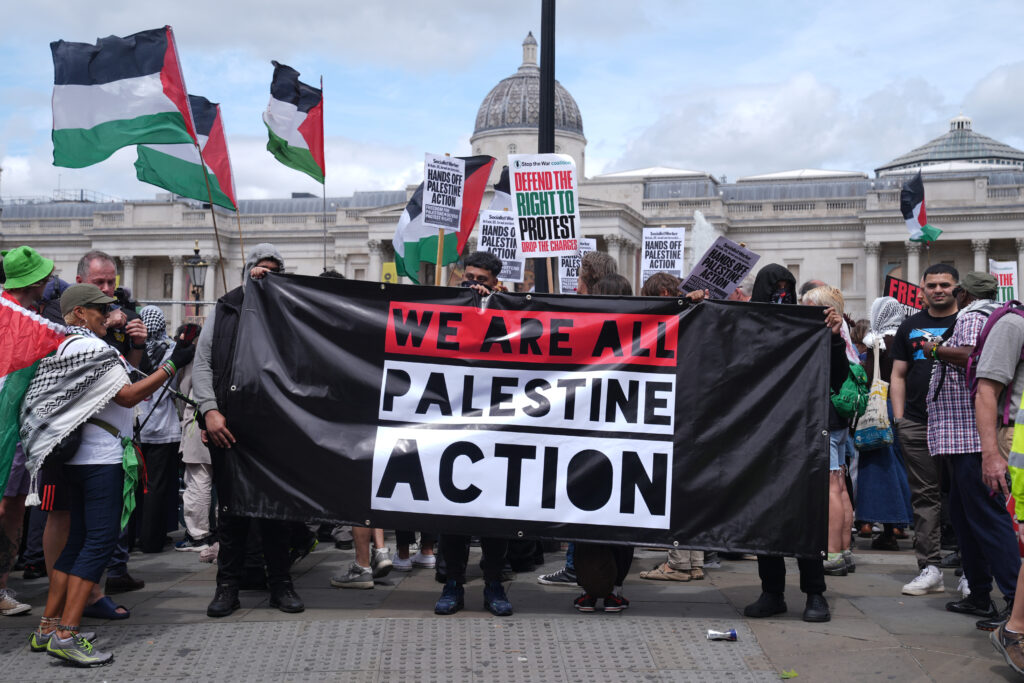
The High Court is to rule on Friday on whether the Home Office’s decision to ban Palestine Action under anti-terrorism laws was lawful.
Palestine Action’s co-founder Huda Ammori is taking legal action against the department over the then-home secretary Yvette Cooper’s decision to proscribe the group under the Terrorism Act 2000.
The ban, which began on July 5 last year, made membership of, or support for, the direct-action group a criminal offence punishable by up to 14 years in prison.
At a hearing late last year, barristers for Ms Ammori told the court that the decision to ban the group was unlawful and should be quashed, with Palestine Action being the first “direct-action civil disobedience organisation that does not advocate for violence” to be proscribed as a terrorist group.
The Home Office is defending the challenge, with its barristers telling the hearing in London that the move has not prevented people from protesting against Israel’s actions in Gaza or in support of Palestinians.
Dame Victoria Sharp, Mr Justice Swift and Mrs Justice Steyn will hand down their ruling at 10am on Friday at the Royal Courts of Justice in London, according to court listings.
Ms Ammori began her legal challenge against the decision in June, before failing in a last-minute bid on July 4 to block the ban from taking effect.
In October, the Home Office lost a Court of Appeal bid to block the challenge from proceeding.
Opening the full hearing of the challenge, Raza Husain KC, for Ms Ammori, told the High Court that the decision was an “ill-considered, discriminatory, due process-lacking, authoritarian abuse of statutory power… that is alien to the basic tradition of common law and the European Convention on Human Rights”.
The barrister said there had been more than 2,000 arrests after Palestine Action’s proscription, including “priests, teachers, pensioners, retired British Army officers” and an “81-year-old former magistrate”.
He said: “Direct action and civil disobedience are not simply to be tolerated, but valued.
“It is an honourable tradition, both in our common law and in any liberal democracy with a developed understanding of the rule of law.
“We say (Ms Cooper) missed this, in setting up a dichotomy between so-called good protesters and bad protesters, those that obeyed the law and those that breached it.”
Sir James Eadie KC, for the Home Office, said the ban “strikes a fair balance between interference with the rights of the individuals affected and the interests of the community”.
In written submissions, he said: “Whilst it has at all times been open to supporters of Palestine Action to protest against its proscription without breaking the law, certain individuals have instead repeatedly sought to flout Palestine Action’s proscription.”
Sir James added that the aim is “stifling organisations concerned in terrorism and for members of the public to face criminal liability for joining or supporting such organisations”.
He continued: “That serves to ensure proscribed organisations are deprived of the oxygen of publicity as well as both vocal and financial support.”
Support our Nation today
For the price of a cup of coffee a month you can help us create an independent, not-for-profit, national news service for the people of Wales, by the people of Wales.



The fact is that Palestine Action has been involved in violence and caused criminal damage and injury. The usual mendacity that attends most things involving the Middle East including Israel and Palestine has been drawn in to make spurious legal arguments.
Sir Keith Stagnant would not respond to our queries about reports that he will designate anyone who dares ask awkward questions about Mandelson a ‘domestic terrorist’ at the time of going to press