


‘Keep Wales nuclear free’ pleads activist in wake of Green Party policy change
Martin Shipton
The Wales Green Party should continue to oppose nuclear power projects proposed for Wales despite a recent change in the Green Party of England and Wales’s policy, a leading activist is set to argue.
Although the Wales Green Party is organised as a separate entity, members voted some years ago to remain within the Green Party of England and Wales (GPEW).
This can lead to confusion.
Debra Cooper, who chairs the Bridgend Green Party, will propose a motion at the Wales Green Party conference on Saturday 21 November calling for the party to maintain its opposition to nuclear power.
In a background paper, Ms Cooper writes: “Wales Green Party takes note of the motion passed at GPEW Autumn conference 2026 relating to changing the GPEW’s policy on nuclear power. This new policy established a list of criteria which a Green government will use to assess the merits of any future energy generation proposal including nuclear.
“Wales Green Party maintains that these criteria, backed by relevant scientific and economic evidence, would continue to rule out the deployment of nuclear power in Wales as a nation.”
SMRs
Ms Cooper goes on to state that small modular reactors (SMRs) may produce larger volumes of more complex radioactive waste than larger reactors because they are naturally less efficient.
She adds: “The takeaway message for the industry and investors is that the back end of the fuel cycle may include hidden costs that must be addressed.
“[T]he first reactors of a given design will be unavoidably expensive and will require large government or ratepayer subsidies to get built.
“An SMR produces more waste per kw unit of electricity produced compared to a conventional GW scale reactor. Any community with an SMR will have to plan to be a de facto long-term nuclear waste disposal site.
“SMRs use proportionately more Uranium per kw electricity produced than conventional reactors with the knock-on effects to impacts on the environment to the C footprint of the mining and processing of the fuel and to waste disposal.”
Ms Cooper goes on to state: “SMRs would also bring about proliferation risks with the proliferation of weapons-usable nuclear knowledge, materials, and facilities. Economically, SMRs would not be cost-effective due to their smaller size, which would lack economies of scale.
“Private venture capitalists, such as the USA company Last Energy Nuclear Power, are offering to fund the start-up costs of SMRs to the British Government. The company seeks to make a profit out of building a newly designed SMR in the Llynfi Valley [near Maesteg].
“This US company would own the company, unless it decided to sell up, or go bankrupt. So far Last Energy have missed two of its anticipated planning application deadlines.
“The Llynfi SMR site is on a flood plain, within four kilometres of four schools. The nearest school is the only Welsh Medium Secondary School in Bridgend County Borough.
“There is only one road from Bridgend to Maesteg. If that road is blocked there is no access to hospitals, no access route for the terrorist trained police to travel from Bridgend and no way to evacuate the school.
“Last Energy aims to get safety certification in the Llynfi Valley for an untried and untested design, which it then plans to sell to countries willing and able to pay for the technology.
“The nuclear industry is unsuited to this business model. On a planet that is increasingly geopolitically unstable, Wales should play no part in facilitating more nuclear enrichment technology which increases the danger of our country and other countries using nuclear weapons.”
Planning inspectors
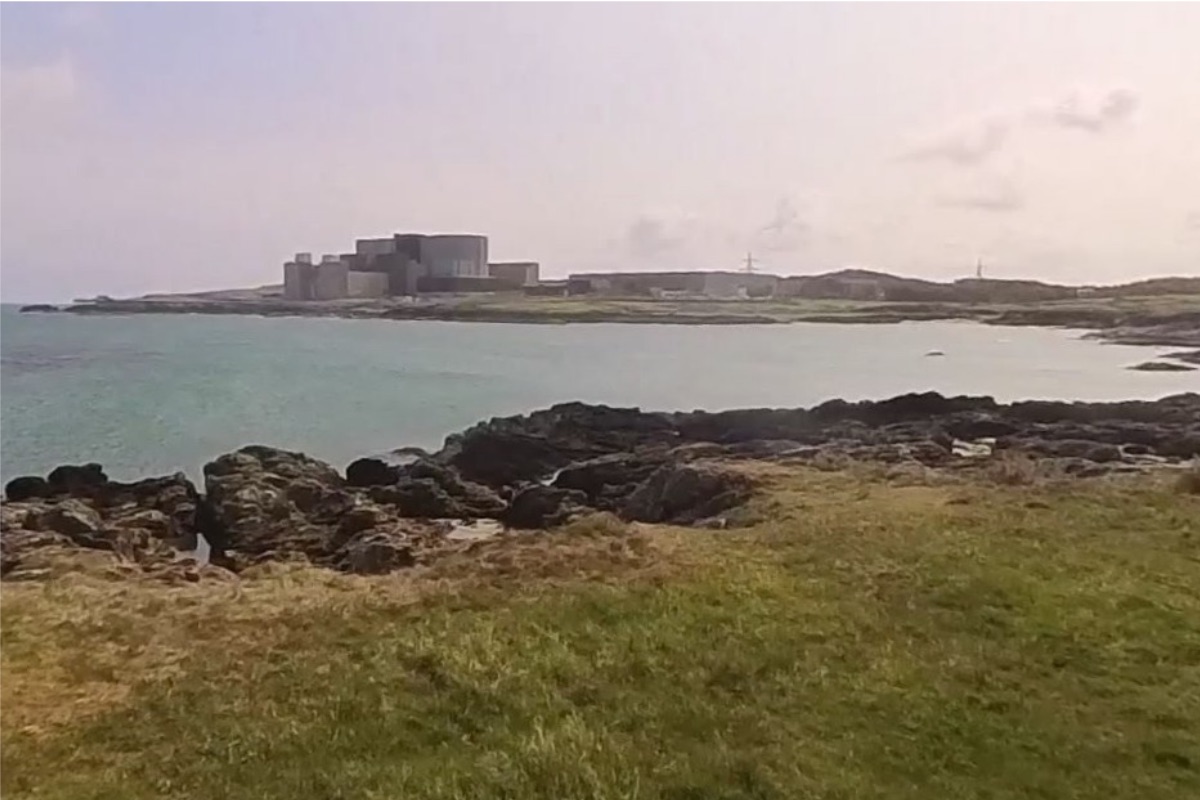
Turning to the proposal for a small nuclear reactor on Anglesey, Ms Cooper writes: “In Anglesey in 2019 the planning inspectors recommended rejection of the then Hitachi model on the grounds that it was detrimental to the economy, local services, housing, habitats and the Welsh language.
“In 2021 the British government introduced the Regulated Asset Base funding model. The consumer pays the upfront costs, plus the costs of delays.
“Exactly who ‘the consumer’ is, remains opaque. The final investment decision is expected at the end of 2027. Power generation will start at the earliest in the mid 2030s.
“Plaid Cymru MP Llinos Medi and MS Rhun Ap Iorwerth both support this nuclear power development.
“Both Last Energy and the Rolls Royce nuclear developments are linked to powering up large scale AI centres.
“Wales in the future may become a nation independent of England. Should this happen, then Wales will not be able to rely on England as an independent nation agreeing to dispose of nuclear waste generated in Wales. Wales will not be able to afford the building of a nuclear waste disposal site, nor persuade whichever Welsh community is chosen to store the waste that the people and planet will be perfectly safe living alongside a nuclear waste site.
“If we agree to having nuclear energy, we expose ourselves to devastating attacks, both from internal terrorists and from external threats. If we agree to having a Wales nuclear weapons policy, or a policy whereby we accept military bases in Wales, we further expose our people to potential harm.
“If we campaign for an independent Wales then we have to have a proactive set of policies in place, before we support any new nuclear energy systems in Wales.”
‘Self-sufficient’
Ms Cooper ends by stating: “It is a strength of Wales that we have the resources to be entirely self-sufficient in energy, with the correct focus and an intelligently and thoughtfully written energy policy based on true consensus with not just Green Party members, but our population at large.
“Costs of solar energy are falling. Renewable energies are required to benefit the community within which they sit. Small scale and community owned energy is often fit for purpose, quick to install and upgrade, and more resilient to climate change, cyber attacks and not for the benefit of profiteering.
“In Wales we can and should make full use of our renewable energy resources. Large scale renewable projects for certain areas should have a different governance and funding model, which by the development of policy in this area could be controlled by local authorities and the Senedd.”
Support our Nation today
For the price of a cup of coffee a month you can help us create an independent, not-for-profit, national news service for the people of Wales, by the people of Wales.
Get more trusted Welsh news
Choose Nation.Cymru as a preferred source in Google News to see more of our journalism.


