


Labour’s climate credibility ‘on the line’ after Jackdaw approval – green groups
Rebecca Speare-Cole, Press Association Sustainability Reporter
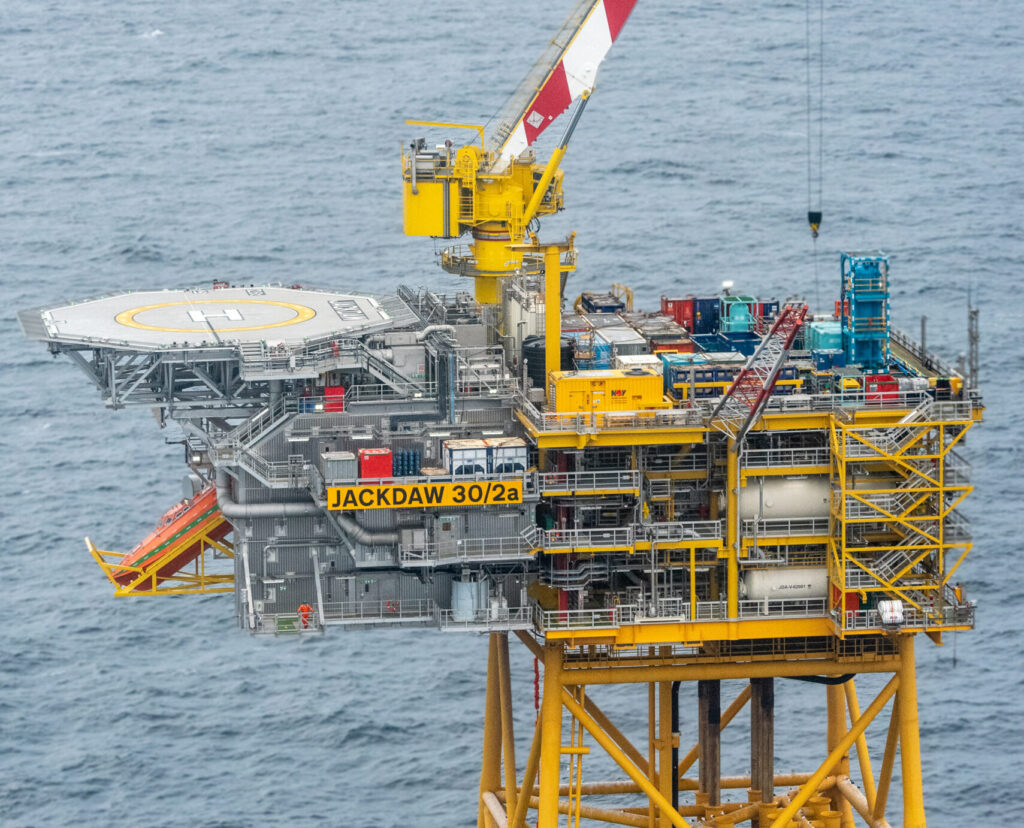
Labour’s climate credibility is “on the line now”, climate campaigners have warned, after the Government approved plans to begin drilling in the Jackdaw gas field in the North Sea.
Greenpeace, Friends of the Earth, Uplift and WWF are among the environmental groups that condemned the decision, which was announced by Energy Secretary Miatta Fahnbulleh on Wednesday.
They warned that new drilling at Jackdaw will further drive already devastating climate impacts and mainly enrich fossil fuel firms while doing little to tackle the decline in North Sea jobs, risks to energy security or the cost-of-living crisis.
The untapped gas field, which lies about 150 miles east of Aberdeen and is operated by the joint Shell-Equinor venture Adura, will begin to supply gas to the UK grid by the end of the month.
The Government argued that approving the project will support the country’s energy security with homegrown gas this winter and minimise the use of imported fuels that have been produced with a higher environmental impact.
It comes at a time when major supply disruptions driven by conflict in the Middle East are causing global fossil fuel prices to skyrocket.
While Labour came to power in 2024 with the promise of accelerating clean power while issuing no new oil and gas drilling licences, Prime Minister Andy Burnham said his Government is taking a “pragmatic” approach to the North Sea.
Ms Fahnbulleh also insisted the decision is compatible with the UK’s legally binding climate commitments, with the Government remaining “resolute” in ending new licences and cutting planet heating emissions to zero overall by 2050.
It is largely accepted that Jackdaw will not cut energy bills because the price of its gas will still be governed by volatile international commodity prices.
Ami McCarthy, head of politics for Greenpeace UK, said: “What Jackdaw is guaranteed to do is generate record profits for Shell and Equinor while supercharging the climate chaos hitting families here and abroad.
“True pragmatism means severing our reliance on expensive oil and gas that leaves British households broke, supercharges extreme weather, and leaves our energy security at the mercy of petrostates.”
Caroline Rance, Friends of the Earth Scotland’s head of campaigns, said the Government has chosen “to put hundreds of thousands more people at risk from fuel poverty and extreme weather”.
“Giving Jackdaw the green light is guaranteeing more climate impacts like the deadly heatwaves and wildfires in the UK this summer, and the devastating floods in Nepal,” she said.
And Simon Francis, co-ordinator of the End Fuel Poverty Coalition, said: “The North Sea is a basin in decline and new drilling won’t reverse that.
“It just prolongs the country’s exposure to the price shock profiteers’ agenda.
“Ministers should be focused on the future and the homegrown renewables, home upgrades and energy market reform that will actually cut energy costs for households.”
The Government is still weighing up the decision to approve drilling at the much bigger Rosebank, Britain’s largest remaining untapped oil field, located about 80 miles north-west of the Shetland Islands.
Green groups immediately urged ministers to reject the “even more damaging” project, which will dwarf the planet-heating emissions produced by Jackdaw.
According to Shell, Jackdaw could produce emissions of up to 35.8 million tonnes during its 10-year lifetime.
For context, Scotland’s total emissions for 2023 were 39.6 million.
Meanwhile, Equinor has found that Rosebank could produce emissions equivalent to 254 million tonnes of carbon over its 25-year lifetime.
Tessa Khan, executive director of Uplift, which campaigns for a transition away from oil and gas production, said: “Labour’s climate credibility is on the line now.
“No new oil and gas fields are compatible with safe climate limits, but the defining test is Rosebank.
“Approving it would see the Government knowingly breach safe climate limits.
“Burnham must deliver on his promise to put the common good ahead of vested interests – and prioritise affordable bills, genuine industrial growth and a safe climate over oil profits.
“That means rejecting Rosebank.”
Kate Norgrove, WWF chief impact officer, said Jackdaw is a “disappointing decision”, but added that the Government now “urgently needs to show that it remains 100% committed to the clean energy transition by rejecting the even more damaging Rosebank oil field”.
“The truth is that this decision will only support a tiny number of jobs, do nothing to lower prices, barely move the needle on growth, and undermine the UK’s climate leadership,” she said.
“We have all seen the devastating consequences of rising temperatures this summer for people and nature, and it’s clear that politicians are out of step with public opinion on taking action on climate change.”
Support our Nation today
For the price of a cup of coffee a month you can help us create an independent, not-for-profit, national news service for the people of Wales, by the people of Wales.
Get more trusted Welsh news
Choose Nation.Cymru as a preferred source in Google News to see more of our journalism.



How much will the taxpayer fund of this. Like all North sea drilling, we seem to pay upo for companies to profit. We hasve no sovereign wealth fund like Norway has from its oil and gas fields.Just same quick fix narrow minded politics at play. Oil and gasprices are not set by us , so still subject to OPEC and such.
The taxpayer does not fund any oil or gas exploration or extraction. Quite the opposite, the UK government got £4.5bn revenue last year in the form of Petroleum Revenue Tax, an amount for each barrel extracted and Offshore Corporation Tax, and additional tax on oil company profits. This was down from £6.1bn in 2024. Most, of course is within Scottish territorial waters.Unlike Norway this cash is spent rather than invested in a sovereign wealth fund.
Has anyone realised what bullshine it is that Jackdaw will drastically reduce UK household energy bills when all the gas extracted is sold on the international market? This is about greed and it will inflict wanton environmental destruction on the North Sea.
The gas will be fed directly into a pre-existing pipeline from the neighbouring Elgin gas field and bought ashore at St Fergus gas terminal Aberdeenshire. None is ‘exported’ as the GB grid currently purchases gas from overseas in pipelines from Norway and LNG. What is will do is displace imported gas. Whatever the source the price is however, determined by the global market.
It makes no difference where it’s fed to, there is no benefit to the UK we will pay at open market rates, it will not lower energy bills it will not create a serious number of jobs, what it will do is make tons of money for shell, the “tax payer” indirectly contribute via the huge tax relief schemes and lost public revenue.
That’s what I’m afraid of. Not to mention the enormous environmental damage it will inflict.
The global gas price varies with demand. Higher in winter. Lower in summer. Most EU counties have huge gas storage facilities and buy cheap in the summer when demand is low. This to offset the price surge of the winter peak, and stop shortages if it’s a cold winter. GB does not have such storage and this direct supply stops exposure to winter peak prices by means of reliable source. The alternative is to build new storage, a cost which would otherwise be added to the standing charge on gas bills. There are no ‘tax relief schemes’ on fossil fuels… Read more »
Yes and the UK sells in the summer and buys back in the winter because we got rid of our storage facilities
So the 91p in the pound in total tax write offs isn’t a tax relief scheme or the combined first year relief offsetting substantial portion of capital expenditure, and don’t forget the decommissioning tax relief that also isn’t a tax relief scheme,
The benefit to the UK is that the gas starts flowing this winter and so reduces the chances of the UK actually running out of gas, which it could be very close to since there is next to no storage in the UK.
You know what, thank you for the nuance. My point stands but you’re right to make this distinction.
Corporate Lobbying 1, Life on Earth 0. Will the Senedd pass a motion condemning the decision? Don’t hold your breath.
This is what happens in the Westminster bubble. A bubble that’s controlled by big business. They have a big hold over government decisions. Our children will suffer as a result. Shameful.
What climate credibility?
If the party hasn’t taken the industry’s shilling, it has definitely drunk its Kool-Aid.