


Listed chapel once at heart of Welsh community to be converted into a home
Dale Spridgeon Local Democracy Reporter
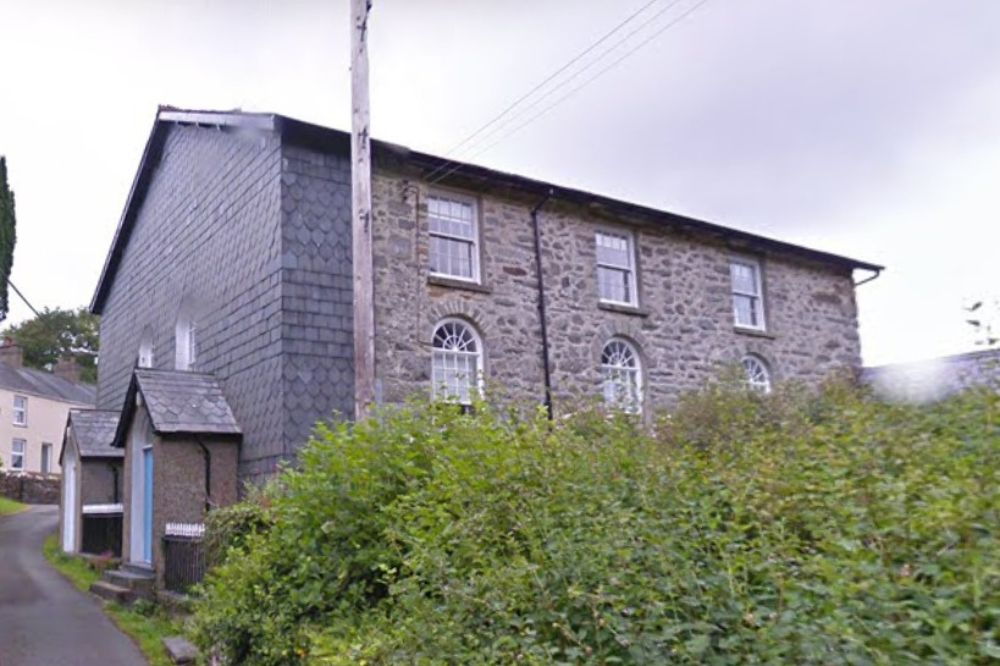
A listed chapel once at the heart of a Welsh-speaking community and a symbol of “cultural and linguistic resilience” has been granted permission to become a home.
An application to convert the former Wesleyan chapel Capel Soar has been approved by Eryri national park planners.
Soar, near Talsarnau, is a hamlet set under the dramatic landscape of Allt Cefn Trefor and Clogwyn Gwyn.
The Grade II listed chapel closed around seven years ago with its last service chronicled on a YouTube video held in the People’s Collection of Wales online archive.
Historically, it was not only a place of worship but “the social and cultural nucleus” for the area, supporting a range of community functions.
A historic building report points to it hosting Sunday Schools and educational sessions that taught reading, scripture and moral lessons, long before universal education existed and which helped to raise Welsh and English literacy.
The chapel’s raised pulpit would not only have been used for firebrand preaching but also to address matters of civic and local importance.
Hymn singing was also central to Welsh Non-Conformist chapel life and it also showcased community participation and musical tradition.
“Resilience”
The chapel, the report notes, also “embodied” Welsh speaking religious independence in a period when Anglicanism was often associated with English landowners, the Crown and imposed values.
“As such it was a symbol of cultural and linguistic resilience”.
The custodians of Capel Soar, since 2022, Claire and Christopher Helps, want to convert the chapel as a home but plans describe a continuation of links to the community.
The application says part of the building could be used as an ‘open studio’ space showcasing local arts and crafts.
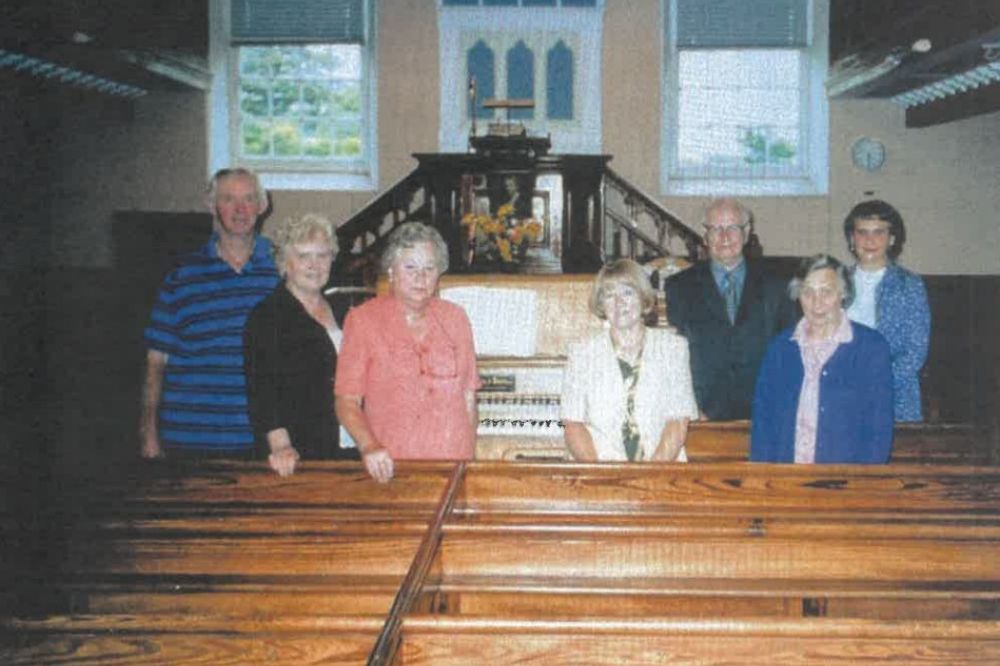
They also want to give some of the chapel’s many pews to locals who have a connection to the building after they were historically paid for by local families.
The Wesleyan chapel was built in 1824, rebuilt in 1839, with porches added in 1863 and modified further in 1891.
It is described as a “particularly well preserved mid C19 Wesleyan Chapel and which only ceased being used as a chapel in 2018”.
It is also of “significant character and in a fine landscape setting and retains significant internal detailing of good quality”.
Consent
Eryri National Park Planning Authority recently granted Listed Building Consent for the conversion.
They also agreed to a separate application to turn the former religious building into dwelling together, with associated alterations.
The plans note the ceiling is of “high architectural value” and of “critical importance to the chapel’s character and history.
The ground floor includes many rows of pews, whilst a gallery includes curved fitted stepped pews.
Plans state the nature of the location and quantity of pews “makes it difficult to create an open space for the proposed functions of a living space.
“The applicants have been made aware by speaking with the local people that a number of the pews were purchased by local families for the chapel.
“Where it is possible to identify these people and where there is a desire, these will be returned or donated to a place of their choosing.
“Otherwise, the pews will be re-used in the interior as dining benches, reading benches against the surrounding walls, kitchen joinery and for wall cladding in the upper floors”.
“A substantial amount of pews” will also be used within the design of the building.
The plans also stated that “there have been discussions with neighbours who already run artist retreats in the hamlet about using the space for shows and an involvement in an ‘open house’ display of crafts at weekends through the year.
“The open floor space and volume has specifically been maintained to allow this and provide maximum flexibility for any future uses”.
Alterations
The couple also noted in the application that “we will offer pews to the local community, failing that we will distribute them to architectural salvage yards. We will not allow any pews to be damaged,” they said.
They also “recognise the significant historical, aesthetic and communal value the building holds and seek to protect this” the application noted.
Some alterations would be “essential” but “preserving the original features of the chapel interior that are key to its listed status have been the starting point with all proposed alterations”.
Mr and Mrs Help, who made their application through the agents Penn and Sett have been custodians, since February 2022.
“The applicants are not developers but have a keen interest in restoring buildings and bring a wealth of skills to the renovation process. They intend to live here and therefore their skills in metalwork and healthcare will be valued assets for the local community.
“They have already formed positive relationships with the community who are delighted that the chapel is being sympathetically handled with the drive of preserving as much of the historical features as possible and to maintain the gardens and surrounding foliage.
“This is not a profit driven project but one of careful restoration and of giving the building a renewed importance in the community”.
The plans noted that “minimal changes” were only described for alterations to the exterior.
View the People’s Collection of Wales link to the final service at Capel Soar: https://www.peoplescollection.wales/items/1382986
Support our Nation today
For the price of a cup of coffee a month you can help us create an independent, not-for-profit, national news service for the people of Wales, by the people of Wales.



Empty 90% of the year I can see it already
That’s fine. The Owners will be paying 3 times the Council Tax, so at least something will be going into the local coffers
Why 3 times? It says that they intend to live there. So wouldn’t that be just the ordinary amount for a house in that band?
They should pay much more than that let’s be real here. Your banishment from Wales for being a colonial-minded waste of a person however is ideal.
The hard fact is that once churches and chapels hit the point where there aren’t enough worshippers to keep them viable, inevitably they’ll be closed down. They can’t all be kept open, devoid of sufficient congregations, as some sort of quaint museum pieces reminding us of a now vanished past. In theory you could argue that if they’re going to be converted into residential properties, local folk – or at least Welsh people – should somehow be able to have ‘first bite of the cherry’ when it comes to living in them. But I do wonder how many Welsh folk… Read more »