

Londoner explains reason for adopting historical form of Welsh surname
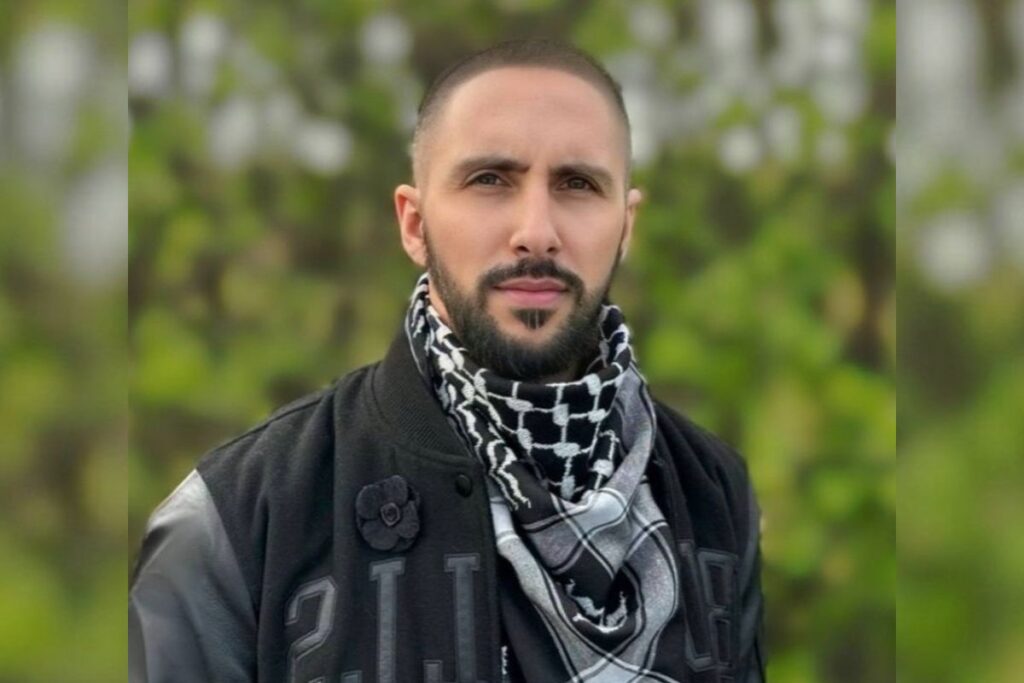
Stephen ap Rhys
A Londoner of Welsh descent has drawn praise on social media for reconnecting with his heritage and ‘resisting language death’ using Cymraeg and adopting the historical form of his surname in place of the Anglicised version.
Previously known as Adam Pugh, X user Adam ap Huw is a former Green Party candidate for Police Crime Commissioner and is an active campaigner and Welsh learner.
Sharing the rationale behind his decision to use ap Huw, meaning son of Huw, and not the Anglicised ‘Pugh’, he wrote: “Not a rebrand. Not just a new handle.
“Names are political. They always have been. Who gets to name you, spell you, pronounce you, decide how you’re recorded, that’s never neutral. So making the decision to change mine isn’t cosmetic. It’s a personal and political act, and I want to explain it properly:
“I’ve changed my name from Pugh back to ap Huw, the original Cymraeg patronymic meaning “son of Huw.” I’m a proud South Londoner, but of Welsh descent, and this name is part of reconnecting with that heritage. It isn’t a quirky rebrand, it’s a refusal.
“Cymru was conquered by England, not united with it. Edward I crushed Welsh independence in 1282-83, seized land from Cymry nobles and handed it to English settlers, and built a ring of castles to enforce it.
“That was just the start. Over the next few centuries, English legal and administrative pressure, especially the Laws in Wales Acts of 1535-42, pushed Cymru away from its own naming traditions and towards English style fixed surnames. Patronymics like ap Huw, got contracted down into Pugh. Not overnight, but as one small casualty of a country slowly being administered out of its own identity.
“What happened to Cymru wasn’t a one off. Centuries before Britain built an overseas empire, the tools and tactics of that empire were already being tested there: dismantling native law and replacing it with English law, building fortresses to enforce occupation, administering a people out of their own culture and language. Many historians argue Wales was effectively the training ground for a colonial and imperial system that England and Britain went on to inflict, at far greater and even more violent and brutal scale, across Ireland and then across huge parts of the world. Empire was not a benign project. It was violent, extractive, and built on the subjugation of entire peoples, and I say that plainly, without pride or nostalgia for any of it.”
Not a rebrand. Not just a new handle.
Names are political. They always have been. Who gets to name you, spell you, pronounce you, decide how you’re recorded, that’s never neutral. So making the decision to change mine isn’t cosmetic. It’s a personal and political act, and I want… pic.twitter.com/OwGjCslCjv
— Adam ap Huw (@AdamapHuw) July 3, 2026
“To be clear; what happened to Cymru is not comparable to the transatlantic slave trade or to the colonial violence inflicted on Black and Indigenous peoples and people of colour across the world. That was a different order of horror, involving the ownership of human beings, mass death, and the deliberate destruction of entire civilisations, and its effects are still very much alive today. What I’m describing with Cymru is a smaller, earlier thread in a much larger and much darker imperial pattern, not an equivalent to it. I’m naming that history because it’s part of understanding how empire operated, not to draw an equivalence that isn’t there.
“Even on that smaller scale, what happened to Cymru did real damage. It cut the thread between the Cymry and their own genealogy, their own language, their own sense of who they are. A name isn’t decoration, it’s a record. Mine had been quietly rewritten by a process my ancestors never chose.
“As a father, I have a huge responsibility and that shapes not just how I view the world but also how I navigate and move in it. Knowing your history can help give you the tools to shape your future. It’s one thing to let a piece of your history quietly disappear when it only affects you. It’s another to hand that same erasure down to your child as if it were normal, or as if it never happened at all. I want him to know where his name actually comes from, what was done to it and why, and that he has a choice in how he carries his own history forward. It is a privilege to be able to do so, and that feels like a more honest inheritance than a surname that was never really ours to begin with.
“So I’m taking it back. Not out of nostalgia, and not to claim an identity I don’t live day to day, but because language death isn’t natural. It’s engineered, sometimes by conquest, sometimes by centuries of bureaucratic pressure. But it can be resisted. Every Cymraeg speaker, every reclaimed name, every bit of Cymraeg spoken out loud pushes back against that.
“Cymru isn’t England’s periphery. It’s its own nation, with its own language, its own law, its own history. I’d rather carry a name that tells the truth about my heritage and where my family comes from, than one shaped by centuries of pressure to disappear into someone else’s.
“Thank you for reading, and understanding.
“Adam ap Huw.
“Cymru – hen wlad fy nhadau, a’m calon yn dywod a’th gwynt
“(Wales – old land of my forefathers, and my heart in your sands and winds.)”
Welsh surnames
In the 1300s nearly 50 per cent of Welsh names were based on the patronymic naming system, in some areas 70 per cent of the population were named in accordance with this practice, although in North Wales it was also typical for place names to be incorporated, and in mid Wales nicknames were used as surnames.
Ben Johnson writes: “The limited range of Welsh surnames is due in large part to the ancient Welsh patronymic naming system, whereby a child took on the father’s given name as a surname. The family connection was illustrated by the prefix of ‘ap’ or ‘ab’ (a shortened version of the Welsh word for son, ‘mab’) or in the woman’s case ‘ferch’ (the Welsh for ‘daughter of’).
“Proving an added complication for historians this also meant that a family’s name would differ throughout the generations, although it wasn’t uncommon for an individual’s name to refer back to several generations of their family, with names such as Llewellyn ap Thomas ab Dafydd ap Evan ap Owen ap John being common place.”
King Henry VII introduced the Laws in Wales Acts 1535-1542, meaning, as Johnson puts it: ‘that the Welsh legal system was completely absorbed into the English system under English Common Law and both the English Lords who had been granted Welsh land by Edward I and their native Welsh contemporaries became part of the English Peerage. As a result of this creation of a modern sovereign state of England, fixed surnames became hereditary amongst the Welsh gentry, a custom which was slowly to spread amongst the rest of the Welsh people.”
Although the vast majority of Welsh surnames are family names, there has been a limited revival of patronymics in modern Wales, especially among Welsh speakers as we’ve seen with Rhun ap Iorwerth and many others.
Alternatively, given surnames are used, as in the case of the folk singer and political figure Dafydd Iwan (Dafydd Iwan Jones), opera singer Bryn Terfel (Bryn Terfel Jones), classical singer Shân Cothi, and the late actress Myfanwy Talog.
Find out more about the history of Welsh surnames here.
Support our Nation today
For the price of a cup of coffee a month you can help us create an independent, not-for-profit, national news service for the people of Wales, by the people of Wales.
Get more trusted Welsh news
Choose Nation.Cymru as a preferred source in Google News to see more of our journalism.



Our FM proudly uses the patronymic version & so do I on FB! As a Welsh learner, not a native speaker (the result of Anglo imperialism) I hesitate to take the final step & deed poll my name. This interest Article & gives me a food for thought & intelligent discussion would be nice but unlikely in modern discourse led by today’s vile, racist, hate filled social media. Witness the minority Anglocentric hate filled right of Cymru childish attacks on those who chose the patronymic option. Adam ap Huw brave stance provides much food for thought.
Da iawn ti Rhisiart, rwy’n dilyn dy byst ar FB yn gyson.
I’m in much the same position as Richard and haven’t taken the plunge yet; much as I loved my Dad, Steffan ap Colin sounds a bit strange to me and so far I’m content with my on-line persona of Steffan Llyn. However, Campau Celtaidd Cymru (see http://www.campauceltaidd.cymru) has included the offer of such traditional matronymic/patronymic names to new members in our constitution and my fellow directors, Efan ap Ifor and Elfed Wyn ap Elwyn have done just that. I’m still thinking about it…
All he is doing is restoring his cultural patronymic tradition. Good on him. People in Wales traditionally used mab or map (shortened to ap), or fab (shortened to ab), meaning “son of”, and the female form Ferch, meaning “daughter of”, before these practices were gradually phased out over centuries due to English administrative, legal, and religious pressures.
What a wonderful piece. Diolch Adam.
Time to ditch our slave names…
Love this. Genuinely makes me consider doing this one day myself.
It is strange to think how many surnames just derived from “ap Rhys”, Rees, Rice, Price, Pryce, Reece, Reese, Preece, Prees, Brice/Bryce (US national park), Breeze. All done under the pretext of collecting tax.
Does he say anywhere why he chose the to change from Pugh to Ap Huw rather than use his father’s given name?
It isn’t beyond the realms of possibility that his dad was Huw Pugh but explanation given here makes it sound like the origin of Huw was the original family name.