


Lord Hain warns of ‘dangerous’ political shift in Wales
Hayley Jones
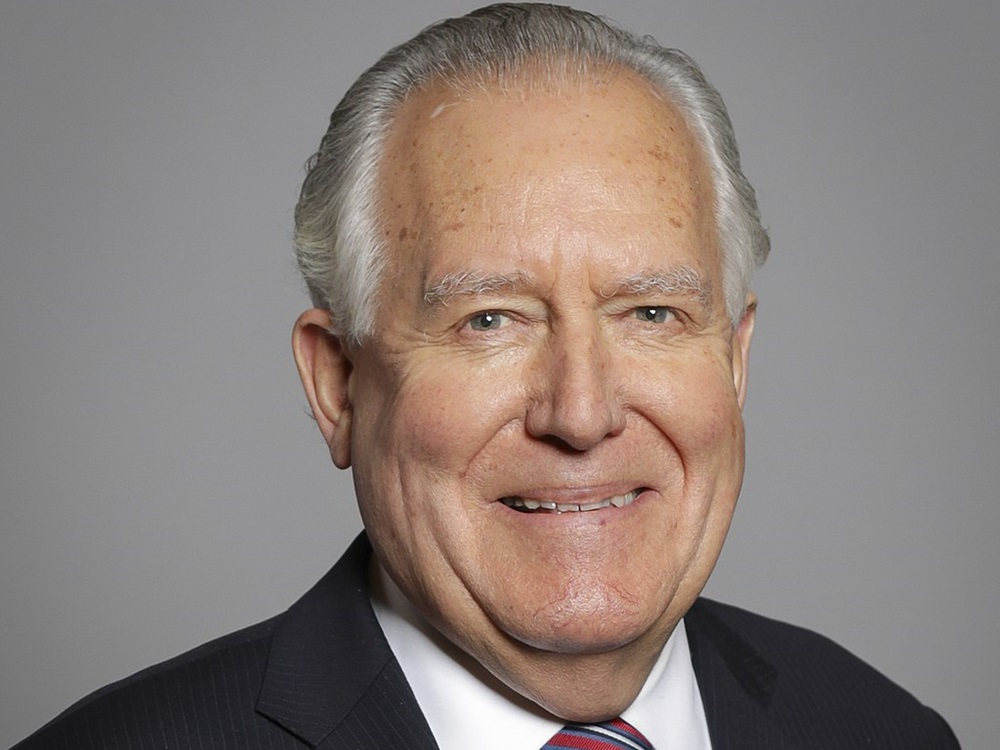
Former Secretary of State for Wales Lord Peter Hain has warned that the rise of Reform in Wales reflects deep structural changes in Welsh communities and fears it could lead to a shock result at the next Senedd election.
Lord Hain, who served as Welsh Secretary of State from 2002 to 2008 and as MP for Neath from 1991 to 2015 believes that the same political forces that drove the 2016 Brexit vote in Wales are now feeding Reform’s rise in Wales.
He said: “I did foresee the impact of deindustrialisation in Wales, the decline of trade unions and I did say to everybody that it was dangerous: dangerous for the Labour Party and dangerous for politics. So I don’t think the fallout is surprising. It’s a similar phenomenon to what happened during the Brexit campaign.
“I took part in Welsh Labour’s campaign and I knocked on doors in the valleys. It was pretty evident talking to people on the doorstep as to what the sentiment was.
He recalls how he warned colleagues at the time that the “Leave sentiment” in Wales was being “underestimated”. He added: “In fact, I did phone the ‘Remain Campaign CEO and told him what I had experienced, he said that there was nothing to worry about and that they had a ‘plan’.
“But they didn’t and they didn’t foresee it. It was a severe defeat.”
The current member of the House of Lords believes that Welsh “leave voters”, many of whom felt ignored are now forming a core part of Reform’s support. He said: “There was evidence then that this phenomena was happening.”
Collapse of Labour vote
Lord Hain revisited the stages of collapse for the Labour vote in Wales and pointed to a steep fall in Labour majorities in parts of Wales over recent decades.
Mr Hain quoted how, in 1997, he won the Neath constituency for Labour with 30,324 votes, a majority of 26,741 over the Conservatives.
At the time, Neath had never experienced a majority on this scale,. However by 2015 and one year before the Brexit vote, that majority had dropped to just 9,548 when the Labour candidate for that same area Christina Rees had the support of 16,270 votes.
Mr Hain stressed that this shift was not driven by a surge in opposition support, but by disengagement among Labour’s traditional base.
“Basically, Labour voters stayed at home,” he said, referring to the 2016 Brexit vote.
The decline, he reiterated, mirrors the loss of large workplaces, the weakening of trade unions, and the breakdown of tightly knit working-class communities, particularly in former industrial and mining areas.
He said: “Trade unions disappeared, large workplaces disappeared, and that cohesive working-class community dissolved.”
Labour unpopularity
Despite the shift, Lord Hain believes that Welsh Labour could still recover some ground, particularly under Eluned Morgan.
He said: “If Welsh Labour fights a presidential campaign, then I think it could do much better than currently predicted.”
However, he warned that Labour’s prospects in Wales are being heavily shaped by perceptions of the UK Labour government.
“UK Labour’s unpopularity is damaging more than anything Welsh Labour has or hasn’t done.”
Lord Hain, who has known First Minister Eluned Morgan since the mid 1990s, believes that she is still “capable of reconnecting with voters if the party adopts a more direct, personality-led campaign.”
Support our Nation today
For the price of a cup of coffee a month you can help us create an independent, not-for-profit, national news service for the people of Wales, by the people of Wales.



Personally I think it’s too late to change the perception of Eluned Morgan, and indeed some polls are even predicting she may lose her seat in the Senedd!
No matter what Welsh Labour does now – it will be too late. People want change and that is reflected in the polls.
The established parties had decades to address Wales’ problems in a far more robust and constructive manner. Instead it became a time of gestures and rhetoric. Those who have suffered most became disaffected and angry hence the occasional gesture from them such as Brexit and now Reform. All well and good for the bright sparks on here to repeatedly declare that such people are “dull” or “stupid”, but the real dullness and stupidity is most commonly manifested among those politicians who saw the problem and proceeded to ignore its intensity.