


Mahmood announces ban on taxi use for asylum seeker medical trips
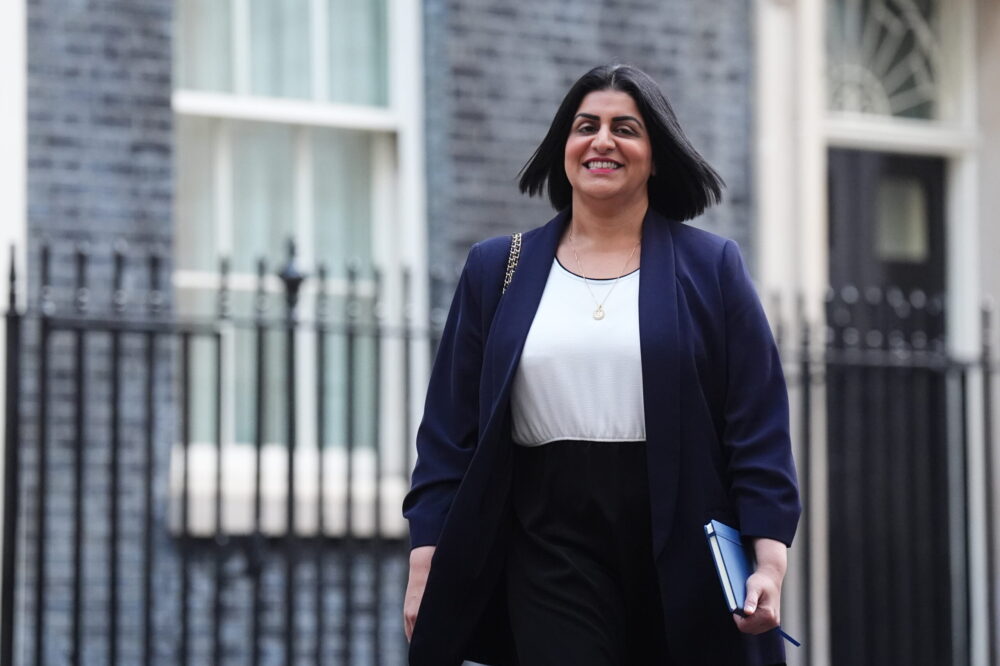
Asylum seekers have been banned from using taxis for most medical journeys, Home Secretary Shabana Mahmood has announced.
The Government said the new rules will restrict taxi use for medical travel to exceptional, evidence-based cases such as physical disability, pregnancy or serious illness.
Any such journey would require Home Office approval.
The decision follows a recent BBC investigation that found “widespread” use of taxis by asylum seekers, including for long journeys, with one case involving a 250-mile trip to see a GP.
Taxi drivers told the BBC the system was open to “abuse”, accusing sub-contractors of inflating mileage, for instance by dispatching drivers over long distances to perform much shorter journeys.
One told Radio 4’s Today programme he had been dispatched from Gatwick to take an asylum seeker in Reading to an appointment 1.5 miles from his hotel, with a second driver sent from Heathrow to bring the same man back from the appointment.
It is understood the policy change comes after a Home Office review of transport arrangements for asylum seekers.
All service providers will be required to stop using taxis for medical journeys from February.
Ms Mahmood said the Government is working with providers to introduce alternatives — such as public transport — in a bid to save taxpayer money.
“This Government inherited Conservative contracts that are wasting billions of taxpayers’ hard-earned cash,” she said.
“I am ending the unrestricted use of taxis by asylum seekers for hospital appointments, authorising them only in the most exceptional circumstances.
“I will continue to root out waste as we close every single asylum hotel.”
Wasted money
Liberal Democrat MP Paul Kohler, a member of the Commons Home Affairs Committee, welcomed the change, saying the money “wasted” on taxis was a “shocking indictment of the contracts signed under the previous Tory government”.
Mr Kohler told the Today programme: “It never dawned on them it was a huge incentive to spend money.”
Earlier this month, Ms Mahmood set out a raft of measures to overhaul the asylum system, aimed at deterring illegal migration to the UK and making it easier to deport people.
The proposed changes include making refugee status temporary, subject to reviews every 30 months, and sending refugees home if their country is deemed safe.
‘Uncomfortable truth’
The wide-ranging reforms drew criticism from Labour backbenchers.
Ms Mahmood told MPs it was the “uncomfortable truth” that the UK’s generous asylum offer, compared with other European countries, is drawing people to UK shores, and for British taxpayers the system “feels out of control and unfair”.
The Home Secretary told the BBC’s Political Thinking podcast that she had already directed officials to “pilot a small programme” of increased payments “just to see how it changes behaviour”.
The UK currently offers payments of up to £3,000 for some people with no right to remain in the country who agree to return home.
Smash the gangs
Meanwhile, the Home Office published figures on Saturday showing a 33% increase in activity aimed at meeting Labour’s election promise to “smash” people smuggling gangs.
The figures showed a rise in “disruptions” of people smugglers in the year to September 2025, including arrests and the seizure of boats being transported across Europe for use by people smugglers in the Channel.
Most of the activity was classed as “minor”, including arrests of low-level gang members, but “major” disruption deemed to have a significant or long-term impact on smuggling gangs was up 51%.
Labour made “smashing the gangs” a key promise in its 2024 election campaign, but since coming to power has seen small boats continue to cross the Channel.
So far this year, 39,292 people have made the journey, already more than crossed the Channel last year but still below the total for the record year of 2022.
Home Office officials pointed to the increase in the average number of people per boat compared with 2022 as a sign that disruption by law enforcement was “significantly impacting the gangs’ tactics” and forcing them to “take greater risks”.
Support our Nation today
For the price of a cup of coffee a month you can help us create an independent, not-for-profit, national news service for the people of Wales, by the people of Wales.



How much does the government save by taking up this measure? It all sounds great headlines but thoroughly useless in the grand schemes of things.
Not as far as bent taxi firms are concerned, the correct corrupt pecking order has to be adhered to…to each hotelier, security firm and taxi firm their opportunity to fleece the taxpayer and the devil take the refugee …RIP Tom Petty
This isn’t really about taxis or asylum seekers. It’s about a central government that doesn’t know how to actually run things properly. It’s the same story with covid response.
Why is Whitehall so incapable?
My view is decades of ever-smaller-government political ideologues afraid of capable people with clipboards, combined with two-thirds of senior mandarins being privately educated who have been completely isolated from the real world.
This measure can only be described as ignorant, racist and cruel.
If any deaths result, the blood will be all over Ms Mahmood’s hands.
Asylum seekers are foreign nationals under the stewardship of the Home Office and therefore cannot access the NHS or a local GP. It is for this reason they are attended to by a private GP practitioner. This dictates the vast distances they are required to travel. An alternative of public transport, train or bus, and missed appointment at a private GP will be considerably more expensive than a taxi fare. It’s a false economy. The real solution is to process the asylum claim promptly, and deport any failed claimants. This backlog is the root of the issue and net cost… Read more »
Performative cruelty from Labour trying to appease farage.
Top tip. You don’t out racist a racist.
Labour MP’s in Wales, do the right thing.
There is only one or two Labour MPs in Wales. The others have been sent by Labour HQ into the provinces to as emissaries to do their bidding. Some couldn’t even find their allotted constituency upon arrival.
Those on the left (inc Plaid) must not fight against every measure that takes money, rights, etc away from asylum seekers. Like it or not a majority of people in Wales and the UK think the pendulum has gone to far. We saw what happened to Biden when he ignored people’s concerns. I would much rather Plaid, Greens, Labour, etc take people’s valid concerns on board. Is it right to give asylum seekers hundred of pounds to to use a taxi to visit the doctors? UK citizens don’t! Better a Plaid gov with a realistic outlook on asylum policy next… Read more »
“a recent BBC investigation” is the BBC now an arm of the Home Office?
Wales is not an independent country and has no role on immigration policy. The ‘Nation of Sanctuary’ declaration in 2019 was a piece of flannel. It only can into any useful context in 2022 when there were those fleeing the Ukraine invasion and the Westminster Government were too slow off the mark and eventually and reluctantly issued access and right to remain. Provision was by local councils in England and by dint of devolution the Welsh Government via local authorities. This explains why 87% of the Nation of Sanctuary budget has gone to Ukraine refugees. All costs and arrangements of… Read more »