


Major progress in first year of project to restore River Wye
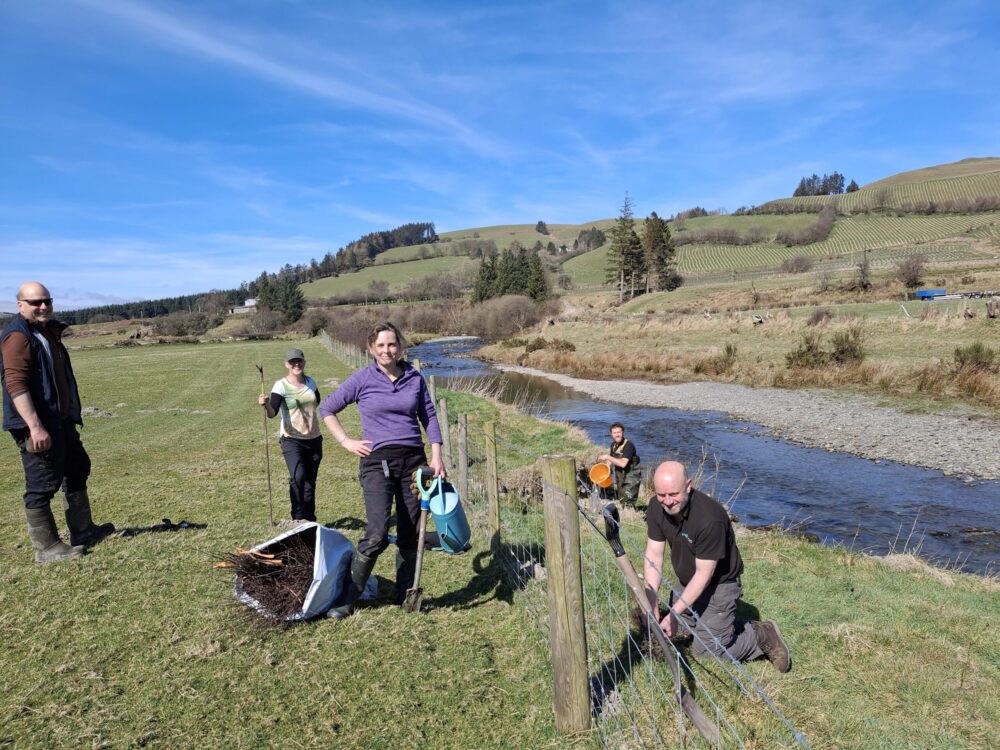
A project to revive one of Wales’ most treasured rivers has reached the end of its first year, with major wins including planting thousands of new trees and uncovering an invading species.
In the last 12 months, the Upper Wye Catchment Restoration Project found a major infestation of American Skunk Cabbage, planted 2,000 trees, delivered two large Slow the Flow schemes, restored rivers on two farms, and brought together more than 50 organisations in a landmark stakeholder workshop.
Launched at the Royal Welsh Show last year, the Natural Resources Wales project works with farmers, landowners, and local communities to improve water quality, restore natural processes, and strengthen climate resilience in the Upper River Wye Special Area of Conservation.
Highlights
1. Tackling invasive species
Surveys last year led to the discovery of a previously unrecorded infestation of American Skunk Cabbage on one of the Wye’s tributaries. A tip-off from the public directed the team to other plants at risk of spreading further. American Skunk Cabbage is an invasive plant that spreads its seeds via streams and rivers. It is critical that these are contained to prevent the species from spreading to the main River Wye.
Thanks to targeted control work, progress is already being made in containing the infestation. Himalayan Balsam surveying is also underway on key tributaries to help plan a removal strategy over the coming years. Public reports are crucial in adding to existing knowledge, and the team is calling for more eyes on the river.
2. Slow the Flow success
Working in Welsh Government’s Hafren and Tarenig forests, the team has installed low-cost measures like leaky dams, bunds, and forest drain blocking. These have slowed down flood pulses, trapped sediment, reconnected floodplains, and created richer habitats for wildlife.
Huw Irranca-Davies, Deputy First Minister with responsibility for Climate Change and Rural Affairs, visited the Tarenig Forest to see the progress first-hand.
“We are determined to keep improving our rivers across Wales, including the Wye, and it’s great to see the progress being made,” said the Deputy First Minister. “This work in the upper Wye catchment will benefit the whole river, making it more resilient to climate change and extreme weather and also protecting precious wildlife.”
The Tarenig Forest is now being used as an exemplar demonstration site for other forest managers, showcasing how practical, nature-based solutions can contribute to climate resilience and river restoration – with strong potential for replication across Wales.
3. Restoring rivers on local farms
Two large farm schemes have transformed riverbanks and floodplains, with kilometres of fencing, new buffer zones, off-stream livestock watering points, and wetland creation. These changes will reduce erosion, improve water quality, and support species like the endangered Freshwater Mussel.
4. 2,000 trees planted
The team planted 2,000 native trees at one farm along the river, which, once fully grown will stabilise the riverbanks and create vital future shade for fish.
5. A year of strong partnerships
In October, more than 50 stakeholders – from farmers to conservation charities – came together for the first Upper Wye workshop. Ideas were shared in the field and in discussion, laying the foundations for stronger, long-term collaboration.
6. Eyes in the sky
Drones are being used to capture dramatic before-and-after images, monitor erosion, and guide restoration. The footage has already helped refine project plans and inspire local farmers and landowners.
Looking ahead
The next year will build on this momentum – working with farmers and landowners to deliver more work on riverside farms, extending Slow the Flow measures to other forests, expanding tree planting, and continuing the fight against invasive plant species.
“The first 12 months have shown what’s possible when we work together,” said Susie Tudge, Project Lead. “We’ve built strong relationships, delivered real change on the ground, and are creating a foundation for restoring the Upper Wye for our future generations .”
Support our Nation today
For the price of a cup of coffee a month you can help us create an independent, not-for-profit, national news service for the people of Wales, by the people of Wales.



Wonderful, it has been heartbreaking to witness this once beautiful river slowly die of poisoning, I hope this project will succeed.