


Major report reveals public transport inaccessible to thousands of deaf people in Wales

Nation Cymru staff
A first-of-its-kind report released today has warned that people who are deaf or have hearing loss are being excluded from public transport across Wales – with tens of thousands facing stress, anxiety and a loss of independence.
Clear Signals, a report from RNID – the national charity supporting the more than 850,000 people in Wales who are deaf, have hearing loss or tinnitus – reveals that shockingly, 8 in 10 (80%) of Welsh people with hearing loss who use public transport experience accessibility barriers – with consequences that go far beyond the journey itself.
Around 1 in 3 people in Wales are deaf or have hearing loss – more than 850,000 people. According to RNID, this community is being let down by a transport system failing to meet their needs, and face significant challenges across services such as trains, buses and trams.
The report highlights how barriers – including inaccessible live travel information and a lack of deaf awareness from staff – can make even every-day journeys feel impossible, requiring immense emotional effort and planning.
As a result, deaf people and those with hearing loss in Wales say they are forced to restrict or adapt their travel behaviour – affecting people’s ability to work, socialise and travel independently.
In the report, almost 2 in 5 (38%) passengers who are deaf or have hearing loss in Wales said they always or often avoid travelling on certain types of public transport whilst almost a third (30%) said they avoid using public transport whenever possible.
More than six in ten people (61%) feel anxious when travelling, and 78% sat they must stay ‘on alert’ throughout a journey.
In anticipation of barriers, nearly two thirds (63%) of people over-prepare and plan ahead for journeys because they cannot rely on travel information being accessible, and (85%) say they build in extra time to reach their destination in anticipation of barriers.
Produced with funding from the Motability Foundation, RNID’s report is the first-ever published research focusing specifically on the real-life experiences of people who are deaf or have hearing loss on public transport in Wales.
The charity is calling for urgent action from the Welsh Government to improve transport accessibility for people with hearing loss and commit to its Travel for All strategy.
Polly Winn, External Affairs Manager for Wales at RNID, said: “Tens of thousands of people in Wales are being let down by a public transport system that fails to meet their needs.
“Deaf people and people with hearing loss shouldn’t have to sacrifice their own freedom because of the stress, anxiety and planning it takes to simply to get from A to B.
“We hope our research will prompt Welsh Government, Transport for Wales and all providers to take urgent action to address these barriers, and to ensure that accessibility is central to planned changes and improvements to transport across Wales.”
Emily Forrington is 49 and lives in Cardiff. She began to lose her hearing in her 20s and has now lost all hearing in her left ear and has severe-to-profound hearing loss in her right ear.
She said: “As a hard of hearing user of public transport, it is very stressful using unfamiliar routes or being on journeys where announcements are made over tannoys that I cannot hear properly.
“Accessible information has improved in recent years through smartphones and transport apps, but ‘on the spot’ situations like the bus driver unexpectedly saying something makes me nervous and I unnecessarily panic.”
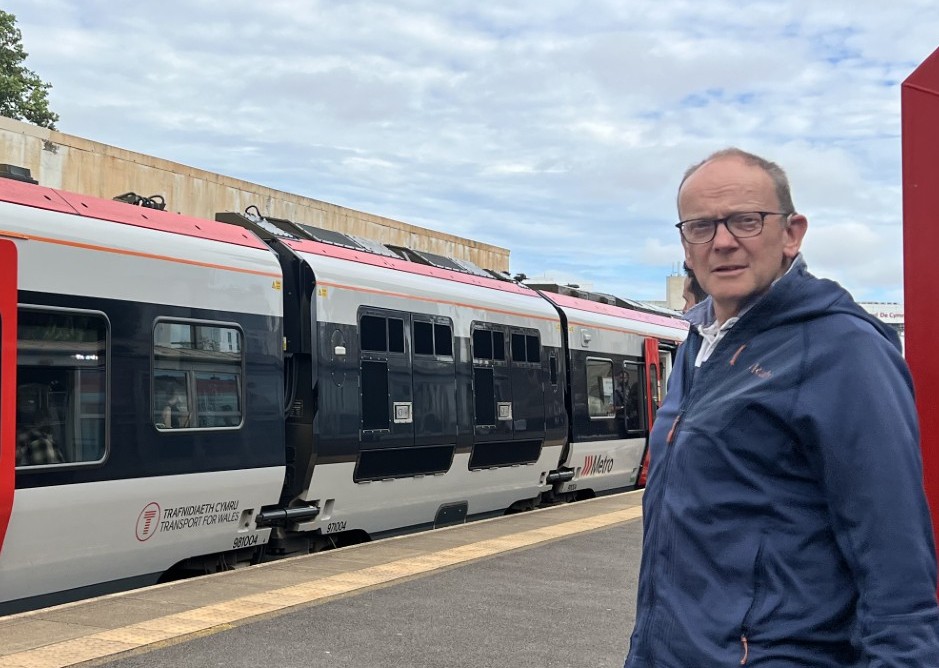
Rob is in his early 60s and lives with his family in Penarth, near Cardiff. He experienced sudden hearing loss in 2023 which prompted early retirement and wears a cochlear implant.
He said: “I use the bus locally, just between Penarth and Cardiff. That’s pretty straightforward, because I know where I’m going and if a bus doesn’t turn up when it’s supposed to, I just wait and there’ll be another one.
“Train travel is more difficult. When things break down – when they have to change their scheduling and their platforms – then train travel becomes much more difficult. You’re relying on the public address system; for me, it’s pretty much impossible to hear and to understand what’s being said.
“There’s always an element of uncertainty even for the normal hearing people when disruptions happen, but if information was accessible, I’d be on the same footing as them. I’d be on equal terms with all the other passengers.”
Clear Signals sets out a number of solutions to help combat inaccessible public transport for deaf people in Wales.
These include – improving the accessibility of journey information through innovative technology such as Auracast, deaf awareness training for all customer facing transport staff, and greater involvement of people with lived-experience in the co-design of transport services, ensuring they meet people’s needs.
RNID is calling on the Welsh Government and transport sector to work together to put these recommendations into action.
To read more, visit rnid.org.uk/clearsignalsreport/
Support our Nation today
For the price of a cup of coffee a month you can help us create an independent, not-for-profit, national news service for the people of Wales, by the people of Wales.
Get more trusted Welsh news
Choose Nation.Cymru as a preferred source in Google News to see more of our journalism.


