


Marine licence approved for pioneering floating wind project
Mark Mansfield
A floating offshore wind project has been granted a marine licence, clearing the way for one of Wales’ first demonstration-scale floating wind farms.
Natural Resources Wales (NRW) has approved the licence for the Llŷr Floating Offshore Wind Farm, which is planned around 35km offshore from Linney Head, Pembrokeshire, in the Celtic Deep.
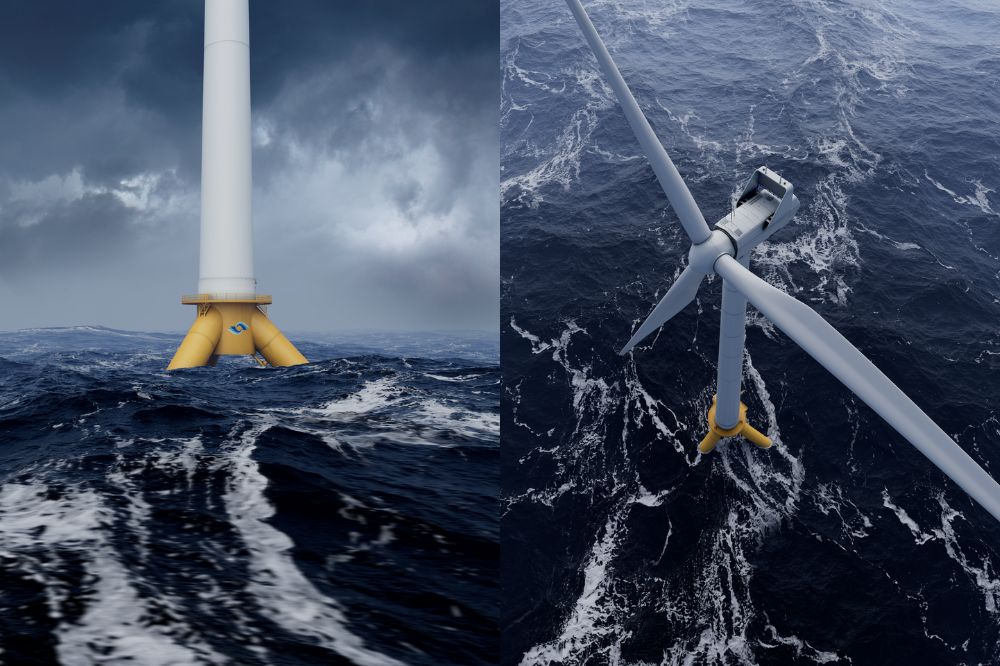
The project is intended as a test and demonstration facility for floating offshore wind technology and will comprise up to 10 floating wind turbines, each standing up to 300 metres above sea level with rotor diameters of up to 285 metres.
The development will occupy an offshore array covering around 45 square kilometres in water depths of between 65 and 75 metres. Each turbine will be mounted on a floating platform secured by up to eight mooring lines and anchors or piles, with a total of up to 80 mooring lines and 80 anchors across the site.
Electricity generated by the wind farm will be brought ashore via up to two export cables, each almost 49km long, making landfall at Freshwater West using horizontal directional drilling beneath the beach to minimise surface disruption. The scheme also includes up to 11 inter-array cables linking the turbines.
The marine licence covers the construction, operation, maintenance and eventual decommissioning of the project and remains valid until the end of 2060.
Before any offshore work can begin, however, the developer must obtain approval for a series of detailed environmental and construction plans. These include pre-construction ecological and archaeological surveys, a construction environmental management plan, marine mammal mitigation measures, fisheries liaison arrangements, navigation monitoring, pollution contingency planning and cable installation plans.
The licence also requires ongoing consultation with fishing organisations, the Ministry of Defence, HM Coastguard and other maritime bodies before work starts.
‘Unique opportunity’
Ruth Jenkins, NRW’s Head of Planning and Permitting Services and Marine Operations, said: “At Natural Resources Wales, we have a unique opportunity to tackle the climate emergency across a range of sectors and industries. This includes using our licensing powers to support Wales’s transition to clean energy.
“As a regulator and advisor, we ensure energy projects are developed sustainably and with respect for the environment and local communities. At the same time, we play a vital role in enabling innovation in green energy – helping projects move forward safely and responsibly.
“Wales has enormous potential as a leader in renewable energy, and we’re committed to supporting the benefits that can come from these projects as we move towards net-zero targets.”
The project forms part of wider plans to develop floating offshore wind in the Celtic Sea, where deeper waters are unsuitable for conventional fixed-bottom wind turbines but are considered ideal for floating technology.
Natural Resources Wales acts as the marine licensing authority on behalf of the Welsh Ministers.
Support our Nation today
For the price of a cup of coffee a month you can help us create an independent, not-for-profit, national news service for the people of Wales, by the people of Wales.
Get more trusted Welsh news
Choose Nation.Cymru as a preferred source in Google News to see more of our journalism.




I hope these “windmills” will be well within territorial waters, lest the US Navy have to come strike them down.