


Met Office issues rare red heat warning for parts of Wales

Nation.Cymru staff
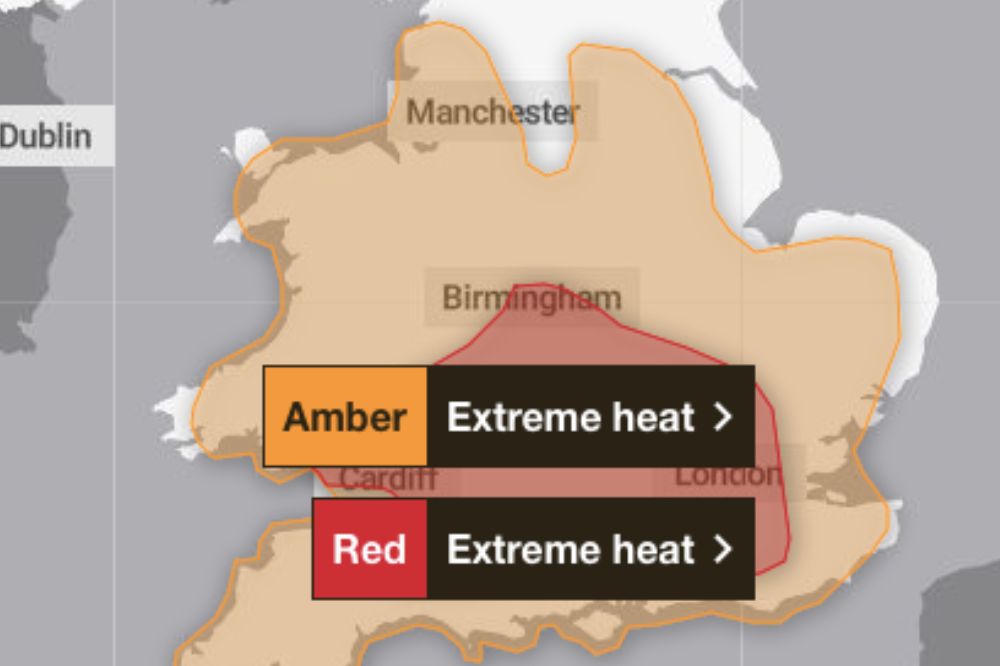
The Met Office has issued a rare red weather warning for parts of Wales in the face of extreme heat and humidity.
The red alert for Wednesday and Thursday will cover Blaenau Gwent, Bridgend, Caerphilly, Cardiff, Carmarthenshire, Merthyr Tydfil, Monmouthshire, Neath Port Talbot, Newport, Powys, Rhondda Cynon Taf, Swansea, Torfaen and the Vale of Glamorgan.
The weather forecaster said that in this week’s heatwave, parts of Wales and England are likely to see temperatures exceed 37C in the shade and could even see them rise to 38C to 40C in some places.
The extreme heat, which has been very rare in the UK until now, will be accompanied by high humidity, and very warm and humid nights which will make it hard for people to recover overnight, the Met Office said.
The heat will have impacts on health, and there will be “significant disruption” to daily life, it warned, as it urged people to adapt their routines where possible to cope with the heat.
The Met Office had already issued an amber weather warning covering most of Wales from Monday to Thursday but upgraded parts of south Wales to red on Monday morning.
As part of the rare warning, forecasters say conditions will bring a risk to life and population-wide health impacts that no longer limited to those most vulnerable to extreme heat while “substantial changes” in working practices and daily routines will be required.
There is also a high risk of failure of heat-sensitive systems and equipment, with the loss of power and other essential services, such as water, electricity, gas or mobile phone services.
Significantly more people will likely visit coastal areas, lakes and rivers, leading to an increased risk of water safety incidents, the Met Office said.
And people can expect travel disruptions, including delays on roads and road closures as well as delays and cancellations to rail and air travel which bring significant welfare issues for those who experience even moderate delays.
Public health experts are issuing an urgent call for people across Wales to look out for one another, as the country faces a period of extreme heat.
Heat-related illness can affect anyone, regardless of age or health — but the risks are greatest for older people, babies and very young children, who can deteriorate quickly in high temperatures.
It’s important to try to stay as cool as possible by doing the following:
-
- Try to stay in the shade
- Drink plenty of water throughout the day
- Keep buildings cool by closing curtains, blinds and windows during the day, opening them again in the evening
- Use a sunscreen of SPF 30 and above with at least 4-star UVA protection
Babies and toddlers can’t regulate their body temperature well.
Avoid covering prams or buggies with blankets or cloths as this can trap heat.
Use lightweight bedding and keep rooms as cool as possible. Sometimes, downstairs rooms may be cooler than upstairs for sleeping.
Watch for signs of heat exhaustion. If you or someone else feels unwell during hot weather move to a cool place, rest, and drink water.
If symptoms worsen, it may become heatstroke, which is a medical emergency.
Professor Sarah Jones, Consultant in Environmental Public Health for Public Health Wales, said: “We need to adapt the way that we live during spells of extreme heat to make sure we keep everyone well.
“Taking just a few minutes to check in on family, friends and neighbours could be lifesaving.
“A knock at the door, a phone call or a simple text message can make a critical difference to someone who is struggling in the heat and may not be able to ask for help themselves.”
When it is very hot, try if you can to plan your day to avoid peak sun hours.
Try to exercise, walk the dog or run errands in the early morning or late evening.
Keep strenuous activity to early mornings or until the weather is cooler in the evenings.
If you are going outside, consider wearing a wide brimmed hat and loose-fitting clothing.
It may be tempting to cool off in lakes or rivers, but cold-water shock is a real danger when jumping in.
Remember to enter water slowly to reduce the risk of cold-water shock.
You should never swim in a reservoir. If you find yourself in trouble in the water, remember the lifesaving advice: #FloatToLive.
Support our Nation today
For the price of a cup of coffee a month you can help us create an independent, not-for-profit, national news service for the people of Wales, by the people of Wales.
Get more trusted Welsh news
Choose Nation.Cymru as a preferred source in Google News to see more of our journalism.



Maybe some climate change skeptics may change their minds. Then again, farage wants to drill all the oil out of the north sea and obviously burn it.
You can be certain that anybody who says it was worse 1976 also voted for brexit.
True.
In 1976, only Britain burnt. Now the whole world is on fire.
France is bonkers hot. We are lucky.
This used to be the stuff of what could happen. Now it is happening. Climate change deniers still want to drill.
Idiots.
The new normal.
Perhaps it’s time to listen to the qualified and experienced scientists who’ve been collating vast amounts of data for the past 50 years or more rather than someone who’s watched a YouTube video once.
This isn’t the new normal it’s going to get a lot hotter.
New normal for now. If that rather large lump of ice decides to break, we’ve a whole new level of things to worry about.