


Met Office reveals best places in Wales to watch solar eclipse
Nation.Cymru staff/agencies
Parts of Wales will be among the best places in the UK to watch the biggest solar eclipse for more than half a century, according to the Met Office.
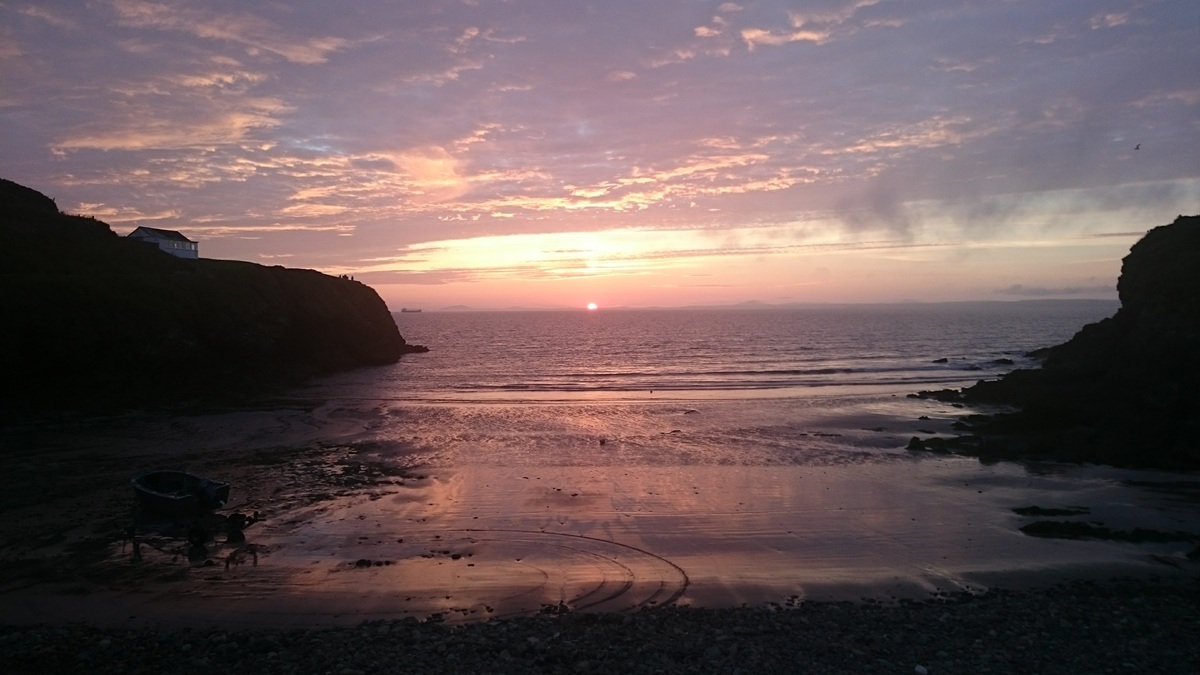
Western Pembrokeshire is expected to see up to 96% of the sun obscured on Wednesday, August 12, making it one of the best areas in the UK to watch the spectacle.
Strumble Head, on the county’s north-west coast, has also been ranked as one of the UK’s best individual viewing locations, while Rhossili Bay and Craig Goch Dam have been highlighted as other prime spots in Wales.
More than 90% of the sun will be obscured by the moon across the UK between around 6.17pm and 8.06pm, although exact timings and coverage will vary depending on location.
The westernmost parts of Pembrokeshire are expected to see between 94% and 96% of the sun covered, putting the area alongside Devon and Cornwall for the fullest views in the UK.
Elsewhere in Wales, between 92% and 94% of the sun is expected to be obscured.
In Cardiff, the eclipse is forecast to peak at 7.13pm, when 93.24% of the sun will be covered by the moon.
Elevated spots on the western side of the city such as the Garth and Pentyrch are likely to offer some of the clearest views, provided cloud stays away.
It will be the fullest solar eclipse visible from the UK since the total eclipse of 1999, with another of similar magnitude not expected until 2081.
Wales will experience a partial eclipse, while parts of Iceland, Greenland and Spain will see a total eclipse.
Where to watch
Strumble Head in north-west Pembrokeshire is likely to be one of the prime locations in Wales, combining the high level of solar coverage forecast by the Met Office with an exposed coastal position and clear views towards the western horizon.
It was ranked second in the UK in recent research, which assessed locations using factors including typical August cloud cover, elevation and the proportion of the sun expected to be obscured.
Rhossili Bay on Gower was ranked sixth in the same study, with its position providing an open view westwards across the sea.
Craig Goch Dam in the Elan Valley, Powys, was ranked the best UK location in a separate study. As the highest of the Elan Valley dams, it offers wide views of the surrounding landscape and sky.
Imo Bell, a planetarium astronomer at the Royal Observatory Greenwich, said people should find a vantage point facing west with as few buildings as possible.
She said: “We might notice the sky getting a little bit dark, so if you’re looking safely, it’ll look a bit like the moon is taking a bite out of the sun, you’ll see something that looks a bit like a crescent sun.”
Cloud could interfere with views, although the duration of the eclipse means there may still be opportunities to see it if conditions are changeable.
Safety warning
Experts have warned people not to look directly at the sun during the eclipse, stressing that ordinary sunglasses do not provide adequate protection.
Ms Bell said: “It’s not a total eclipse, but over 90% is really exciting. We’re not going to get one this good for a really long time.
“So, it’s important not to miss it, and to be prepared. You can’t just go out and expect to have a look because it’s really dangerous for your eyes.
“So, you can use solar eclipse glasses, which are very, very different from sunglasses.”
Another safe method is to project an image of the eclipse rather than looking directly at the sun.
Ms Bell suggested using an everyday item such as a colander, with observers standing with their backs to the sun and watching the projected crescents created by its holes.
Meteor shower
The eclipse will be followed later that night by the peak of the annual Perseid meteor shower.
The shower runs from July 17 to August 24 but is expected to peak overnight on August 12-13.
It occurs as Earth passes through debris left behind by Comet 109P/Swift-Tuttle, with particles burning up as they enter the atmosphere and producing streaks of light across the sky.
Under ideal conditions, observers can see dozens of meteors an hour.
Support our Nation today
For the price of a cup of coffee a month you can help us create an independent, not-for-profit, national news service for the people of Wales, by the people of Wales.
Get more trusted Welsh news
Choose Nation.Cymru as a preferred source in Google News to see more of our journalism.


