

Michael Sheen documentary reignites campaign over toxic waste site
Alec Doyle, Local Democracy Reporter
Michael Sheen’s investigation into toxic chemical dumping has reignited a decades-long campaign to clean up one of Wales’ most notorious industrial waste sites.
The Hollywood actor turns his attention to the Llwyneinion Acid Tar Lagoon in Ruabon, Wrexham, in the second episode of his new BBC documentary series Buried.
The renewed attention has been welcomed by Ponciau councillor Paul Pemberton, who believes it could represent a “one last chance” to tackle the legacy of chemical dumping after more than 20 years of campaigning.
The first episode of Buried – which aired on the BBC on Monday night and is available on iPlayer – sets out how Sheen became involved in the campaign to clean up sites across Wales where Monsanto historically dumped tonnes of polychlorinated biphenyls (PCBs).
One such site is Llwyneinion, where historic news reports reveal that an estimated 1,100 barrels of chemical waste were dumped by Monsanto – which was based in Acrefair – plus other chemical manufacturers from across the region.
Despite concerns about the site, Wrexham Council last week said it was no longer considered dangerous enough to require a multi-million-pound clean-up.
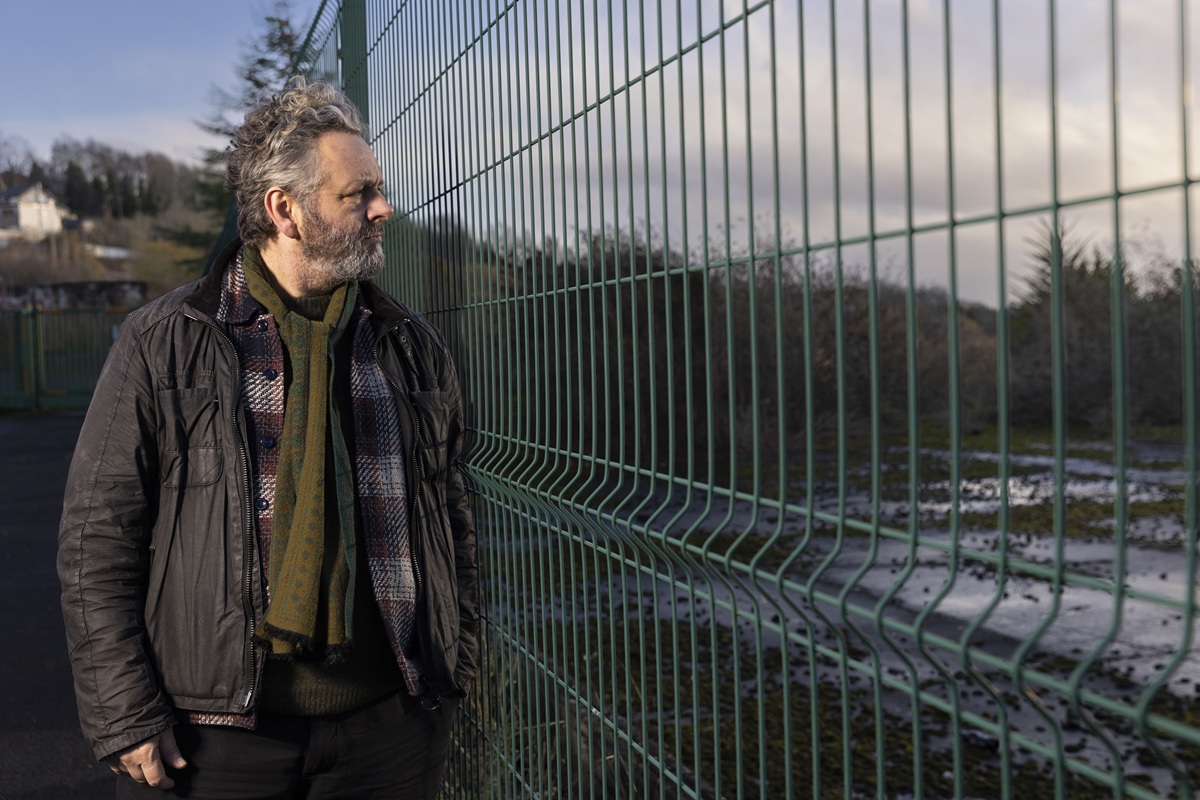
Episode two of the documentary – which is also now available online and will be broadcast on TV next Monday – focuses on Wrexham and features Ponciau councillor Paul Pemberton, who has campaigned for the clean-up of Llwyneinion lagoon for more than two decades.
“I have put many hours into this site and I wish Wrexham Council had not made that statement,” he said.
“The only reason it is no longer considered a danger is because they put a fence up around it. People can still get in and with the weather changing and the site not being lined – there is always the prospect these toxic chemicals get into the water table or the food chain.
“Back in the early 2000s, before the fence went up, sheep from a farm got onto the land and were grazing there. There was no investigation after they were rounded up and that meat – probably contaminated with PCBs and whatever else – got into the food chain.
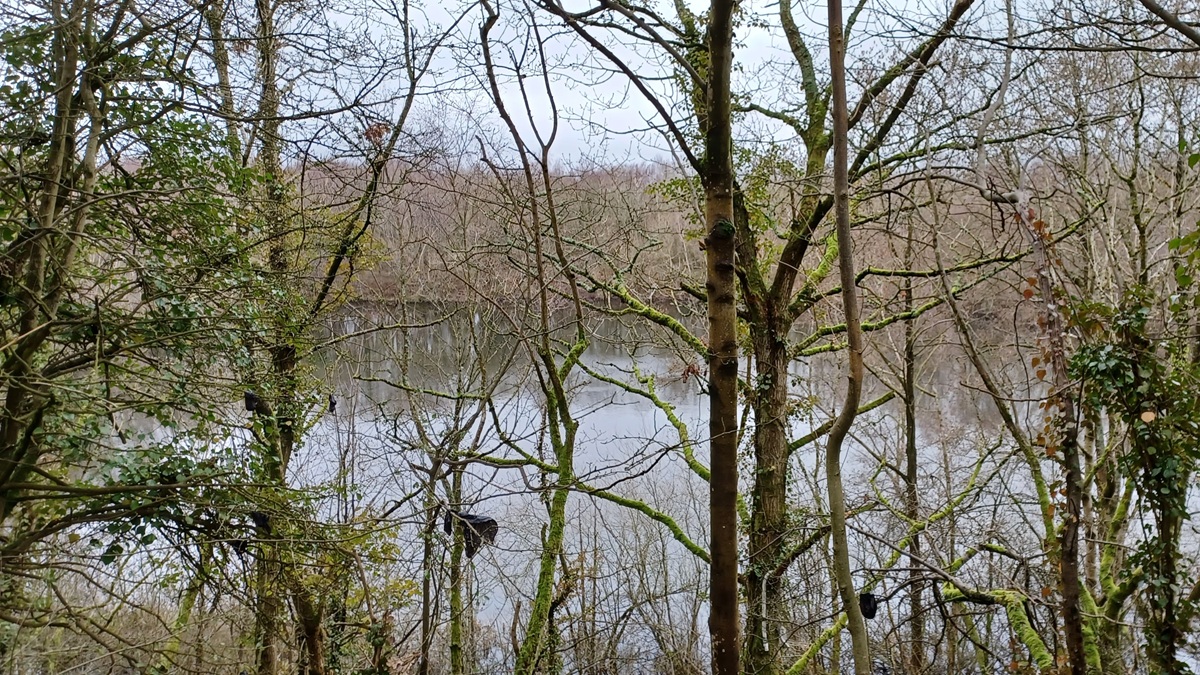
“The lagoon looks full of water but the water is actually only four or five inches deep. Underneath it’s all tar and the water is sort of encasing it and not letting the fumes come out.
“In 2010, a delegation of us went over to Ghent in Belgium and we looked at a chemical dump that was getting remediated there. That was a bit of a bigger picture because that also had unexploded bombs from World War Two in it.
“I remember what the expert we met there said – clear as day because he knew all about Llwyneinion – ‘while there’s nothing seeping into the water right now, that certainly won’t be the case in the future’.
“That told me then that we had to do something, but at the time the cost would have been around £45 million. It will be more now.
“I’ve been on Wrexham Council for years and we know that if the authority was made to clean up the site we would be bankrupt – simple as that.
“But it is dangerous. It was on the verge of legally being classed as contaminated land in 2007 and they put that fence up. That fence was all it took to stop that classification but it doesn’t change the reality.
“That stuff – and it wasn’t just used by Monsanto, other companies dumped there too – is festering. There were rumours mustard gas from the First World War was even dumped there.
“Whatever is there is getting into the water and I fear for future generations.”
Cllr Pemberton said the documentary had given the community one more chance to rid itself of its toxic legacy.
“We’ve got some interest again and I think now’s the time to move forward and find some legal way of making these polluters pay.
“In America now, they are taking Monsanto’s owners Eastman to the cleaners through the courts and it needs to be done here. They’ve had all the profit and they’re running on it.
“This programme’s given it a little bit of momentum again and I think if we ever want to get anything done about it, now is the time. This is our one last chance to sort it out.”
Clean-up
Meanwhile, the Department for Environment, Food and Rural Affairs has refused to respond to campaigners calling on the UK Government to fund the clean-up of toxic waste sites across Wales.
Wales Environment Link (WEL) this week challenged the UK Government to pay for the clean-up operations needed at sites like Llwyneinion to stop the impact they are having on communities, while pursuing the chemical companies for compensation.
WEL believes that because the dumping took place before devolution, the UK Government should not simply pass responsibility on to Cardiff.
Episode two of Buried – featuring Llwyneinion Acid Tar Lagoon – is now available on BBC iPlayer and will be broadcast on BBC One Wales and BBC Two across the UK on Monday, August 24.
Support our Nation today
For the price of a cup of coffee a month you can help us create an independent, not-for-profit, national news service for the people of Wales, by the people of Wales.
Get more trusted Welsh news
Choose Nation.Cymru as a preferred source in Google News to see more of our journalism.



A fence does not neutralise chemical waste. The Llwyneinion Acid Tar Lagoon remains a textbook case of how legacy industrial pollution is managed by containment rather than removal when the cost is high and the original polluters have long since moved on. Councillor Pemberton’s point is straightforward: the site was once close to formal contaminated-land status; the barrier changed the classification, not the underlying risk of eventual leaching into groundwater or the food chain. Sheen’s documentary has usefully restored public attention, but attention alone does not fund remediation. The unresolved question is who ultimately pays — the local authority that… Read more »
There is a tract of land near a river in Talbot Green, South Wales. A company called “The Permutit” dumped waste there in the late 60 s. It is surrounded by a high black fence. The company made fibreglass. 24 men died in 1972 due to exposure of these toxic chemicals. One of them was my father. I was 8 yrs old.
Nothing will change until corporate law is changed so that the management board and ceo’s are held directly responsible,
Remediation funding needs to be centralised so councils aren’t incentivised to look the other way. The immediate urgency must be to build up an accurate understanding of the scale of the problem. Perhaps an amnesty system might be needed to allow drivers and site managers to unburden their guilt without fear of repercussions. Research grants should be made available to universities to better understand the problems and innovate new solutions. This is a global challenge and Wales could become a world leader in responding to it.