


Middle East war could drive UK food inflation to 9% this year, trade body warns
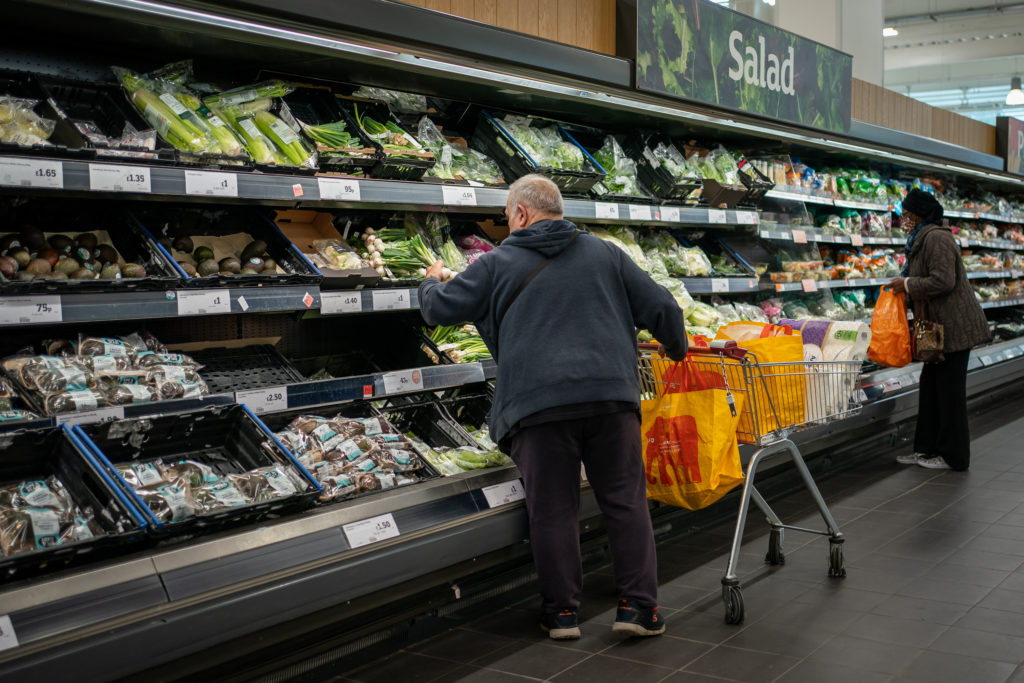
Food inflation could soar higher than 9% by the end of 2026 as war in the Middle East risks pushing up the cost of living for British households, a trade body has predicted.
The Food and Drink Federation (FDF), which represents 12,000 food and drink manufacturers, hiked its inflation forecast for the year in light of the conflict.
Economists for the trade body are now predicting that food inflation will reach at least 9% by the end of the year, up from the 3.2% that it had forecast in September last year.
The shift has been caused by the effective closure of the Strait of Hormuz and disruption and damage to energy infrastructure in the Middle East.
This has sent Brent crude oil and natural gas prices skyrocketing to their highest level since 2022.
The FDF said the situation is fast-changing, but its revision to the inflation forecast is based on the assumption that the Strait of Hormuz opens to cargo traffic within the next two to three weeks and the majority of key facilities, such as oil, gas and fertiliser sites, return to normal within a year.
Disruption to oil and gas markets is having a direct and immediate impact on production costs for UK food and drink manufacturers, the FDF said.
This is because it is an industry that requires a lot of energy for the manufacturing process.
Many larger businesses are able to hedge costs by fixing energy contracts, but they are preparing for sharp price rises when contracts end, according to the FDF.
Meanwhile, it said smaller producers tend to buy energy “on the spot” and were already experiencing higher prices.
Dr Liliana Danila, FDF’s chief economist, said: “The food and drink sector is already feeling the force of this geopolitical shock.
“As one of the UK’s energy intensive industries, manufacturers are facing mounting energy bills, rising transport and packaging costs and disruption across key supply chains.
“These pressures are hitting simultaneously, and are a significant challenge for businesses to absorb.”
She added: “The current situation is unprecedented and hard to predict, however given the scale and speed of these cost increases, and despite companies’ best efforts not to pass price increases on, it’s clear that food inflation is going to rise in the months ahead.”
Sir Keir Starmer is expected to provide an update on the cost of living on Wednesday amid concerns over the amount energy bills could rise as a result of the conflict.
Furthermore, Chancellor Rachel Reeves will meet supermarket bosses and regulators to discuss the impact on consumers.
Support our Nation today
For the price of a cup of coffee a month you can help us create an independent, not-for-profit, national news service for the people of Wales, by the people of Wales.



The price of rain and sunshine in Wales has not increased. What does increase is the cost of heating greenhouses to grow stuff like tomatoes out of season or importing food from the far flung places across the globe. Perhaps if we supported our native farmers instead of taking land away when they die or relying on poverty growers in places like Africa on a dollar a day, we wouldn’t have this ‘food price inflation’. This press release is from “food and drink manufacturers”. These are just the parasites that cream a margin. All food comes from farming.