


More than 200 people help to save Wales’ ‘stained glass window’ butterfly
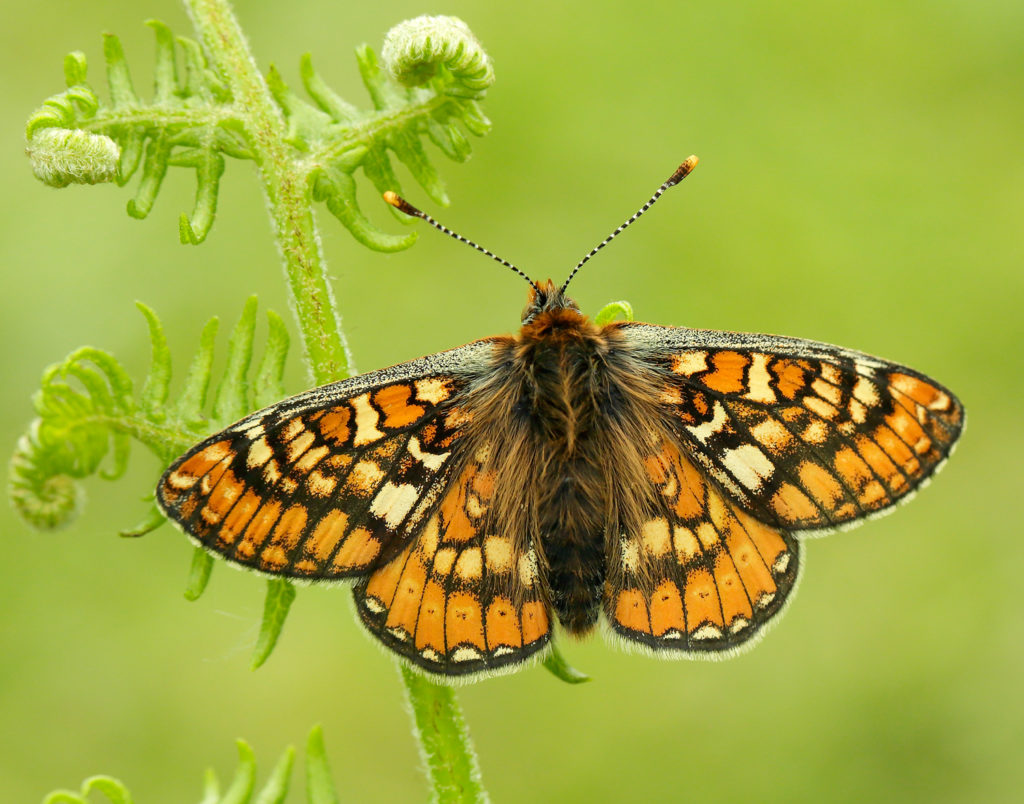
More than 200 people have joined a project to save one of Wales’ rarest and most beautiful butterflies.
Rugby players, waiters and interior designers have given more than 2,000 hours of their time over 18 months to help the magical Marsh Fritillary.
The project, run by national charity Butterfly Conservation, gave ordinary people skills to aid conservation of the beleaguered butterfly and help it recover after decades of decline.
John Hitchens, Butterfly Conservation’s Marsh Fritillary Recovery Project Officer, led the work and said he was delighted with how many people got involved.
He said: “I want thank everyone that has been part of the project over the last 18 months: no matter how big or small a part you feel you played, your efforts have helped and will continue to help the Marsh Fritillary across Wales.
“Please keep up your incredible work, whether that’s from your computer, by engaging the next generation of passionate conservationists at training events, or wading through the mud searching for caterpillars. Although they may not tell you themselves, the butterflies are as grateful as I am.”
The Marsh Fritillary has orange-and-black chequered wings which glow in the sunlight like a stained glass window.
Once widespread in Britain and Ireland, it declined severely over the 20th century. Between 1985 and 2019 alone its UK distribution fell by 43%.
The main threat is loss of habitat: Marsh Fritillary caterpillars only eat one plant, called Devil’s Bit Scabious, which grows almost exclusively on grassland grazed by cattle, and much of this habitat was lost over the 20th century.
Pembrokeshire farmer Terry Clarke, who joined the project, said: “They’re a beautiful looking butterfly and once you’ve seen one you’ll always remember the first time… I hope that other farmers will join in and prove just how good we, as farmers, can look after the countryside.”
Butterfly Conservation was awarded £174,000 from the Welsh Government’s Nature Networks Fund, delivered by the National Lottery Heritage Fund, to create a Wales Marsh Fritillary Recovery Partnership with environmental charities, statutory bodies, landowners and farmers.
Project officer John started recruiting members of public last year by organising a series of free talks which were attended by around 100 people.
He then arranged training sessions at Swansea, Carmarthenshire, Ceredigion, Gwynedd and Neath Port Talbot, teaching people to survey the species by counting the silken nests its caterpillars weave in long grass, known as ‘larval webs’.
This year he organised more sessions on how to survey the adult butterflies in the summer.
Many of the sessions were led by Butterfly Conservation volunteers who have helped protect the Marsh Fritillary in Wales for years. Now a host of new volunteers are qualified to continue this work, including a significant number of young volunteers aged between 18 and 30.
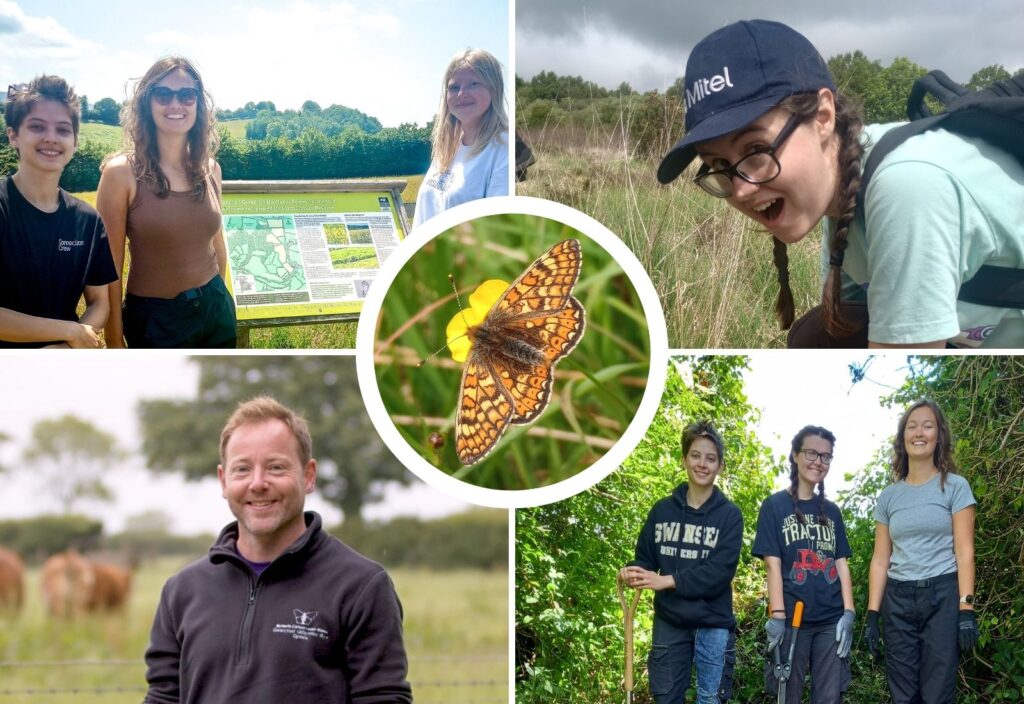
‘stained glass window’ butterfly. Image: Butterfly Conservation
Esme Taylor, one of those young volunteers, said: “Being part of volunteering has been an incredible experience – meeting landowners, networking, seeing the management techniques people use, and how incredibly important Marsh Fritillaries are.”
John and his team have also worked with landowners and farmers to draw up plans for work they could do on their own land to help Marsh Fritillaries. Butterfly Conservation now hopes to get funding to make these plans a reality.
Butterfly Conservation Director of Nature Recovery Dr Dan Hoare said: “Over the past hundred years, butterflies, moths and other wildlife in this country has been battered by habitat loss, pesticides and pollution. In the next hundred years, climate change will present a host of new challenges.
“The most impactful single thing we can do to help rare species like the wonderful Marsh Fritillary is ensure that they have the habitat they need to survive, and this fantastic project is a perfect example of inspiring local people and giving them the skills to look after wildlife on their own doorstep. A huge thanks to everyone involved, especially our fantastic project officer John.”
More about Butterfly Conservation can be found here.
To find out about more about getting involved in Butterfly Conservation’s work, email [email protected]
Support our Nation today
For the price of a cup of coffee a month you can help us create an independent, not-for-profit, national news service for the people of Wales, by the people of Wales.



So this is now the official Welsh pili-pala? I’d better plant some Devil”s Bit Scabious then