


More than 800 prisoners still serving indefinite IPP sentences
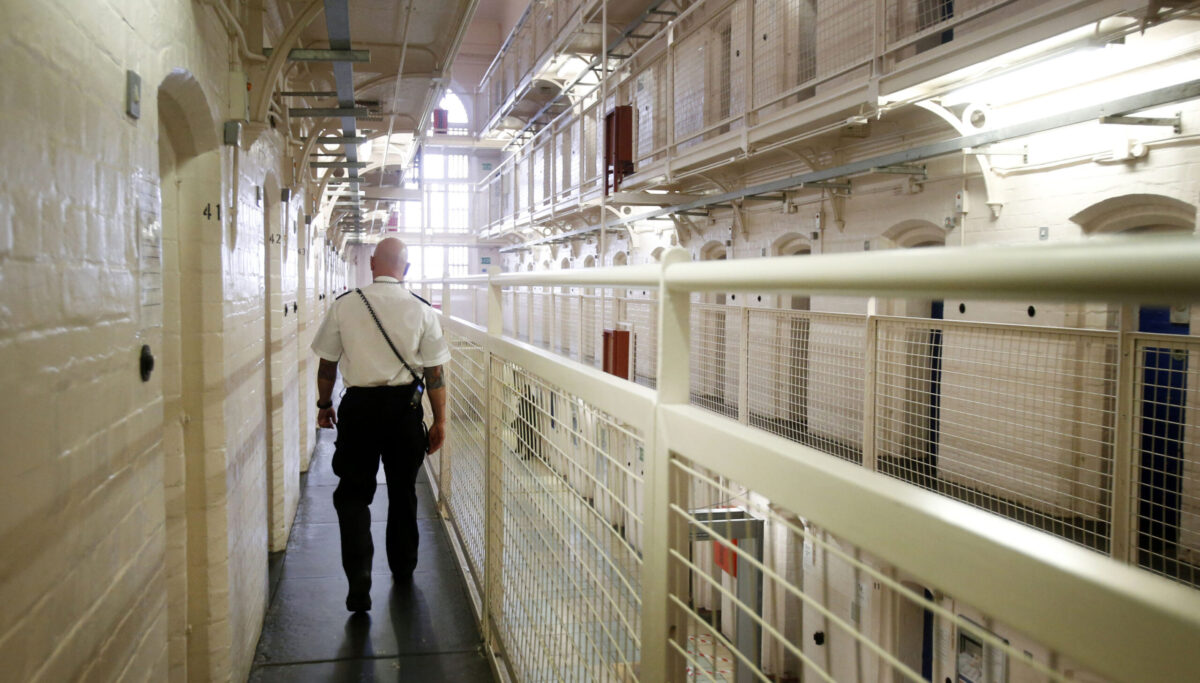
More than 800 people imprisoned in England and Wales are currently serving a long-abolished indefinite jail sentence, according to the Ministry of Justice (MoJ).
Some offenders serving indefinite Imprisonment for Public Protection (IPP) sentences are among those who will be freed under plans to ease jail overcrowding, the Prime Minister has promised.
Along with its counterpart for under-18s, detention for public protection (DPP), the IPP scheme was designed to keep people locked up who were considered dangerous and thought to pose a serious risk to others if released.
Both ran from 2005 until 2012 when they were abolished, and many of those given IPP sentences have ended up spending far longer in prison than they otherwise would have if they had been sentenced outside of that period.
Statistics from the MoJ and HM Prison and Probation Service show that as of June 30 this year, 856 people remained behind bars after being given IPP sentences.
Of these, 850 were male and six were female, according to the Ministry of Justice data.
Some 851 of these prisoners had had their minimum tariff expired, for three prisoners their tariff had not expired, and two had not had their tariff recorded.
Eight in 10 of those have been jailed for at least 10 years beyond the minimum term at which they can apply for parole.
A further 1,415 prisoners had been recalled after being handed IPP sentences, the data showed.
Earlier this month, IPP prisoners Niki Haycock and Ashley Pymont had their sentences reduced at the Court of Appeal.
Haycock, who was convicted of controlling prostitution for gain and assault in March 2006, had his sentence reduced from an IPP to a standard term of five years.
Pymont was 18 when he was convicted for armed robbery in August 2006, after he threatened someone with a knife at a bus stop over a demand for 30p.
He was still in prison this month, some 20 years after his conviction, when his sentence was reduced to three years.
Other criminals handed an IPP sentence include Tracey Connelly, the mother of Baby P, who was jailed in 2009 for causing or allowing the death of her 17-month-old son Peter at their home in north London in August 2007.
Her then-boyfriend, Steven Barker, and his brother, Jason Owen, were convicted of the same crime.
Known publicly as Baby P, Peter suffered more than 50 injuries despite being on the at-risk register and receiving 60 visits from social workers, police officers and health professionals over eight months.
Connelly admitted the offence of causing or allowing the death of her son and was handed an IPP sentence with a minimum term of five years.
She was released on licence in 2013, but was recalled to prison two years later after failing to disclose an online relationship.
In 2024, she was recalled again to jail after being released in 2022.
In a separate case, the family of James Ward, who was given an IPP sentence after setting fire to his bed while serving a year’s jail term for another offence, said he had been granted parole in 2017 after spending 11 years in prison.
Nicholas Bidar became the first IPP prisoner to be the subject of a public parole hearing in 2024.
Bidar was jailed in 2009 at 21 years old for a string of robberies and using a gun to resist arrest and was still behind bars at the time of the hearing despite the eight-year minimum tariff set as part of his indefinite sentence expiring in 2017.
Bidar told the parole hearing that he was living in “hell” and every day was “torture”, as he begged to be freed.
He lost the bid to be released after the Parole Board said it was “not satisfied that release at this point would be safe for the protection of the public”.
In June this year, the Criminal Cases Review Commission (CCRC) said it had referred the case of Christopher Brown – a man handed an IPP sentence for setting fire to two wheelie bins – to the Court of Appeal.
The CCRC said Brown, who was 18 at the time of the offence, was convicted in November 2005 of arson and had received an IPP sentence with a minimum term of 18 months.
As of June 2026, Brown was still in prison, the CCRC said.
The commission also referred the case of Jamie Jackson to the Court of Appeal – who was still in prison as of June this year after being convicted of wounding with intent in July 2006.
The CCRC said Jackson, who was 19 at the time of the offence, had received an IPP sentence with a minimum tariff of two years.
Chief executive of the Howard League for Penal Reform, Andrea Coomber KC, said on Sunday: “Today’s announcement ought to be the beginning of the end of a terrible injustice that has ruined thousands of lives and brought great shame on our criminal justice system.
“Ministers have made the right decision, and they must now begin the challenging task of putting everything in place to prepare people for release after years of unjust incarceration.
“This moment is long overdue.”
Chief executive of IPP reform campaign group Ungripp, Marc Conway, said: “‘This is a day that thousands of families have spent years fighting for.
“For too long, their loved ones have been trapped by a sentence that was acknowledged as flawed over a decade ago.”
He added: “Legislation alone cannot undo twenty years of damage, but it is the essential first step toward healing.”
Support our Nation today
For the price of a cup of coffee a month you can help us create an independent, not-for-profit, national news service for the people of Wales, by the people of Wales.
Get more trusted Welsh news
Choose Nation.Cymru as a preferred source in Google News to see more of our journalism.



And they call others to task but the plank will forever be in England’s eye…
There are two points about this – first the unsurprising fact that like the cruel rules about compensation for wrongful conviction this appalling idea was a Labour Party project. Second the idea was that the individuals would be offered courses to reduce the risk and make them eligible for release. Apparently the courses were non existent or in short supply so that when they are available they are offered to persons on fixed sentences to ensure they complete them before release. So the indefinite sentence victims are in a catch 22 situation of having to do a course before release… Read more »