

More time to be requested for assisted dying debate in Lords
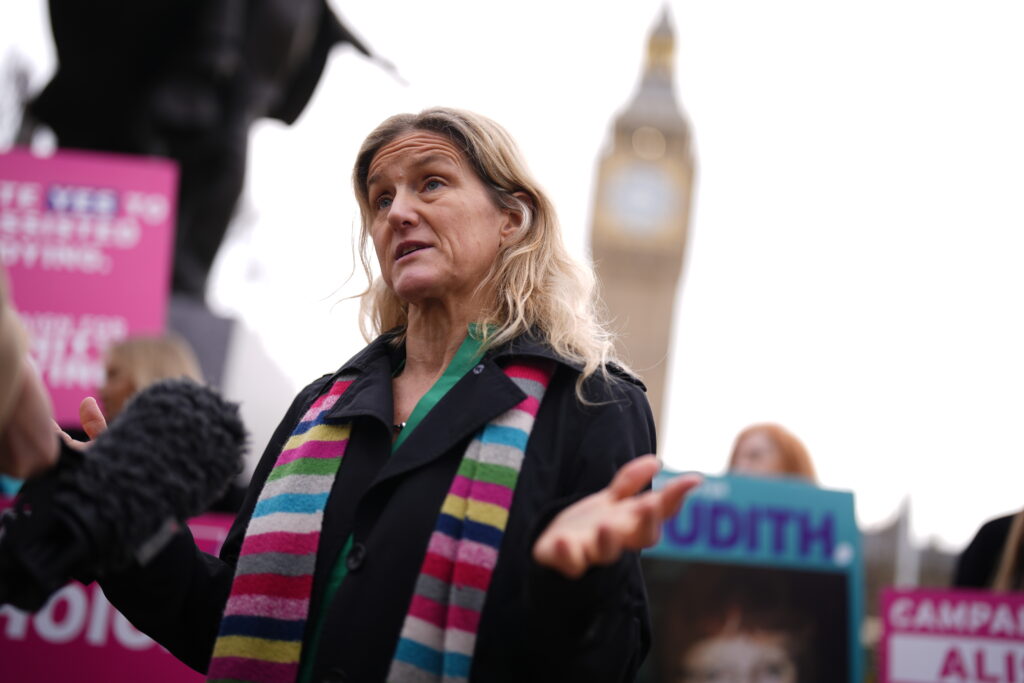
More time is to be requested in the assisted dying debate in the House of Lords, ahead of peers preparing to meet to discuss the controversial draft legislation for the first session of the new year.
Members of the Lords will meet on Friday to continue committee debate on the Terminally Ill Adults (End of Life) Bill.
But on Thursday, a motion tabled by Lord Charlie Falconer – who is steering the Bill through the Lords – will request “further time” for debate to ensure the proposed law can get through the upper chamber and return to the Commons in good time.
The Bill will become law only if both the House of Commons and House of Lords agree on the final drafting of the legislation – with approval needed before spring when the current session of Parliament ends.
Lord Falconer’s motion states: “In order to allow the House to complete its scrutiny of the Terminally Ill Adults (End of Life) Bill and return it to the Commons in reasonable time before the end of the current parliamentary session, further time should be provided for consideration of the Bill.”
It is understood this could mean sittings starting earlier or finishing later.
Friday debates on the Bill so far have generally begun after 10am and finished by around 3pm.
Baroness Butler-Sloss, who has made clear her dislike of the Bill, is among those supporting the motion, saying in a letter to peers that the Lords have made “uncharacteristically slow progress” and there is a risk of “significant harm to the reputation” of the upper chamber if the legislation runs out of time.
But the request for longer sittings could come up against opposition, with some peers last year already having raised concerns over potential breaches of the Equality Act regarding disabled and religious members.
Conservative peer Lord Shinkwin, who has rare brittle bone disease osteogenesis imperfecta, had expressed concern about longer sittings impacting his travel arrangements on Fridays, while others set out their reservations over the potential impact on Jewish members wishing to observe the Sabbath and Muslims attending Friday prayers.
Those supportive of a change in the law have accused some in the Lords of time-wasting, having tabled more than 1,000 amendments to the Bill – believed to be a record high number for a piece of backbench legislation.
But opponents of the Bill have repeatedly stated that they are simply doing their job of scrutinising a piece of legislation which they argue is not safe in its current form and needs to be strengthened.
Assisted dying campaigner Dame Esther Rantzen, who has repeatedly urged members of the Lords not to block the landmark legislation, warned last month that “scrutiny must not tip into sabotage”.
Baroness Butler-Sloss is one of four signatories to a letter to peers this week urging them to support Lords Falconer’s motion.
Conservative peer Lord Young, Labour peer Baroness Jay and Liberal Democrat peer Lord Dholakia also put their names to the email stating it is “clear that we will be unable to fulfil our responsibilities to this Bill without some means of moving the process forward more effectively”.
They said the “uncharacteristically slow progress” meant peers had got through only 10 of 87 groups of amendments to the Bill during 17 hours of committee debate so far.
The motion put forward to be voted on on Thursday is “both necessary and uncontentious”, they argued.
They added: “We are a self-regulating chamber and by approving this motion we can demonstrate that we take our responsibilities seriously and to proceed with our affairs so as to meet the expectations of the public and of the elected chamber. Namely, that robust and effective scrutiny can be applied within a realistic and workable timeframe.
“To prove unable to provide proper scrutiny within a reasonable time-frame risks doing significant harm to the reputation of the Lords.
During last year’s final day of debate on the Bill in December, Baroness Butler-Sloss warned there is “the perception that we are being unreasonable”, and urged colleagues to “exercise restraint, by dealing with the amendments relatively briefly”.
She said: “I don’t like the Bill, but I am here like other noble lords to try and make it work.
“It needs scrutiny, it needs improvement, but we must get it to third reading.”
The former archbishop of Canterbury Lord George Carey, who supports the Bill, has also previously warned that bishops and peers in the Lords should not claim to know better than the public by standing in the way of legalising assisted dying.
Lord Carey, who was the Church of England’s top bishop for 11 years, is at odds with his religious colleagues on the issue – including staunch opponent and incoming Archbishop of Canterbury Dame Sarah Mullally.
He warned both the Lords and Church bishops risk their legitimacy as major institutions in public life if they block the legislation.
The Bill was narrowly approved at third reading by MPs in the House of Commons in June last year, and received an unopposed second reading in the Lords in September ahead of the current line-by-line scrutiny which it is now undergoing.
There are 10 sessions currently listed for the Bill in the Lords between Friday and April 24.
Support our Nation today
For the price of a cup of coffee a month you can help us create an independent, not-for-profit, national news service for the people of Wales, by the people of Wales.


