


Most adults not aware of scale of primary school reading gap – survey
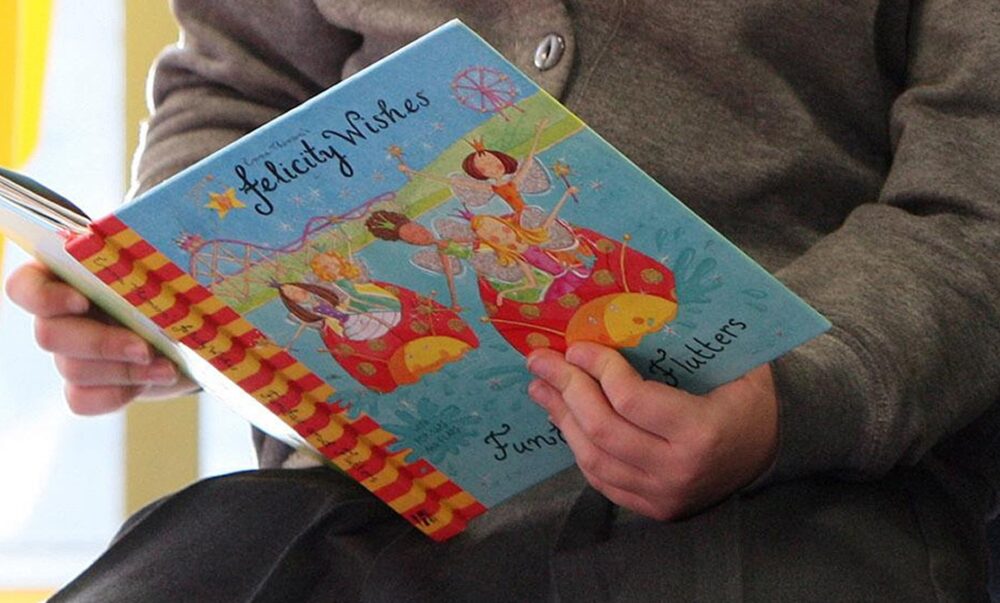
Many adults are not aware of the scale of the UK’s primary school reading gap, a survey has found.
Nearly three in five (59%) UK adults are unaware that a quarter of children leave primary school not able to read well, the survey commissioned by Bookmark Reading Charity found.
Only a third of adults (33%) said they were aware one in eight children aged five to eight does not own a book at home.
The survey found two in three (67%) of adults unaware of those two facts said they were surprised to learn them.
The findings come amid the Government’s drive to focus on improving reading skills in pupils through a “national year of reading” in 2026.
Children from poorer backgrounds are more likely to leave primary school unable to read well, and are also more likely to not own a book at home.
In 2025, 75% of all children met the expected standard for reading in their year 6 SATs, compared with 63% of disadvantaged children. Four in five (81%) children from more affluent backgrounds met the expected standard in reading.
Only around 10% of disadvantaged children who fall behind in their reading at primary school go on to pass English and maths at GCSE, it has previously been found.
The survey of 2,000 adults, conducted by OnePoll, found almost all respondents believed reading for pleasure is essential (96%), and 94% said there should be more national attention on the literacy gap.
However, fewer than half (45%) said they would be willing to volunteer to support children with their reading.
Emily Jack, chief executive of Bookmark Reading Charity, told the Press Association people in the UK think literacy is an issue, but that many do not understand the scale of it.
“It’s not just about doing well in your exams,” she said. “It’s also about applying for jobs, self-esteem, confidence, boosting mental health, and even just going in and ordering a coffee from a menu.”
The charity is calling for more people to give their time and to volunteer to support primary school children who are falling behind with their reading.
The campaign is supported by several celebrities, including The One Show’s Alex Jones.
“If we all gave up just one hour per week to help a child struggling with their reading, I think the future of our next generation would look quite different,” Jones said.
“When children struggle with reading, it can stop being enjoyable, and that’s when they disengage,” Ms Jack added.
“So when you give children a bit more focused time with an adult to make them believe they can do it and boost their self-esteem, then reading becomes something positive again, and reading for pleasure is a huge driver in children’s reading attainment.”
Teaching assistants
Schools who are not able to afford teaching assistants often struggle with having the staff for one-to-one reading with children, she said.
The National Literacy Trust found earlier this year only one in three (33%) of young people aged eight to 18 say they read in their spare time.
MPs on the Education Select Committee have launched an inquiry into the “generational shift” in reading for pleasure, which will look at the relationship between reading, screen time and mental health.
“We compete with technology every day” in encouraging children to read more, Ms Jack added.
In addition, education secretary Bridget Phillipson warned in an article for the Telegraph last week that declining reading comprehension could “have an impact on our security as a country” by leaving children more vulnerable to disinformation online.
The Government has announced plans to introduce a new statutory reading test for year 8 children that aims to ensure any problems are identified so support can be put in place.
Sarah Hannafin, head of policy for school leaders’ union NAHT, said: “Reading is a skill crucial to many areas of the curriculum, but fewer children and young people now read for fun or enjoyment, at least in part because the opportunities for reading for enjoyment have been squeezed out of the curriculum.”
Instead of a new statutory Year 8 reading test, it would be better to spend on resources to improve the teaching of reading, she added.
Support our Nation today
For the price of a cup of coffee a month you can help us create an independent, not-for-profit, national news service for the people of Wales, by the people of Wales.



This has been going on for many years. I trained as a literacy tutor 25 years ago. , but soon realised I couldn’t earn a living at it as there was so little paid work around as it was not adequately funded. Nothing new sadly with same problem for adults too.
… and don’t ask about PISA data In re secondary schools! 🙁
Try getting hold of PISA data for the English regions to see how Wales compares with the tens of millions who don’t benefit from London wealth.