


MPs and peers urge new Archbishop of Canterbury to scrap £100m reparations plan
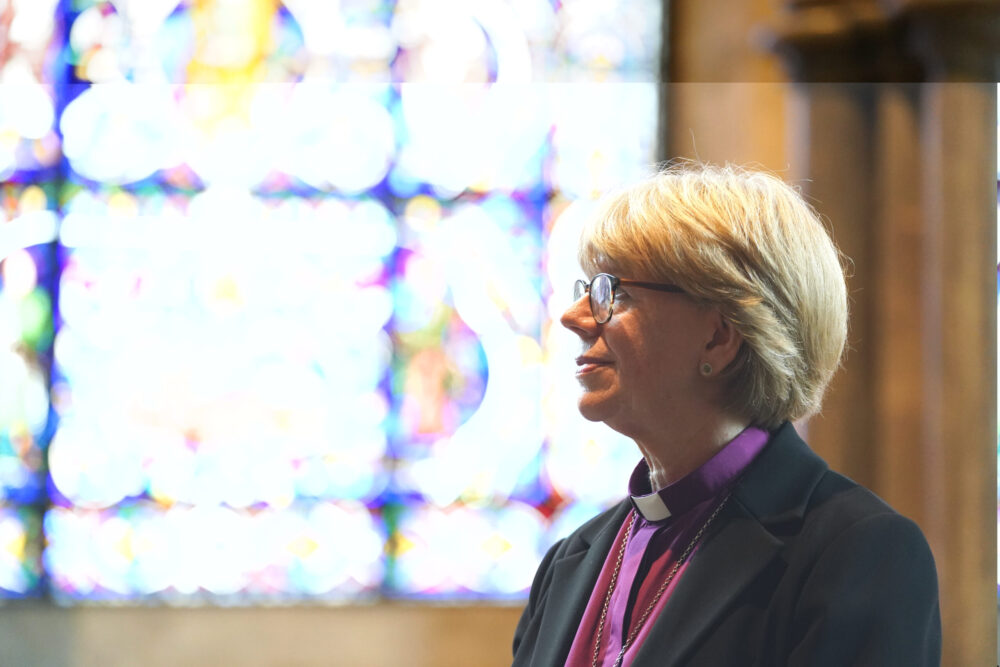
A group of MPs and peers have urged the incoming Archbishop of Canterbury to stop the Church of England from spending £100 million on slavery reparations.
The 27 parliamentarians warn in a letter to Dame Sarah Mullally that the move could set a “worrying precedent” for other organisations to feel they must follow suit.
The plan is for £100 million from the Church Commissioners endowment to go into a separate charitable fund for “healing, repair and justice” that will grow over time and be used to invest in support for historically marginalised groups, in particular communities affected by historic African chattel enslavement.
The parliamentarians say the endowment by law is supposed to be used to support parish ministry, maintain church buildings, and care for the Church’s historic records.
“At a moment when churches across the country are struggling to keep their doors open — many even falling into disrepair — it’s wrong to try and justify diverting £100 million to a project entirely separate from those core obligations,” the letter reads.
The group, led by shadow Home Office minister Katie Lam and with signatories including senior Conservatives Chris Philp, Claire Coutinho and Neil O’Brien, also questions the “evidential basis” of the plan known as Project Spire.
The project was launched after the Church carried out research into the historical links to slavery of its endowment.
“The Church has a long and complex historical record, one that includes both moral failures and courageous leadership in the abolitionist movement.
“To reduce this history to a simplistic narrative of guilt does a disservice both to truth and to the Church’s own legacy,” the letter adds.
The group makes its appeal to Dame Sarah as she is due to be legally made Archbishop of Canterbury in January.
They write: “A clear signal from you now that the focus of the Church under your leadership will be the strengthening of parishes, not the pursuit of high-profile and legally dubious vanity projects, would reassure the many worshippers, clergy, and members of the public who have contacted us with their concerns.”
A spokesperson for the Church Commissioners said: “The Church Commissioners, as a 320-year-old Christian in-perpetuity endowment fund, has committed £100 million to set up a new investment fund to support healing, justice and repair, in response to the discovery of its historic links with Transatlantic African chattel enslavement.
“This is consistent with the Church of England’s Fourth Mark of Mission: to ‘seek to transform unjust structures of society, to challenge violence of every kind and pursue peace and reconciliation’.
“Governance arrangements are being developed transparently – in line with charity law, our fiduciary duties, and our moral purpose – to ensure proper oversight and accountability.”
Support our Nation today
For the price of a cup of coffee a month you can help us create an independent, not-for-profit, national news service for the people of Wales, by the people of Wales.



Why? The UK profited hugely from slavery and the owners got compensation, never the victims. We only just finished pay the bill from our taxes for these evil people. Are these lords people only have what they have because of slavery?
That’s an interesting point. When slavery was abolished, the British government indeed compensated slave owners which is morally wrong by modern standards, but legally decisive at the time. One could argue that this settled the issue in law, even if it fails ethically by modern standards. It would be misguided on this particular basis as it would open a can of worms legally.
Strictly speaking slavery was only abolished on mainland UK in 1807 (it took a few attempts over some years). Slave routes remained and companies still profited til 1834, many slaves became indentured to the previous owners. One day a slave, next day on an island with no work or means to leave, or work for a pittance. UK made vast amounts of money on it, the trade routes and paths and interactions especially with the East India Company were vast. Funny how the perceived legal basis still favours the owners. Ex owners I should say, but decedents and beneficiaries. People… Read more »
Its quite apparent that those on the right who comment on this website, would support the scraping of repatriations for slavery. I wonder why?
Slavery is alive and well in the UK, we just call it by other names… Apprenticeships, Call Center workers, Double Glazing window sellers, Car Washing.
CoE owes Rome a fair bit too for Henry’s theft and destruction of all their assets.
I would like to take this moment to call for a separation of Church and state and for either of them to stop interfering in each others affairs. If other organizations feel the need to follow suit, you have to ask the question: why? Churches, Catholic, Protestant, Anglican etc are all well known for charitable endeavours. Whether that’s fighting against racism, helping refugees, the homeless, drug addicts, the impoverished, the disabled or just the disadvantaged, the Church does actually help. There is zero difference between the money being spent on so called ‘reparations’ and it’s normal charitable spending except that… Read more »