


MPs to debate assisted dying again in September as Bill returns to Parliament
Aine Fox and Rhiannon James, Press Association
A Bill to legalise assisted dying will formally return to Parliament for debate on September 11.
Labour MP Lauren Edwards has reintroduced the Terminally Ill Adults (End of Life) Bill in the House of Commons – almost two months after it ran out of time in Parliament’s last session.
A comment of “not again” could be heard coming from the Conservative benches in the Commons chamber.
The Private Member’s Bill, first brought by her party colleague Kim Leadbeater in 2024, fell in the House of Lords in April, having run out of time to become law before Parliament was prorogued that month.
Peers faced accusations of filibustering – or delaying – the Bill after more than 1,200 amendments were put forward, with more than 800 of those tabled or sponsored by seven peers.
Opponents at the time branded the Bill “hopelessly flawed” while supporters accused them of a “denial of democracy”.
The Bill proposed allowing adults in England and Wales, with fewer than six months to live, to apply for an assisted death subject to the approval of two doctors and an expert panel.
Prime Minister Sir Keir Starmer has acknowledged the “different and strongly held views” on the issue of assisted dying and repeated his Government’s neutrality on the topic.
MPs will once again vote according to their consciences rather than along party lines.
Rochester and Strood MP Ms Edwards described the Bill as “very good, world-leading, robust legislation” and said she was disappointed and frustrated at how it petered out earlier this year.
On Wednesday, she read out the Bill’s title in the Commons and the date of September 11 was agreed for MPs to debate and likely vote on it.
Ahead of Wednesday’s proceedings she confirmed it had been her intention to reintroduce the same Bill.
That piece of legislation passed two votes in the House of Commons, although the second one, which took place in 2025, saw the majority in favour of the Bill narrow to 23 from a previous majority of 55.
Opponents including Labour MP Ashley Dalton have voiced concern, claiming the Bill would “hand sweeping unchecked powers over life and death and our NHS to future governments, whatever their political persuasion” and argued it “isn’t safe or a priority for the people who put us in power”.
Archbishop John Sherrington, lead bishop for life issues for the Catholic Bishops’ Conference of England and Wales, said earlier this week that he was “deeply disappointed” by the return of the “flawed Bill”.
He said: “Reintroducing this legislation, once again, places the most vulnerable at risk. I ask MPs to reject this Bill.”
Ms Edwards indicated she does not have concerns MPs in the Commons might change their minds and vote against it this time around.
She told the Press Association: “I think the question for my colleagues in the House of Commons is really about restoring a bit of faith in our democratic processes and saying please support this Bill so that we can respect the will of the chamber and we can have it go through the usual processes in the House of Lords, just like any other form of legislation.
“We (MPs) will have the opportunity to have a final vote on that in the usual way once it returns from the Lords.”
Campaign group Disabled People Against Cuts said people were “extremely anxious – indeed distressed – at the prospect of another attempt to legalise assisted suicide via Private Member’s Bill and in particular via the same seriously flawed attempt at legislation as before”.
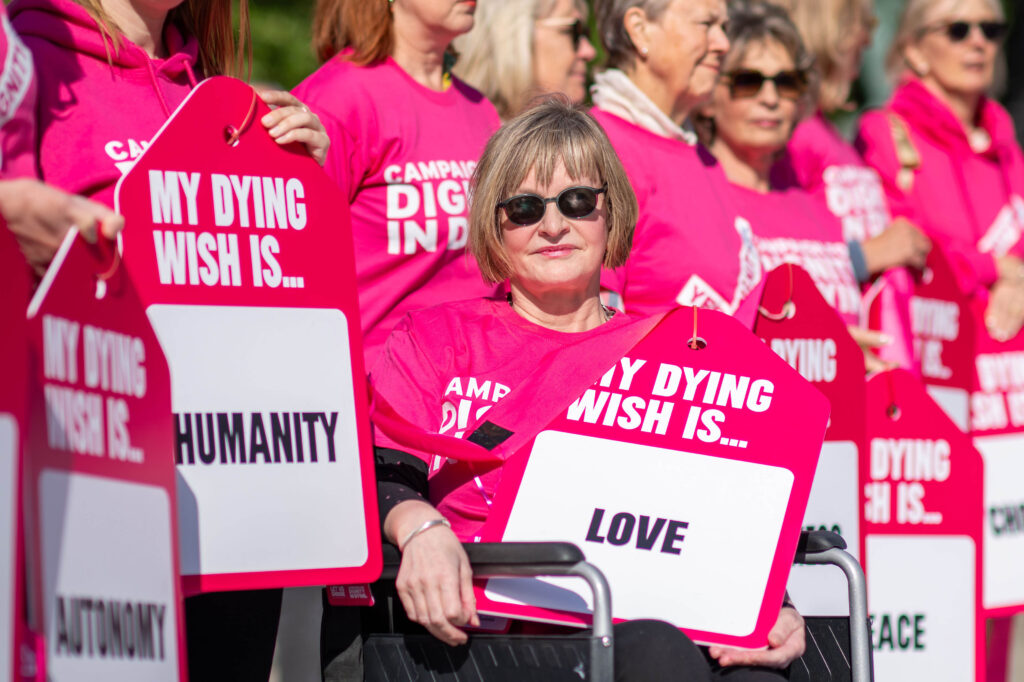
But Dignity in Dying said the Bill’s return “gives fresh hope to dying people across the country” and praised Ms Edwards for “picking up the baton and ensuring Parliament does not turn away from a question it has already begun to answer”.
Davina Hehir, the campaign group’s deputy chief executive, said: “This reform is wanted and needed by terminally ill people, it is backed by the public, and pursuing it is a matter of democratic integrity.
“Parliament has opened this door, it now has a responsibility to see the debate through.”
Pro-change campaigners have previously spoken of using the Parliament Act to get the Bill through.
That Act, a rarely used piece of legislation, allows for Bills that have been backed by the Commons in two successive sessions but rejected by peers to pass into law without Lords approval.
Ms Edwards said it was not her intention that the Parliament Act should apply to the Bill, saying there would be “no need for that if peers complete their unfinished business in the normal way but we cannot allow an unelected minority to frustrate the democratic process for a second time”.
Other Private Members’ Bills presented on Wednesday included the First Cousins (Prohibited Relationships) Bill from Conservative MP Luke Evans, which proposes to ban the marriage of first cousins.
Reform UK’s Robert Jenrick presented a Group-based Child Sexual Offences (Mandatory Life Sentences) Bill to require that whole life orders are handed to offenders.
Support our Nation today
For the price of a cup of coffee a month you can help us create an independent, not-for-profit, national news service for the people of Wales, by the people of Wales.
Get more trusted Welsh news
Choose Nation.Cymru as a preferred source in Google News to see more of our journalism.


