

Museums festival offers opportunity to see rare specimen collections at Welsh university
Members of the public will have the rare opportunity to view a north Wales university’s collections of specimens as part of the Welsh Museums Festival this weekend.
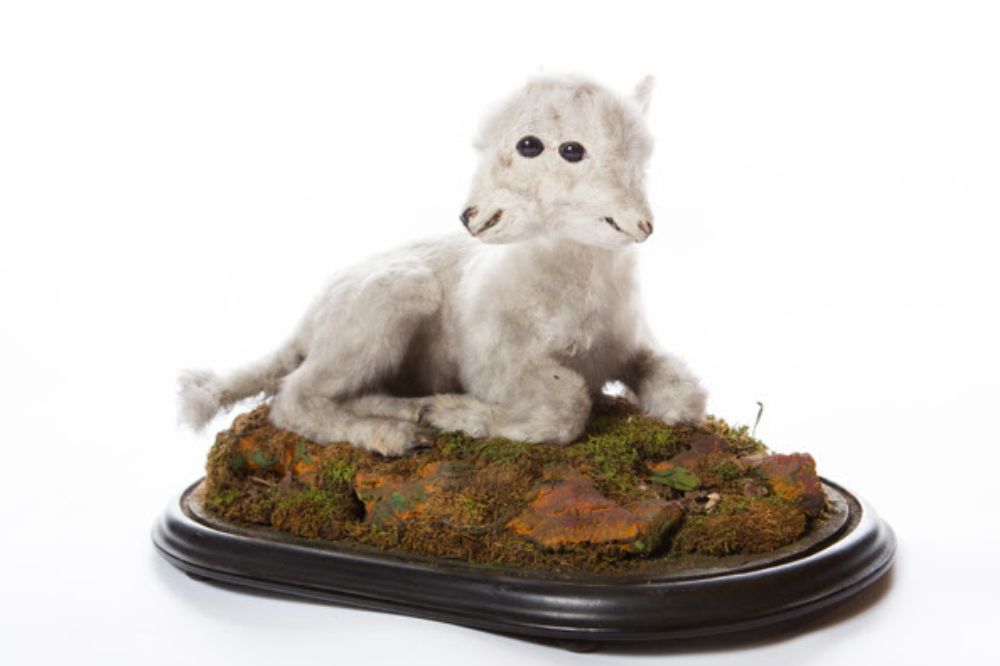
The specimens, which form part of Bangor University’s accredited museum collections, include a two headed lamb, 7500 year-old Irish elk antlers, and a Galapagos tortoise – the species that inspired Charles Darwin to develop the theory of evolution.
As part of this year’s festival, Bangor University’s Brambell Natural History Museum, will be open on Saturday, 25 October, from 11am to 3pm, so that members of the public learn more about the specimens on display.
Questions
The collections on display are not usually accessible to the public, and are used to teach students at the University.
There will be an opportunity for visitors to ask questions of the available students, and there will also be an activities corner for children of all ages.
The Museums Festival celebrates Wales’ rich history and traditions, as well as offering free, family friendly events the length and breadth of the nation during October half-term.
Donated
The collections are held at Bangor University’s Brambell Natural History Museum and were donated by members of the public and by academics throughout the years.
Highlights include a wild cat donated to the Museum in 1926 by David Davies, grandson of David Davies Llandinam and Irish elk antlers, approximately 7500 years old found in a bog in Ireland and donated by Trinity College, Dublin.
There is also a Narwhal tusk, a two headed lamb still born in 1955 on a farm, Tyddyn Du at Gerlan, Bethesda and a Galapagos tortoise which inspired Charles Darwin to develop his theory of evolution.
A case of New Zealand birds donated in 1922 by HR Davies who had brought the collection home in 1885 will also be available to view.
The background was drawn from a photograph of the Pink Terrace, somewhere in New Zealand that was subsequently obliterated by a volcanic eruption in 1886.
Gwenan Hine, University Secretary at Bangor University said: “We are proud that the Brambell Natural History Museum is taking part in this year’s Welsh Museums Festival, particularly as the University is now an accredited museum in its own right.
“This is a golden opportunity for members of the public to see our historic collections of rare specimens.”
Rachael Rogers, of the Federation of Museums and Art Galleries of Wales, who organizes the Festival said: ‘This week shows off the amazing work undertaken by museums across Wales throughout the year.
“It’s an opportunity to learn more about the history of Wales but also to take part in fun events over half term. We’re thrilled to see so many museums taking part again in 2025 and we look forward to seeing what everyone gets up to over half-term.”
Accredited
Bangor University’s Museum Collections including the Brambell Museum have recently been given accreditation for the first time.
Accreditation is the national standard for museums, and the university is working towards improving access to its museum collections in partnership with Storiel art gallery and museum.
The Welsh Museums Festival is funded by the Welsh Government and organised by the Museums Federation Wales.
Brambell building is located opposite ASDA and directions are available on the on website.
To find out more about the events and for a full lineup of festival activities, visit the festival website here.
Support our Nation today
For the price of a cup of coffee a month you can help us create an independent, not-for-profit, national news service for the people of Wales, by the people of Wales.


