

‘My father was the victim of a Cold War red scare’
Martin Shipton
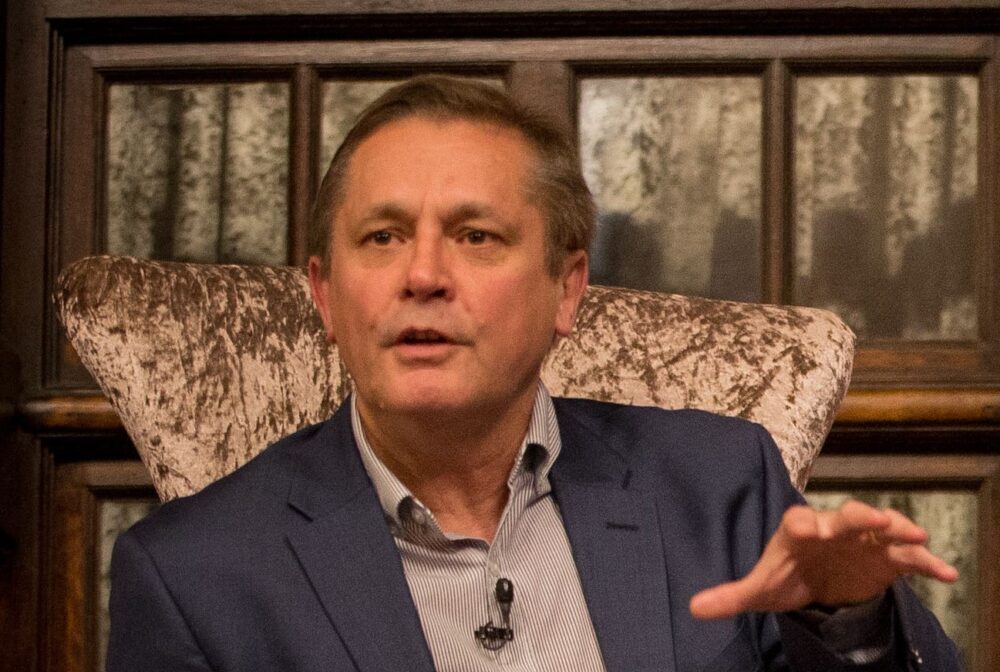
A former BBC Wales journalist who became a senior adviser to Jeremy Corbyn has written a book revealing how his American father became a victim of a Cold War “red scare”.
Steve Howell takes readers on a journey that, while centred on a United States Caribbean colony, also reveals how the FBI’s tentacles reached across the Atlantic.
Cold War Puerto Rico uses the story of Brandon Howell, who worked for Puerto Rico’s planning board in the 1940s, as a narrative thread to introduce readers to hitherto neglected aspects of the Cold War, including how a highly-respected Liverpool professor became collateral damage.
Howell’s father was added to J Edgar Hoover’s notorious Security Index after being suspected of producing pro-independence cartoons for union and communist journals in Puerto Rico under the pen names Pepe and Diego Munoz. Aware of his vulnerability as the red scare escalated, Brandon Howell left the US in 1949 to take a lecturing job at Liverpool University. However, the FBI still had him in their sights and regarded the eminent academic who appointed him, Gordon Stephenson, as guilty by association.
Unbeknown to the two men, Hoover alerted the CIA and the FBI’s head of operations in London to the American’s move to Britain, and they promptly secured the co-operation of allied agencies, who tracked him down to a Wallasey flat and logged the meetings he attended and the friends he made.
Stephenson, who was not politically aligned but who had overseen the 1945 Labour government’s development of new towns, was then blacklisted by the US authorities and denied a visa in 1954 to become head of the planning department at the Massachusetts Institute of Technology (MIT), where he had previously studied and met his American-born wife.
Despite a long battle and the support of MIT’s president, Stephenson was unable to overturn his US blacklisting and eventually settled in Perth, Western Australia. Nevertheless, such was his professional prominence, buildings were named after him there and at Liverpool University.
Collusion
Using Stephenson’s private letters and heavily-redacted FBI files on his father, Steve Howell has pieced together the full story of an episode that reveals the extent of the collusion between Britain and the US in what we generally call ‘McCarthyism’.
He said: “Stephenson’s case is an example of the kind of thing that happened to many other people during this period. While the ongoing UK undercover policing inquiry’s remit is to investigate events since 1968, what happened prior to that is still shrouded in secrecy.
“Even all these years later US and British intelligence services are abusing Freedom of Information Act rules to hide what happened. The FBI file pages relating to my father’s life in Britain from 1949 onwards are much more heavily redacted than earlier ones and my attempt to obtain his CIA files met with a blunt refusal to either confirm or deny their existence, even though by then I had copies of memos from Hoover himself to senior CIA officials.
“With ‘freedom of information’ legislation being even weaker in Britain and my applications having met with denial of any knowledge of the files, I can’t be certain what sources the FBI’s redactions are protecting. However, it must have been a British agency, and it is likely the surveillance of my father, which lasted at least until 1965, was conducted by MI5 and/or Special Branch. What is clear from the FBI files – despite the redactions – is that the spying was very intrusive and tracked his career and family life closely, even as he was becoming much less politically active.
“My father probably remained on Hoover’s radar for such a long time because of the contact he maintained with old friends in Puerto Rico, who were challenging Washington’s new arrangements for governing the colony to make it appear self-governing.”
Contradiction
Cold War Puerto Rico examines the contradiction between the US wanting to retain the island as a major geo-political military outpost while also claiming global leadership in a decolonising world. This led in 1952 to the US giving Puerto Rico a degree of autonomy without changing its legal status as an ‘unincorporated’ US territory and then enforcing it with repressive tactics designed in Washington and deployed by the FBI to silence activists and political parties pushing for full independence.
Brandon Howell’s close friends, such as the author and journalist César Andreu Iglesias, were among the Puerto Ricans arrested and imprisoned multiple times during the 1950s. Drawing on a wealth of new sources, including interviews, archives, personal papers and FBI files, the author tells the stories of Andreu and others who battled indictment in 1954 under the Smith Act, challenged the jurisdiction of the House Un-American Activities Committee in San Juan in 1959, and revived the Puerto Rican independence movement in the 1960s, despite the FBI deploying covert tactics against them.
Denise M. Lynn, the author of Women March for Peace: Black Radical Women’s Anti-Korean War Activism, said: “Howell does an excellent job uncovering the FBI’s transnational networks that enabled it to harass Puerto Rican radicals, follow their compatriots abroad, and work with other intelligence and legislative agencies to circumscribe individual freedoms and rights ostensibly in the name of national security and democracy.”
Puerto Rican historian Rafael Bernabe said: “Most histories of McCarthyism ignore Puerto Rico. Most histories of the Puerto Rico independence movement focus on the Nationalist current. Steve Howell’s book makes a major contribution to filling these gaps. His investigation unearths new material and brings to memory significant events, such as the House Committee on Un-American Activities hearings in Puerto Rico in 1959, a spectacular confrontation that until now has not received the attention it merits in the literature on McCarthyism or in Puerto Rican historiography.”
Dr Hugh Wilford, professor of US History at California State University, said: “Steve Howell’s deeply researched and expertly written account of red scare politics in Puerto Rico offers an impressively panoramic yet surprisingly intimate portrayal of mid-twentieth-century US colonialism and anti-communism at a crucial intersection point in the American empire.”
South Wales Argus
Steve Howell was born in Wallasey and grew up in Hendon in north London. A graduate of the University of Sheffield, he moved to Wales in 1993 to work at the South Wales Argus in Newport. After a spell with BBC Wales, he set up a PR and marketing consultancy in 1997 which rebranded to become Freshwater in 2004 and is now based in Cardiff and London. Howell took leave of absence from his role as Freshwater’s chief executive in 2017 to work as Labour’s deputy director of strategy and communications and an adviser to Jeremy Corbyn. His book on the 2017 General Election – Game Changer: Eight Weeks That Transformed British Politics – was a Guardian political book of the year in 2018.
He now lives near Welshpool, Powys with his wife Kim.
Cold War Puerto Rico: Anti-Communism in Washington’s Caribbean Colony will be published on May 1, 2026 by the University of Massachusetts Press. It is available to pre-order from the publisher and via all the major retailers, including Amazon, Waterstones, Blackwell’s, Foyles and Barnes & Noble.
Support our Nation today
For the price of a cup of coffee a month you can help us create an independent, not-for-profit, national news service for the people of Wales, by the people of Wales.


