


Native oysters return to north Wales after more than a century
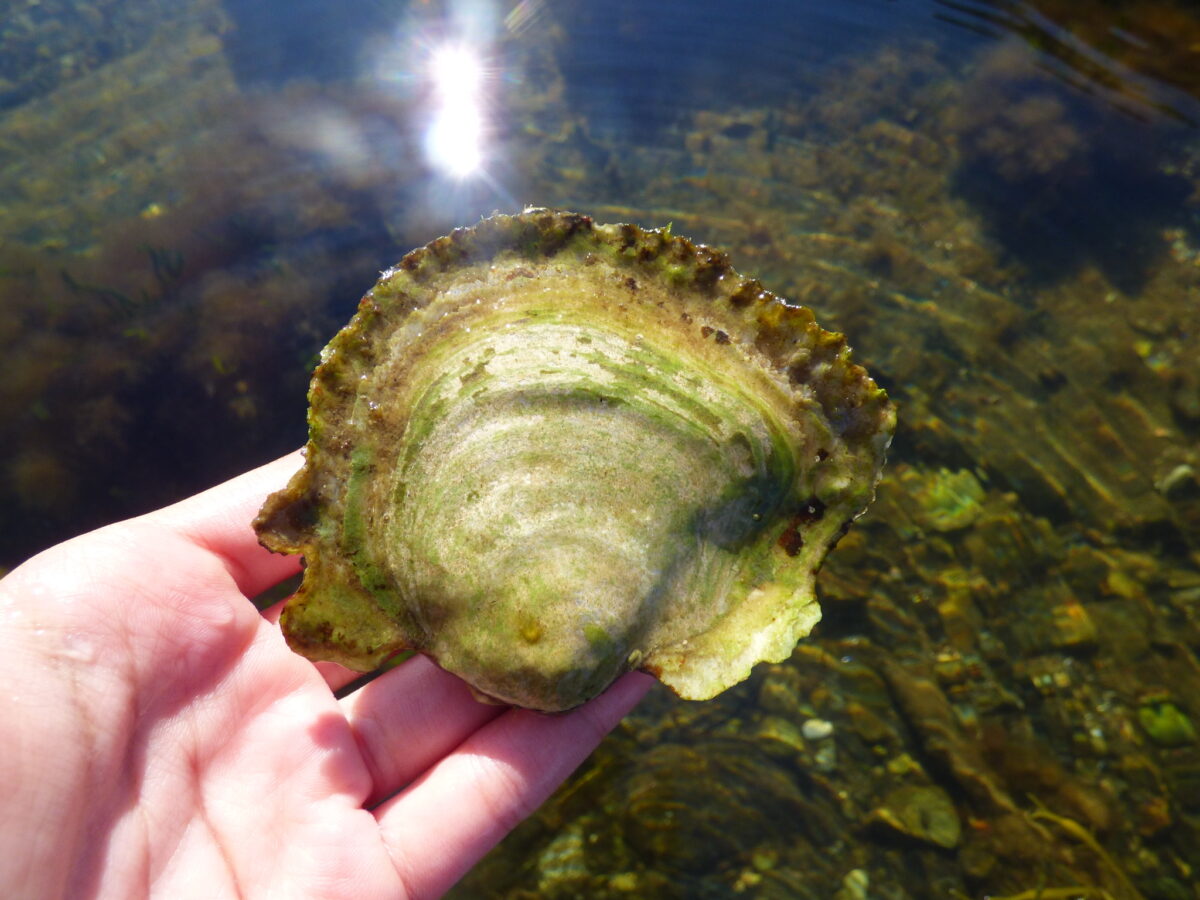
Conservation scientists at a Welsh university have completed work on an ambitious project to bring a species of oyster native to the UK back from the brink of extinction.
In the first scheme of its kind in north Wales, the dedicated team from Bangor University and ZSL (Zoological Society of London) restored European flat oyster habitats in Conwy Bay.
The threatened species has been in decline as a result of disease, habitat loss, historic over-harvesting, and pollution negatively effecting water quality.
Over one hundred years after oyster reefs disappeared from waters in north Wales, Bangor University and ZSL, through the partnership project Restoring Wild Oysters to Conwy Bay, have been working to recover this lost marine habitat.
Supported by a working group of local community members, they provided a home for thousands of European flat oysters, which were once a major part of Wales’ fishing industry supporting coastal communities.
Working with Conwy’s Local Harbour Authority, the project placed shell material, known as cultch, onto the seabed in Conwy Bay to form the base of a new underwater marine ecosystem.
A total of 2,000 mature native oysters were deployed onto the newly restored 640 sq metre area aiming to create a living, biogenic reef. There will be ongoing monitoring of the site with the results used to inform potential next steps in the project.
Since 2021, the project successfully established oyster nurseries suspended from pontoons in Conwy Marina and Deganwy Marina to support oyster recovery.
These nurseries, filled with native oysters, create a protected micro habitat that allows oysters to reproduce and release the next generation into the wider Conwy Estuary.
Volunteers, students, and the project team have been monitoring the oyster nurseries, with positive results: oyster survival rates of around 83%, the release of approximately 240 million larvae during recent spawning seasons, filtering an estimated 112 million litres of water and 79 different species recorded between 2023 and 2025.
The project also serves as a restoration trial, aiming to help improve the health and resilience of coastal waters.
Across the UK, native oyster populations have declined by more than 95% over the past century. Often described as ‘ocean superheroes’, native oysters have the ability provide major benefits to coastal waters by filtering water and creating essential habitat for a wide range of marine species.
Celine Gamble, Senior Restoration Project Manager at ZSL said: “Native oyster reefs have disappeared from our British coastline, and with that we have lost the many benefits they bring.
“We’re working to bring back the species from the brink of extinction, helping to create healthier and more resilient coastal waters.
“Despite their small size, oysters make a big impact. Each adult oyster is capable of filtering approximately 200 litres of water a day – around a bathtub’s worth – helping to improve water quality and clarity.
“The newly built habitat forms a complex three-dimensional surface on the seabed providing ideal conditions for potentially a future self-sustaining oyster reef.
Maria Hayden-Hughes, Research Officer at Bangor University said: “The culmination of a huge amount of work- expert teams from across industries coming together, guidance from our local work group and technical group members, more than 1,460 hours dedicated to monitoring oysters by volunteers, and research to inform site suitability- marks a major step towards recovering this vital lost marine habitat and gives the native oyster population a chance to recover.
“Through this restored reef, we aim not only to support the next generation of native oysters, but also to improve biodiversity and water quality in our coastal waters, which we will continue to monitor and research over time.”
Rhianna Parry, Engagement Officer at Bangor University said: “In many coastal communities, the living memory of native oysters has faded. By restoring oysters to Conwy Bay, we are helping reconnect people with their natural heritage.
“Alongside oyster habitat restoration, we have delivered an ambitious engagement programme seeking to connect the local community with the marine environment.
“Between 2023 and 2025, we engaged more than 11,280 members of the public, reached 3,060 students through education programmes, and trained 303 citizen scientists, helping build a new generation of marine stewards.”
For more information on the oyster restoration project as well as its outputs, visit Bangor University’s site here. More information about Connecting Conwy is available here.
The work has been made possible by funding raised by National Lottery players, provided by the Nature Networks Fund (round 2) and awarded as part of the Heritage Fund on behalf of the Welsh Government.
Support our Nation today
For the price of a cup of coffee a month you can help us create an independent, not-for-profit, national news service for the people of Wales, by the people of Wales.
Get more trusted Welsh news
Choose Nation.Cymru as a preferred source in Google News to see more of our journalism.



