


Nature-based project brings big changes to Carmarthenshire river
Nation Cymru staff
A Welsh river has been restored to flow more naturally thanks to a creative habitat restoration project.
Natural Resources Wales’ (NRW) Four Rivers for LIFE project has recently completed habitat restoration works on the Afon Dunant, a tributary of the River Tywi Special Area of Conservation (SAC) near Llandovery.
This summer, a 700-metre stretch of the river was restored to improve river habitat, restore ecosystem functioning, and provide natural flood management benefits.
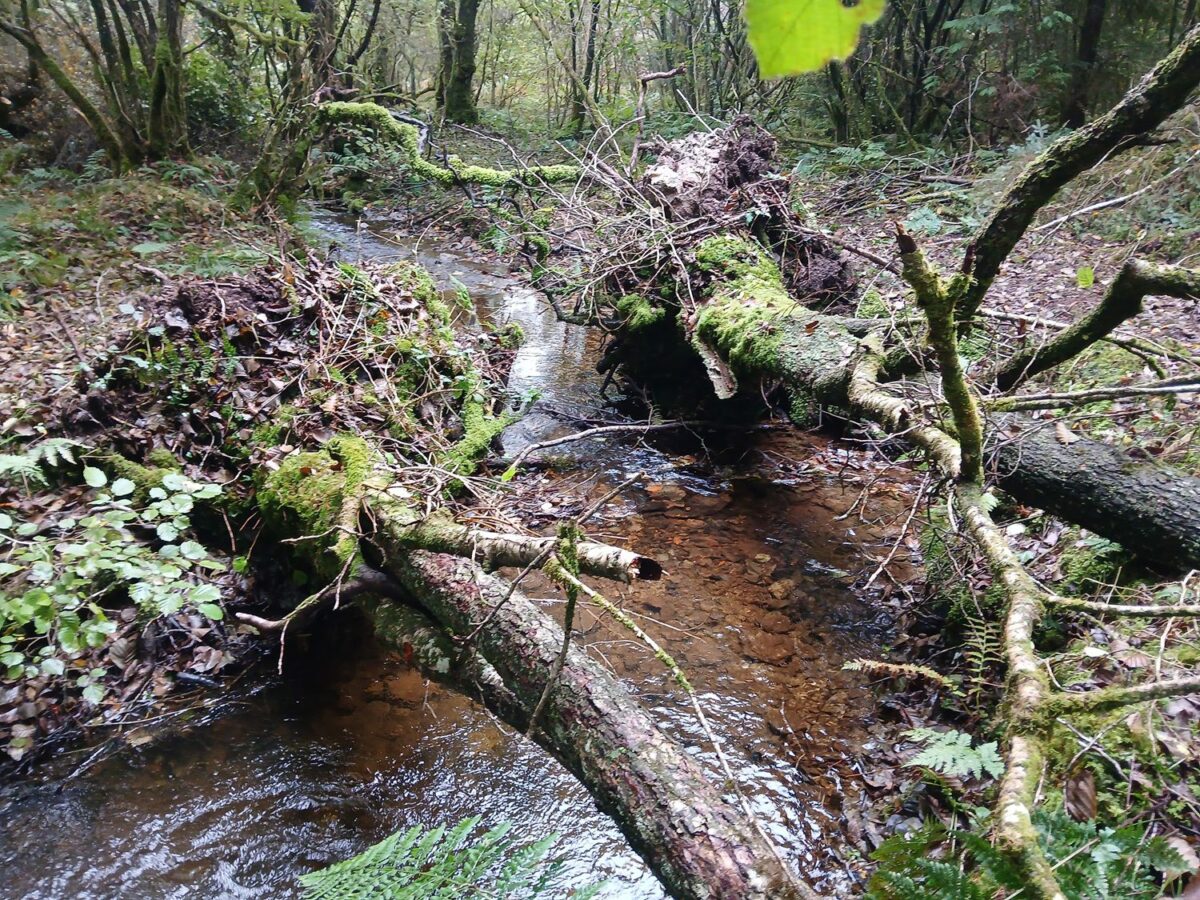
The aim was to mimic natural processes by felling bankside trees into the water, thereby improving in-channel habitat, increasing floodplain connectivity, creating wetland habitat, and increasing water retention on the floodplain.
Large wood is lacking in Welsh rivers due to insufficient bankside woodland, as well as historic and ongoing dredging. Fallen trees in river channels are often removed from rivers if they increase potential flood risk to property. However, environmental experts now recognise that wood in the right place, can be a vital ingredient for a healthy river system.
Working alongside contractors on an area of the Welsh Government Woodland Estate near Llandovery, 19 large wood structures were created along the river, mimicking natural tree fall during storms.
Peter Jones from the Four Rivers for LIFE explains:
“Trees were felled with root plates attached and keyed in against standing bankside trees to stop them from moving during flood conditions.”
“Adding trees into the river changes flows and increases habitat diversity. Wood helps catch gravel and helps water penetration, improving suitability for important species such as salmon and sea trout.”
Wood provides vital food for river invertebrates and gives fish places to hide from predators. The wood structures help raise the riverbed back to its natural height within the floodplain.
Two channels were also dug into the banks to encourage the river to flow out onto the floodplain. Several man-made ditches were blocked to slow flows and hold more water on the land.
The team also built two channel-spanning structures designed to mimic the work of wild beavers. These work to hold back the water, raising the water table and riverbed levels.
The pools created upstream of these beaver dam-like structures can enhance biodiversity locally. The dams can improve water quality downstream by trapping fine sediment. There is also a natural flood management benefit to these structures, in holding back water and gradually releasing during peak flows.
The combination of the large wood structures, beaver dams, channels and ditch blocking will improve habitat and restore natural processes. It will be wetter and richer in biodiversity and more resilient to both floods and droughts.
Peter Jones adds:
“Given the effects of climate change, land and river management in Wales needs to adapt. The Dunant River project demonstrates how making low-tech and low-cost interventions can improve flood and drought resilience while also improving habitat quality.
“We thank colleagues in forestry for their support in the delivery of the project and look forward to delivering more schemes like this on the land in our care.”
The Four Rivers for LIFE project will be monitoring the outcomes of the work over the next few years.
The Four Rivers for LIFE Project is funded by the EU LIFE Programme with support from Welsh Government.
Support our Nation today
For the price of a cup of coffee a month you can help us create an independent, not-for-profit, national news service for the people of Wales, by the people of Wales.
Get more trusted Welsh news
Choose Nation.Cymru as a preferred source in Google News to see more of our journalism.


