


New apartments in capital’s tallest building near completion
Ted Peskett Local Democracy Reporter
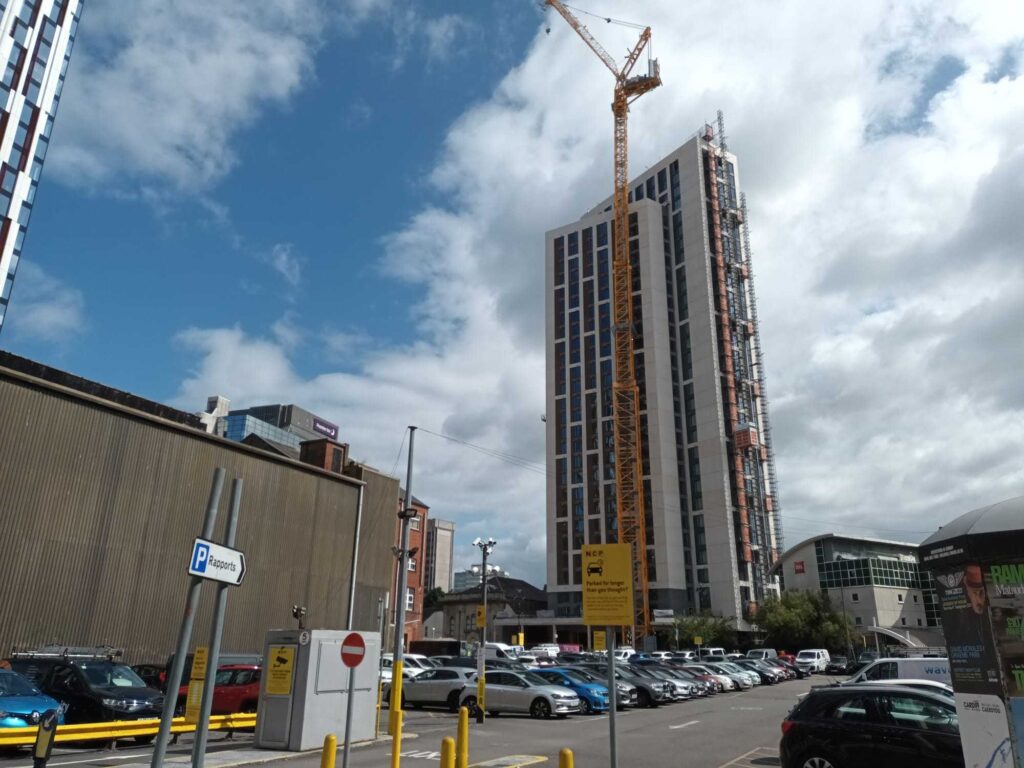
One of Cardiff’s most controversial planning sagas is about to come to an end soon – with the city’s current tallest building almost nearing completion.
The development of apartments at Guildford Crescent, a historic part of Cardiff, has been one of the city’s more controversial planning sagas.
When plans for the 30-storey tower were revealed, there was strong opposition from members of the community who feared for the future of the historic buildings on site and the popular bars and restaurants which called them home.
In 2024, the council decided not to take action against the firm behind the development, GT Guildford Crescent Limited, after the historic façades of buildings were knocked down without planning permission the year before.
It was argued at the time that the developers already had plans to rebuild the sections it demolished.
Report
When the Guildford Crescent scheme was approved in 2021, it was proposed the façade of the buildings would be retained and the original pitched roofs would be reconstructed.
An application to amend the application to allow the demolition and re-building of the Guildford Crescent façade was lodged in August 2023.
Cardiff Council said it was told on September 5, 2023, that the façade had been demolished.
The local authority also said at the time that the move was in breach of planning rules and ordered the developer to cease all demolition works.
A planning report published later in July 2024 stated: “As noted earlier in the report… in cases where unauthorised demolition has occurred, the only formal remedy to such a breach of planning control is through service of an enforcement notice requiring that the building is rebuilt.
“Any such notice would need to include detailed plans/specifications, and a time limit by which time such actions must be undertaken.
“The developer has, however, demonstrated through this current application that they have every intention of rebuilding the terrace as part of their development, together with negotiated ‘uplift’/enhancements – all of which are identified in detailed plans/specifications, and would form part of conditions on a subsequent approval.
“Any formal action would, therefore, only be seeking to require them to implement on site the details contained within this current application – which Officers have already deemed acceptable above.”
Tallest building crown passing on
The construction firm behind Guildford Crescent, Galliford Try, has been contacted for an update on when the new building, set to provide 272 private rented apartments, will open.
A topping out ceremony was held for the site in June 2025.
Before it topped out, the tallest building in Cardiff was the Gramercy Tower on Curran Road at 28 storeys high.
Plans have been revealed for another building in Cardiff city centre which would be 50 storeys in height. Once completed, it would be the tallest building in Wales.
Support our Nation today
For the price of a cup of coffee a month you can help us create an independent, not-for-profit, national news service for the people of Wales, by the people of Wales.



How they restore the crescent units, and who occupies them, is going to be the most interesting part of this development.
A repugnant edifice that will line the pockets of pension funds and developers. Appalling. Funny how lovely restaurants and the fantastic Gwdihw were destroyed but – SHOCK – the masonic lodge was left untouched. Hmmmm….
Pension funds pay pensions. Are you opposed to pensions?