


New Archbishop of Wales on the hostility she initially faced as a woman priest
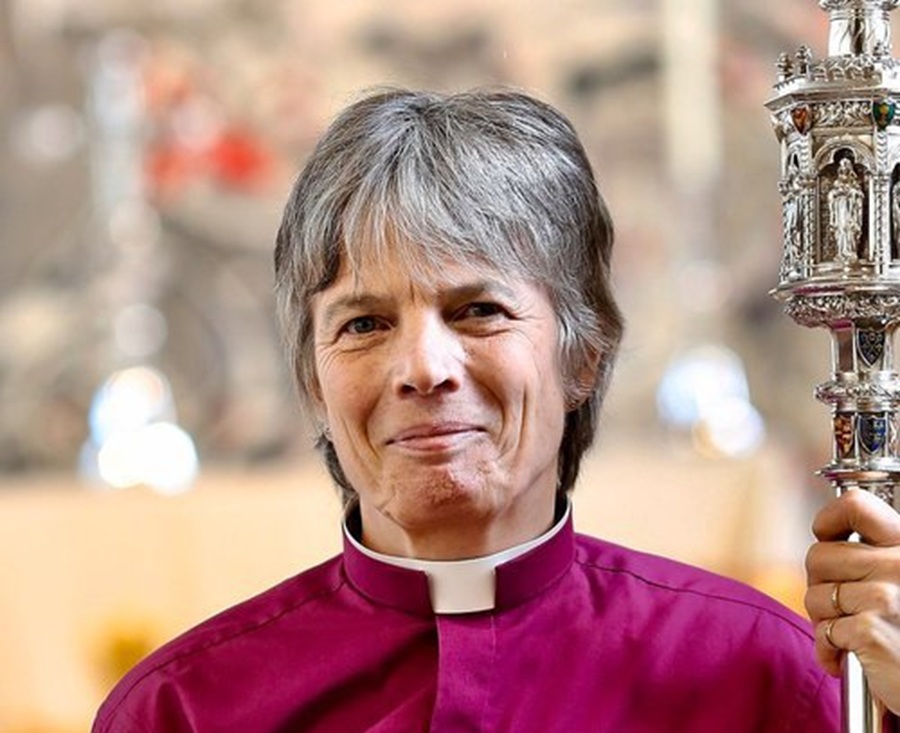
Cherry Vann, the new Archbishop of Wales, has spoken previously about the hostility she faced as a woman priest and the welcome she and her lesbian civil partner received when she was elected Bishop of Monmouth.
In a 2020 podcast she told Martin Shipton, now Nation.Cymru’s associate editor, how some of her former parishioners would not accept communion wine from her because they objected to the idea of women priests.
Ms Vann was among the first cohort of women to be ordained as a priest in 1994, having previously served as a deacon. Originally from a village near Leicester, she studied at a theological college in Cambridge.
‘Love hate relationship’
She said: “I felt a call to the north of England. And the reason for that is I had a pretty love hate relationship with the Church of England right from being a student, right through theological college.
“My sense was that God was to be found outside the church as much as inside the church. And the church was, let’s say, of a particular character. So it tends even now, I would say, to draw more middle class people into its fold. And I felt the gospel was very challenging about the church reaching out to people on the margins, those who are disaffected, those who are homeless, the poor, those who society doesn’t want or isn’t interested in. I wanted to be in a context where there was some real poverty and deprivation and hardship and live out what I believed the church was about in those kinds of contexts.
“So I wanted to go north. I wanted to go to Liverpool first because I’d done a couple of placements in Liverpool and I liked Liverpool. But at the time, women weren’t allowed to be ordained to the priesthood. And when I was due to leave college, Liverpool wasn’t taking any more deacons. Manchester was, they were taking two.
“So that’s why I went to Manchester and stayed there for 30 years in different parts of Manchester.”
Frustration
Asked whether she’d been frustrated by the time it had taken for the church to accept women priests, she said: “Yes, there was frustration. There was hurt, actually, and I know some of my colleagues were very angry. I remember being told myself that I couldn’t possibly have a call to the priesthood because the church didn’t allow it, as if that was a watertight argument. I think when you have that sense of call, it doesn’t go away and it won’t go away and we were left waiting.
“I was fortunate. I was only left waiting five years. Some of my colleagues have been left waiting ten or fifteen years for their sense of call to the priesthood to be recognized. There were quite heated debates at local and national level about whether this was the right way for the church to go. We were involved in those and came up against people who had very strong views against the ordination of women at all.
“And we had to learn to negotiate those. I was lucky. There were only a few people in the congregation who were opposed, but it was deeply hurtful because of the communion services on a Sunday morning. Even though I hadn’t presided at the Eucharist at the communion, I was just administering the chalice, the wine. There were definitely people who swapped to the other side of the rail so that they didn’t have to be administered the wine by me.
“That was deeply hurtful and there were a lot of unkind and unpleasant things said on both sides until the day where the General Synod eventually decided that this was the way the church should go. And then there was great rejoicing and it was a wonderful day.”
Gay clergy
Asked to what extent the fact she was gay had caused a problem to the church, Ms Vann said: “I have to confess that I hid it for a long long time as a lot of gay clergy do, and as a lot of people sitting in the pews do. I hid it out of fear. It was a very fearful place to be, and it felt also quite disingenuous.
“I felt as though I was being forced to hide a substantial part of who I am for fear of being thrown out of the church, for fear of ending up on the front page of a local newspaper, a fear of losing friends. So like a lot of gay people, even today, I hid it. I don’t think I was ever dishonest. I don’t think I ever denied it because I was never asked the outright question. But I worked very hard to hide it.
“And even when I set up with my present partner over twenty years ago, we worked very hard to not live a lie, but not to name it.”
Peter Tatchell
She said that even though the Church in Wales had come to a healthier position on gay priests than the Church of England, there were still priests in Wales who were afraid to admit they were gay. Asked about criticisms made of her by the veteran gay rights campaigner, Peter Tatchell, who called her a “selfish hypocrite” because she would not campaign for gay marriage in the church, she said: “I think he misunderstood what I’d said in a BBC interview. He interpreted what I said, I think, as being opposed to gay marriage. That’s not what I said.
“I’m very happy to do all I can to support lesbian and gay, transgender people in our churches and in our society. I believe that by simply being here as an out gay person with a partner, and my partner is accompanying me on some of my visits, and we’ve had nothing but welcome from everybody, I believe that is probably doing as much, if not more, than I would achieve if I were to be an open campaigner on the subject.
“I’m not a campaigner by nature in the sense I think Peter Tatchell would understand it with placards etc. That’s not part of my nature and I think it’s really important that we are true to who we are and that we are authentic. Because if we aren’t authentic to who we are, people very quickly see through that.”
Support our Nation today
For the price of a cup of coffee a month you can help us create an independent, not-for-profit, national news service for the people of Wales, by the people of Wales.


