

New findings reveal extensive environmental damage to sensitive Gwent Levels
Emily Price
New findings have revealed extensive environmental damage from a solar plant on a sensitive wetland landscape in south-east Wales.
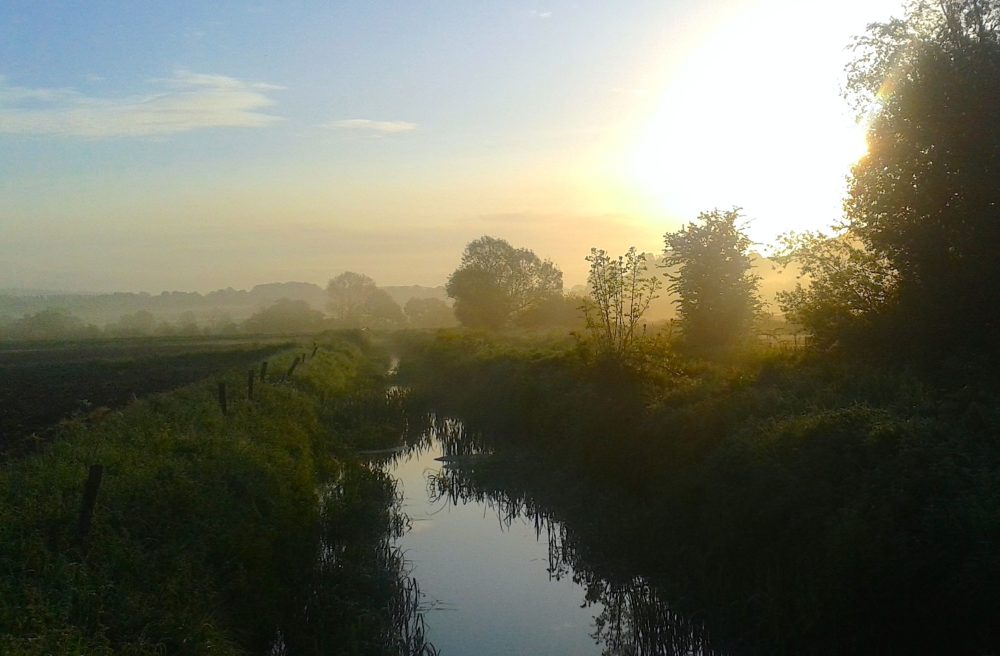
Newport’s protected Gwent Levels stretch along the banks of the Severn between Cardiff and Chepstow.
The inter-tidal zone of saltmarshes, mudflats and sands have been dubbed Wales’ Amazon due to the ecological riches found there.
But the Gwent Wildlife Trust has warned that the Site of Special Scientific Interest (SSSI) is under threat from solar farm developments.
Damage
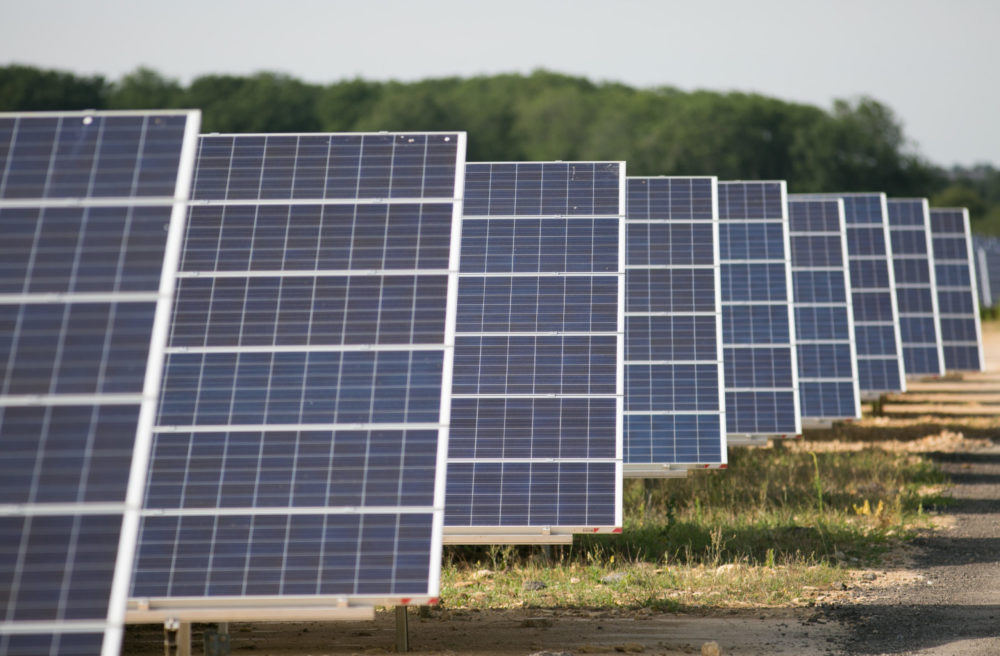
Recent surveys of the Llanwern Solar Farm situated to the south of the former Llanwern steelworks have revealed damage to the nationally important and designated landscape.
The surveys highlighted a severe decline in the lapwing breeding colony in the area.
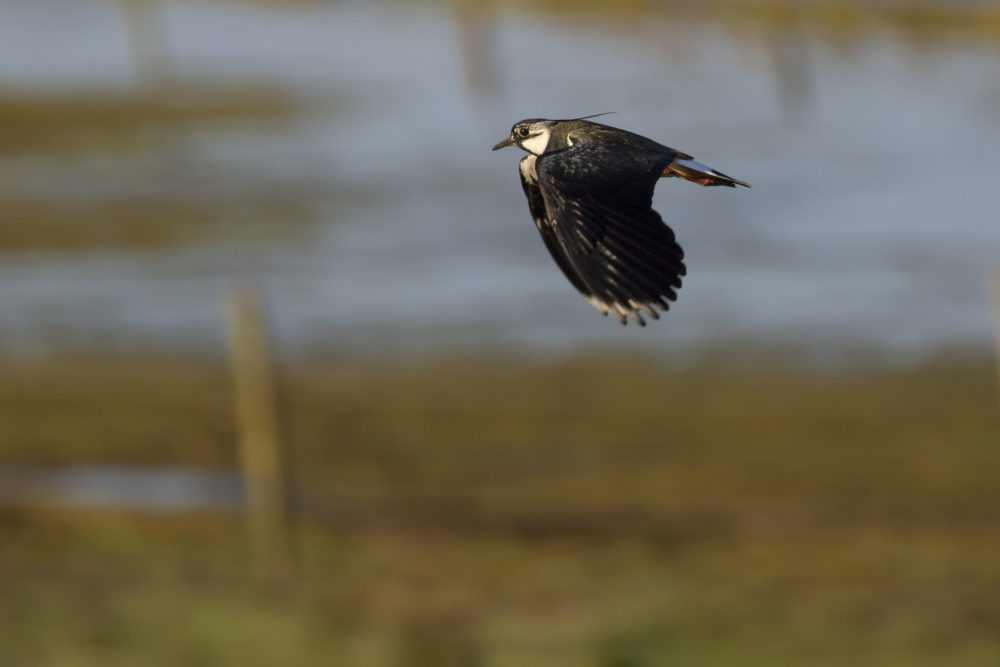
A ‘lapwing mitigation area’ was created at the solar farm – but three years after construction it has so far failed to attract a single lapwing.
In the retained areas, breeding pairs declined from eight before construction to two after – with only one nest found on-site and no successful breeding confirmed in 2023.
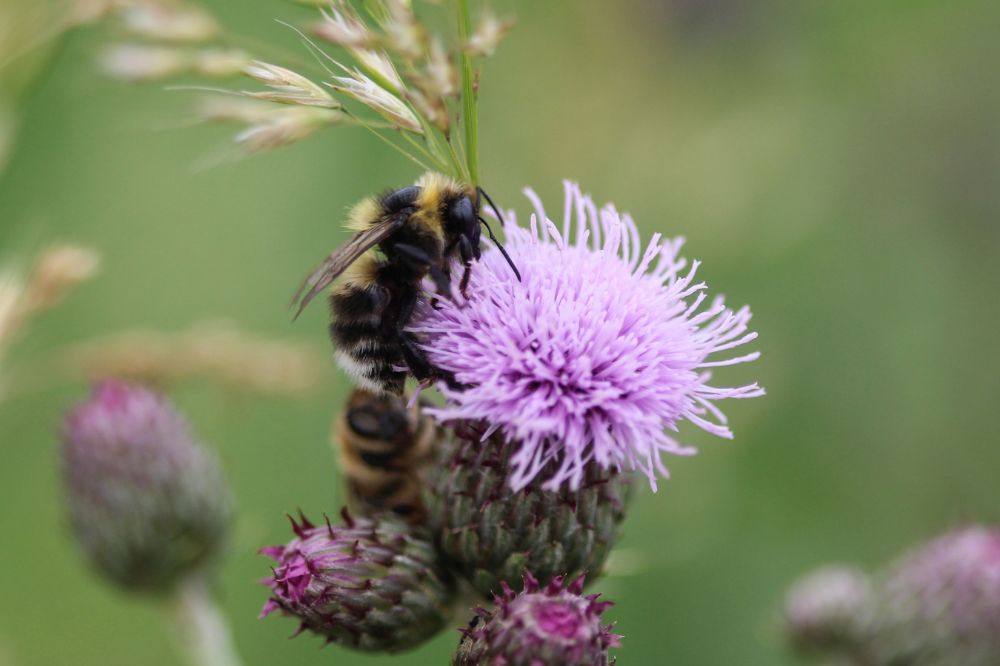
Key bee species numbers are also down with significant declines in shrill carder bee and brown-banded carder bee populations within the solar array areas.
Herbicide treatments on thistle plants – a favoured nectar source of bees – in retained grassland areas and poor establishment of new wildflower planting are cited as possible causes.
Concerns have also been raised about a significant drop in the protected bat population in the area with only a single installed bat box occupied in 2023.
Prior to the construction of the 145-hectare solar farm a pair of extremely rare Eurasian Cranes were in the area – but none have been seen at the site since 2021.
The evidence of the solar farm’s impact on wildlife was presented at a recent Planning and Environment Wales hearing regarding proposals for a new solar development on the Gwent Levels – Wentlooge Solar.
Irreplaceable
The renewable energy hub will comprise of ground mounted solar panels and 160 battery storage units covering 318 acres south of the Newport to Cardiff railway line.
It is one of six applications for new solar plants on the irreplaceable wetland.
The Gwent Wildlife Trust says one of the key issues at the Llanwern solar plant is water pollution in the reens and ditches affecting otters and water voles as well as rare aquatic flora and fauna including many European protected species.
Pollutants includes cadmium – a heavy metal used in batteries, paints, plastics that can cause harm to humans and animals in several forms and is classified as a carcinogen.
Concerns have also been raised over lead pollution which can cause immune system damage, neurological problems, and oxidative stress.
With a Welsh Government decision regarding Wentlooge Solar now looming – the Gwent Wildlife Trust has warned of the damage further solar farm developments will cause if given the go ahead.
‘Catastrophic’
Natalie Buttriss, Gwent Wildlife Trust CEO, says the new report “unequivocally” shows that mitigation measures to protect wildlife within the fragile and complex wetland ecosystem of the Gwent Levels have failed “catastrophically”.
She said: “The Levels waterways are home to many rare species, and high levels of pollution from solar plants will damage them irrevocably.
“The proposed solar plant at Wentlooge is significantly larger than the one at Llanwern, and will pose an even greater threat.
“What’s more, in Somerset and Norfolk, the Eurasian crane is making a thrilling comeback.
“This stunningly beautiful bird appeared to be making a comeback to the Gwent Levels too, but these hopes have diminished with their absence confirmed by the Welsh Government study.’
‘Sacrosanct’
Ms Buttriss stressed that the Gwent Wildlife Trust is not opposed to solar energy – but believes that such developments need to be located on land where they will not irretrievably damage a nationally important designated landscapes.
She said: “It also needs to be stressed that only 12 per cent of Wales’ total land area is made up of SSSIs, these small fragments should be sacrosanct. There is plenty of land available that does not threaten SSSIs.”
The Gwent Wildlife Trust gained massive support from famous figures when lobbying the Welsh Government to halt significant development on the Gwent Levels until proper protection for the landscape was secured.
These included TV naturalists Iolo Williams, Gillian Burke and Lizzie Daly, as well as internationally acclaimed authors Julian Hoffman and Horatio Clare.
Gwent Wildlife Trust owns reserves throughout the region, including meadows, ancient woodland in the Wye Valley, and unspoilt upland tracts of habitat.
One of the trust’s flagship reserves is Magor Marsh on the Gwent Levels.
Magor Marsh is one of the last remaining pieces of natural fenland that once covered the Levels.
Wetlands were once commonplace across Britain but are now one of the UK’s most threatened habitats.
It was the threat of losing the Gwent Levels in the 1960s that brought local naturalists together to form what is now known as the Gwent Wildlife Trust.
A spokesperson for the Welsh Government said they were unable to comment on the new findings because the case is currently with Planning and Environment Decisions Wales.
Support our Nation today
For the price of a cup of coffee a month you can help us create an independent, not-for-profit, national news service for the people of Wales, by the people of Wales.



The gwent levels are only there for unnecessary solar farms and massive empty business parks. Good luck nature, you are about to be obliterated.
It’s ironic isn’t it that those opposing job opportunities for local people in a tiny corner of the levels turned a blind eye to covering the rest in shiny glass panels that will genuinely trash the place.
I lived for a while, back in the 1970s, in Lliswerry, and the ‘Levels’ – of whose existence I’d previously been entirely unaware – proved to be an absolute natural delight, right on our doorstep.
On the other hand, we have to respond effectively to the climate crisis because if we don’t, Whitson, Nash, Goldcliff and Lliswerry itself might well at some future time be inundated in certain combinations of weather conditions.
I wish that I knew what the answer to this conundrum might be – but I don’t.
The answer is to use land of little ecological value for solar farms, exercising compulsory purchase powers if necessary. There is no need to use SSSIs just so landowners can obtain increased land values.
You might be right. I’m still unsure.
Covering the area with solar panels won’t stop it getting flooded. And what happens if it floods around the solar panels and all their cables, batteries etc?
Many years ago I was a herdsman and the arrival of Lapwings was often accompanied by frozen water pipes as they coincided with cold weather. As our seasons are changing this too must be affecting the wildlife migration patterns. I use electricity and I appreciate that it has to be produced but if every roofing tile/slate was an affordable solar panel wouldn’t that be great?
Whatever happened to the future generations bill is this not the time for it’s use given all the noise from the senedd when it was setup, one rule for voters another for large companies wanting large profits by littering the countryside with their future products.