


New fines proposed for water firms committing smaller environmental offences
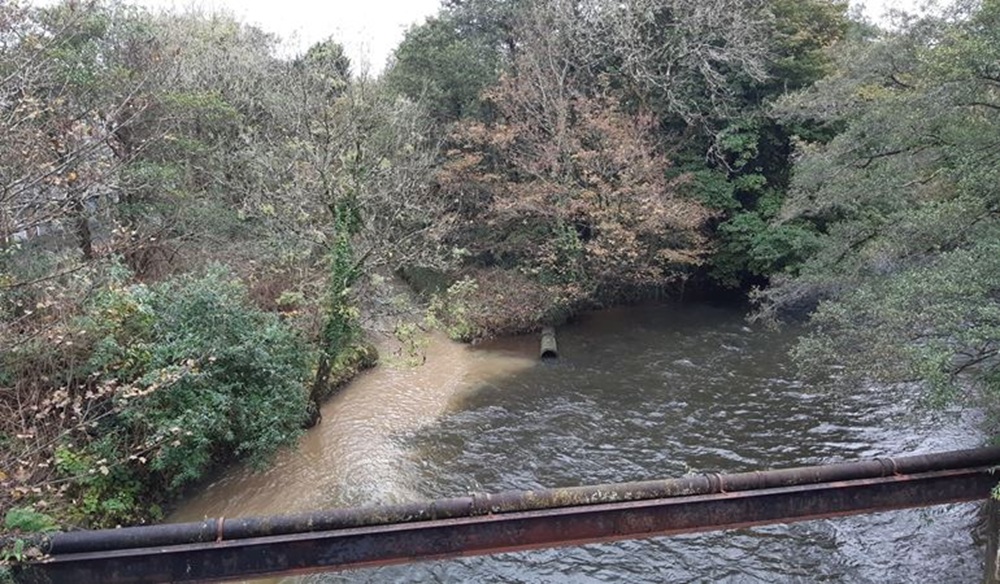
Water firms that commit smaller environmental offences could face quicker fines of up to £500,000 under UK Government proposals.
Ministers are consulting on plans to hand the Environment Agency more powers to penalise water companies for minor or moderate rule-breaking.
The environmental regulator currently struggles to impose financial penalties for frequent smaller offending, the Government said.
According to official figures, 98% of permit breaches last year were categorised as minor, such as failures to maintain equipment, return data and empty storm tanks, as well as less significant pollution incidents.
In order to hand out penalties, the Environment Agency must prove these offences to the same high legal standard of proof used in criminal courts.
This means the high number of less serious offences are too expensive and time-consuming to pursue.
The Government said the proposed changes would lower the standard of proof needed to make it much easier and quicker to penalise firms.
Outrage
The proposals come as part of its wider response to national outrage at pollution of waterways, sewage spills, crumbling infrastructure and rising bills.
Environment Secretary Emma Reynolds said: “I share the public’s anger at the current state of our water system, and this Government is taking decisive action.
“I want to give the Environment Agency the teeth it needs to tackle all rule-breaking.
“With new, automatic and tougher penalties for water companies, there will be swift consequences for offences – including not treating sewage to the required standard and maintenance failures.”
During the consultation, the Government will seek feedback to its proposal to use the lower civil standard of proof, rather than criminal standard, for minor environmental offences.
Cap
It will also ask for responses on setting a cap at either £350,000 or £500,000 for penalties issued for offences that come under the lower civil standard.
Other proposals include introducing new automatic penalties of £10,000, £15,000 or £20,000 for specific or obvious breaches without the need for longer investigations, similar to a speeding ticket.
Alan Lovell, Environment Agency chairman, said: “These changes would be a welcome boost to our current enforcement powers and allow us to deliver swifter and more appropriate penalties.
“Through a larger workforce and upgraded digital tools, we can deter poor performance and achieve a cleaner water environment for communities and nature.”
The Government said modelling based on water company performance in previous years suggests the changes could cost the sector between £50 million and £67 million annually.
But it argued the actual cost is likely to be lower because the policy is designed to drive behaviour change and deter minor breaches from happening.
Ministers also highlighted that the cost burden for these penalties is borne by shareholders, with Ofwat preventing companies from passing these on to customer bills.
More widely, the Government has introduced a host of measures – including blocking bonuses for polluting water bosses – to overhaul the ailing sector.
‘Action’
James Wallace, chief executive of the River Action campaign group, said: “We welcome the wider reforms and the move to use civil standards instead of lengthy legal processes, but the British public doesn’t want another consultation – they want action.
“Fines of £500,000 are pocket change to billion-pound companies like Thames Water.
“The Government must end the failed privatisation model of criminal polluters like Thames Water to stop river pollution.
“Higher penalties and urgent, wholesale reform are essential to prevent negligent firms polluting our rivers and shortchanging their customers.”
Support our Nation today
For the price of a cup of coffee a month you can help us create an independent, not-for-profit, national news service for the people of Wales, by the people of Wales.



I’m assuming this means Environment Agency Wales and the government refers to the Welsh Government? If I read the other article correctly it sounds like Wales will have it’s own water company, water regulator and it already has it’s own environment protector.
Can we confirm if this article applies to Wales or England… because there is an awful lot of chat about England in there.
The Environment Agency only covers England. Natural Resources Wales is the Welsh water agency. This article is only relevant to England.
Fine and then sack the top tier executives not the companies. Fining the companies means the customers will end up paying the penalties in increased bills.
Eh it’s nothing to do with us apparently, let the English deal with their own water companies. :).