


New research shows hairdressers could play an important role in discussing climate change
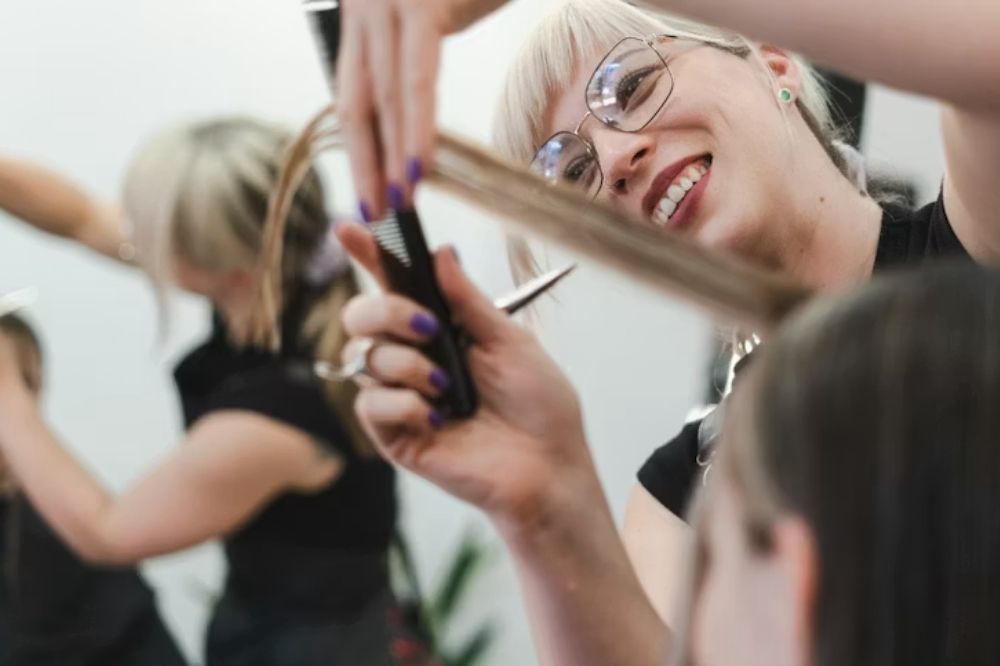
A study by a Welsh university has found that hairdressers across the UK are emerging as powerful influencers in tackling climate change.
The research from academics at the Cardiff University, University of Bath’s Centre for Climate Change and Social Transformations (CAST), the University of Oxford and the University of Southampton reveals that hair salons are hubs of trust, community and conversation where climate action can take root and spread.
The research shows that hairdressers can be influential in everyday conversations with clients about climate and sustainability and are successfully prompting people to rethink their sustainability habits – ranging from their use of water and energy to their choice of bank or diet.
Dr Sam Hampton, Centre for Climate Change and Social Transformations (CAST), said: “Hairdressers build trust over months and years. That kind of relationship is gold when it comes to discussing climate change. We found salons to be unique spaces where clients feel safe, relaxed, and open to new ideas.”
The research team conducted in-depth interviews with 30 salon owners and directors about their climate and sustainability interactions with clients and ran a nationwide intervention in 25 sustainable salons using ‘Mirror Talkers’ – eco-tips placed on salon mirrors to prompt sustainable haircare conversations.
Denise Baden, Professor of Sustainable Business at the University of Southampton said: “Most of us think a ‘green’ product is one with recyclable packaging, but the carbon footprint of shampoo is mostly in the hot water used, so simple messages such as ‘most of us use too much shampoo and shampoo too often’ can prompt conversations about how shampooing less and at lower temperatures saves time, money, energy, water and is better for your skin and hair condition.”
The study found that trust creates impact. Hairdressers build long-term, often decades-long relationships with clients. Many are seen as confidantes or even counsellors. This trust creates a space where advice is both welcomed and acted upon.
It also found that these conversations are already happening. Nearly all participating salons reported chats with clients about environmental topics – often starting with haircare, but expanding to plastic use, food choices, energy use and transport, diet, and more.
It could have a measurable impact, as almost 73% of salon clients said they were likely to change their haircare routine after conversations prompted by the Mirror Talkers. Some reported switching to eco-friendly products, turning down their hot water, or changing habits at home.
Coining the term ’everyday influencers’, the researchers argue that public-facing professionals like hairdressers should be seen as frontline agents of climate engagement.
Harriet Barber from B Hairdressing in Bath said: “We believe beauty should never cost the earth – our salon is proudly vegan, eco-friendly, and stocked with ethical products. Clients come to us for more than great hair; they connect with our values and the conversations we have around sustainability, green living, and even growing your own veg – it’s more than a salon, it’s a like-minded community.”
Dr Briony Latter, a CAST member based at Cardiff University, said: “We’re used to thinking of people in the public eye, such as celebrities, as influencers. But what about the people you actually talk to on a regular basis who know you and who you trust with your appearance and sometimes more personal aspects of your life?”
Salons valuable for climate engagement
With over 61,000 hair and beauty businesses in the UK contributing £5.1 billion to the economy, the research offers a blueprint for policymakers. It recommends: integrating sustainability training into hairdressing education and apprenticeships, rolling out conversational tools like Mirror Talkers nationally, and recognising salons as valuable spaces for public climate engagement, particularly among women and local communities.
Dr Sam Hampton said: “If we’re serious about building a public movement for climate action, then it’s time to invest in these unsung influencers because real change starts in everyday conversations, not just in Westminster.”
The research paper Public engagement and climate change: exploring the role of hairdressers as everyday influencers is published in Humanities & Social Sciences Communications.
Support our Nation today
For the price of a cup of coffee a month you can help us create an independent, not-for-profit, national news service for the people of Wales, by the people of Wales.



They may be influential but what kind of influence. After scaffolders and roofers they were the third most likely profession to not have a covid jab.