


New rural crime strategy launched across Wales’ largest police force area
A new strategy aimed at tackling crime in rural communities across part of Wales will see increased police patrols, stronger community engagement and a renewed focus on protecting wildlife and farmland.
Dyfed-Powys Police has launched its Rural and Wildlife Crime Strategy for 2026–2030, setting out how the force plans to prevent, detect and disrupt offences affecting farmers, landowners and rural residents across its policing area.
Covering the largest and most rural police force area in England and Wales, Dyfed-Powys Police’s rural crime team operates across farms, smallholdings, coastlines and protected natural areas.
The new strategy aims to increase the visibility of rural officers, expand crime prevention initiatives and improve intelligence gathering from local communities.
Inspector Matthew Howells said the force wants to strengthen its presence in rural areas and encourage more people to report crime.
“Rural crime can often go unreported,” he said. “We want to have a stronger presence and expand both Farm Watch and Rural Watch to increase reporting. This will give us extra data to shape our patrols and disrupt criminal activity.
“Our rural crime officers will also be promoting property marking and security measures. The aim is to reduce repeat victimisation and disrupt criminal activity.”
Figures released by the force show the scale of rural crime challenges in the region. In 2025 Dyfed-Powys Police recorded 49 reports of livestock theft, 42 quad bike thefts and 60 heritage crime incidents.
Heritage crime can include illegal metal detecting, looting and off-roading at protected historical sites.
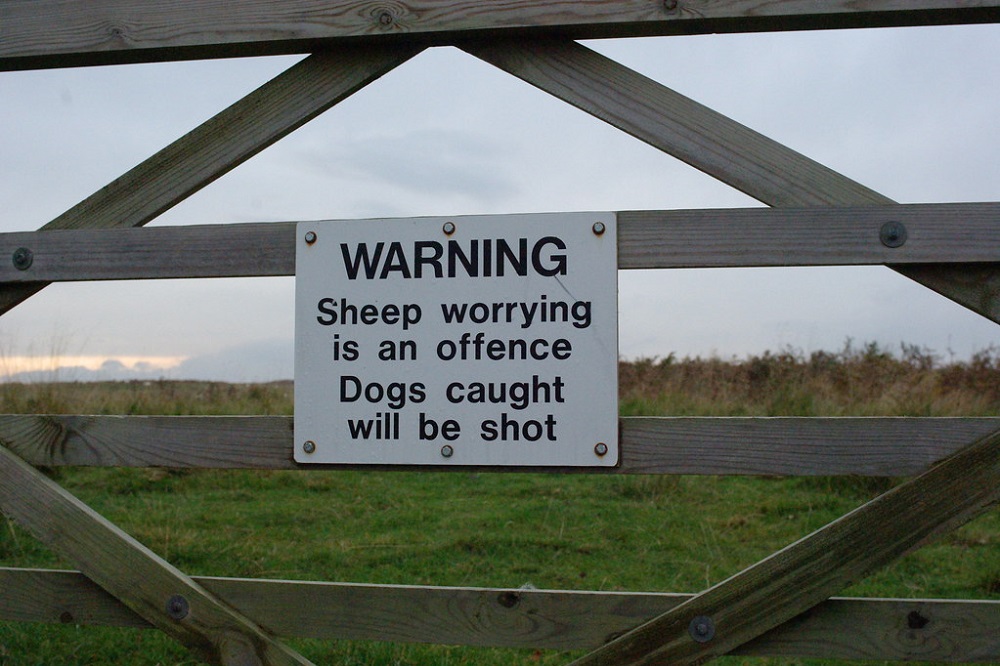
The most frequently reported offence, however, was livestock worrying, with 60 incidents reported during 2025.
The issue has been a particular concern for farmers, especially during lambing season when flocks are most vulnerable.
Chief Constable Ifan Charles recently met members of the farming community alongside Police and Crime Commissioner Dafydd Llywelyn and officers from the rural crime team to discuss the new strategy and changes to legislation designed to tackle livestock attacks.
The meeting took place at Bryn Gido farm near Llanarth in Ceredigion, owned by Farmers’ Union of Wales regional vice-president Anwen Hughes. Wales’ Rural and Wildlife Crime Coordinator Rob Taylor was also present.
During the discussion, Ms Hughes described losing three lambs during a dog attack last year and highlighted the impact such incidents have on farming families.
Livestock worrying
New legislation due to come into force on 18 March 2026 will strengthen police powers to deal with livestock worrying. Under the Dogs (Protection of Livestock) (Amendment) Act 2025, officers will be able to seize and detain dogs suspected of attacking livestock and collect evidence, including DNA.
The law will also remove the previous £1,000 cap on fines, allowing courts to impose unlimited penalties on offenders.
Chief Constable Charles said the impact of rural crime should not be underestimated.
“The impact these crimes have on rural communities can’t be underestimated,” he said. “People’s livelihoods and homes are intertwined.
“The new strategy puts people in rural communities at its heart. Protecting huge rural areas of Dyfed-Powys presents different challenges compared with urban areas. Our rural crime teams will work closely with communities to understand those challenges and keep people safe.”
Key priorities
The strategy sets out several key priorities, including tackling organised agricultural machinery theft, illegal off-roading, fly-tipping and wildlife crimes such as poaching, hare coursing and persecution of birds of prey.
Dyfed-Powys Police said partnership working will be central to the plan, with collaboration planned with local authorities, Natural Resources Wales, farming unions, conservation groups and national rural crime units.
Members of the public are encouraged to report rural, wildlife and heritage crimes via 101 or the force’s online reporting system, with 999 reserved for emergencies. and Wildlife crime across Carmarthenshire, Ceredigion, Pembrokeshire and Powys.
Support our Nation today
For the price of a cup of coffee a month you can help us create an independent, not-for-profit, national news service for the people of Wales, by the people of Wales.



Let’s have a simple rule. Domestic dogs must be on a lead at all times when out of their home.