


New technology to help keep electricity grid stable goes live in Wales
Bruce Sinclair, Local Democracy Reporter
New technology designed to help keep Britain’s electricity grid stable is set to start operating in Wales this week.
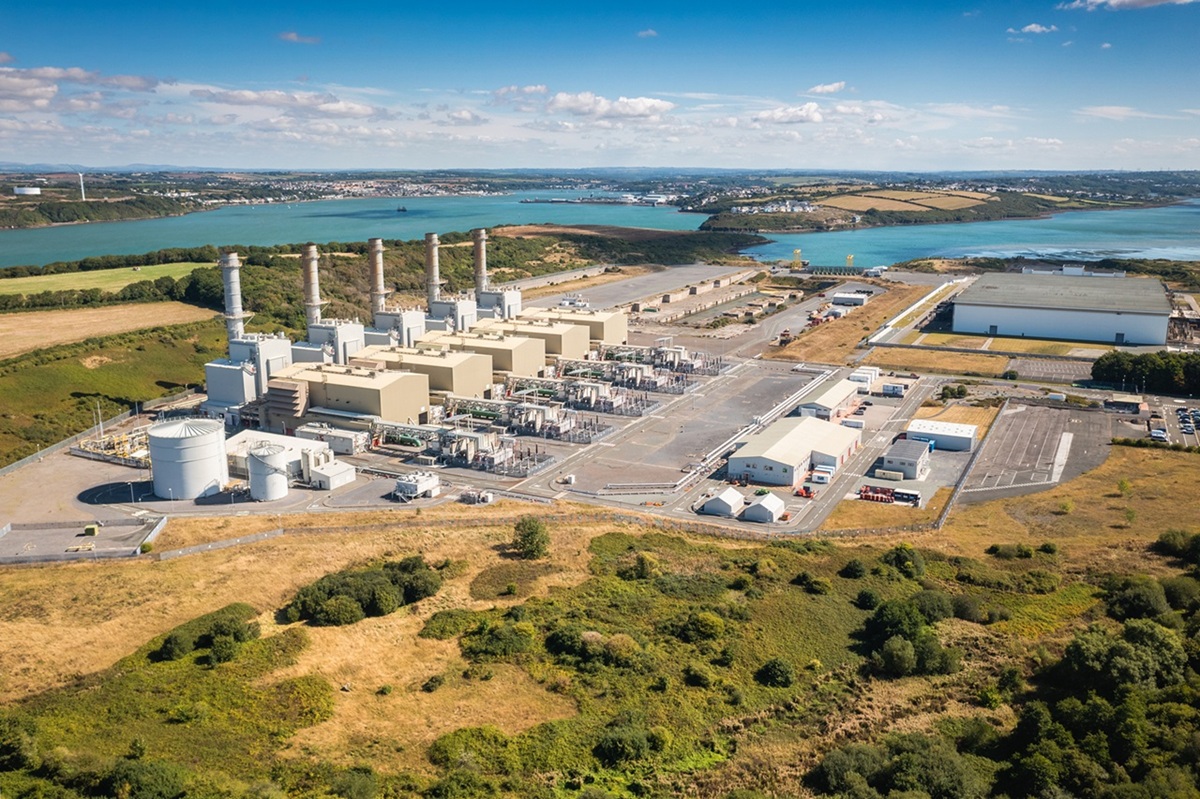
A synchronous condenser built by energy company RWE at its Pembroke power station site is due to start operating in the coming days as part of a wider programme overseen by the National Energy System Operator (NESO).
The large rotating machine provides what is known as inertia, helping the electricity system withstand sudden changes in frequency and maintain a stable supply.
Traditionally, that function has been provided by spinning generators at coal, gas and nuclear power stations.
As those sources provide a smaller proportion of Britain’s electricity and more power comes from wind and solar, alternative ways of providing grid stability are being introduced.
The Pembroke machine is the first of 16 new synchronous condensers being delivered through the next phase of NESO’s Stability Pathfinder programme.
It is the fourth synchronous condenser to become operational in Wales but the first built by RWE at its Pembroke Net Zero Centre, based at the company’s existing gas-fired power station.
£9bn
NESO estimates the stability technologies being introduced through the programme could save consumers up to £9bn in electricity system costs over the coming years.
The programme currently provides 17.2 GVAs – gigavolt-ampere seconds – of inertia to Britain’s electricity network.
Its next phase is expected to provide another 26.9 GVAs, more than doubling the amount of grid stability provided by the technologies.
Matt Magill, director of engineering at NESO, said: “Through our world-leading Stability Pathfinder programme, NESO has pioneered new markets for technologies such as synchronous condensers and Britain’s first grid-forming batteries.
“Together, they are helping replace services traditionally provided by fossil fuel power stations, while maintaining one of the world’s most secure and reliable electricity systems.”
Pembroke
RWE’s wider plans for its Pembroke site include battery storage, carbon capture and green hydrogen projects alongside the existing gas-fired power station.
Nikolaus Valerius, chief executive of RWE Generation SE, said: “The successful commissioning of our new synchronous condenser at Pembroke is an important milestone for the project and for the wider electricity system.
“As more renewable generation connects to the grid, technologies like this will play an increasingly important role in maintaining a secure and reliable electricity network, supporting the Government’s ambition to deliver a clean power system while strengthening resilience.”
The synchronous condenser is expected to operate without generating electricity itself, instead providing the inertia needed to help keep the frequency of the grid stable when there are sudden disturbances.
Support our Nation today
For the price of a cup of coffee a month you can help us create an independent, not-for-profit, national news service for the people of Wales, by the people of Wales.
Get more trusted Welsh news
Choose Nation.Cymru as a preferred source in Google News to see more of our journalism.



These are fancy words for a giant fly-wheel. Needed to keep the frequency of the grid at 50Hz, Wind turbines ‘drift’ in frequency as the angle of attack of the turbine blades cannot adjust fast enough to the rapid changes in wind speed. The gusts. This causes the generated output to vary in frequency. The action of the flywheel is to take any peaks and toughs that are out of phase and ‘correct’ it. It indicates that too many wind turbines are located in gusty locations, on the mountains, and not enough turbines located at more consistent wind locations like… Read more »
I thought the wind turbine power went through a rectifier and inverter before export and the problem for the grid is this does provide the instant pick up you get from turbine inertia, which I know is the main point you make.
Any power network needs system inertia for stability not just to smooth erratic energy supplies but to cope with sudden changes in demand or simply power stations going offline unexpectedly. In recent decades engineers were able to rely on inertia from spinning turbines but between the 1930s and 1970s synchronous condensers were commonplace.
The best explanation for the need is here.
I’ll have a look thanks
Load latency is different from phase deformity. As W=V*A any excess load on the grid will result in a small drop in mains voltage until additional generation is spooled up to compensate. However, phase variance is more immediate and catastrophic. Both depend on ‘grid intertia’. Not unknown in the 1970s. As the ‘Capel Curig Poltergeist’ demonstrated. On dark stormy nights the street lamps in the village would flicker alternately, food mixers unexpectedly sprang into life and televisions would change channel long before ‘the remote’ had been invented. A local journalist even suggested that extra-terrestrials were to blame. The actual cause… Read more »
Watched the video you recommended it’s good. I like the idea of making hydro carbons with the excess electricity not sure the economics of would work sufficiently to keep the internal combustion engine in common use though. Hopefully some clever people are looking at it.
It is not new technology, it has been used since the 1920s.