


New Welsh study examines how human-dog interactions could help worm disease spread
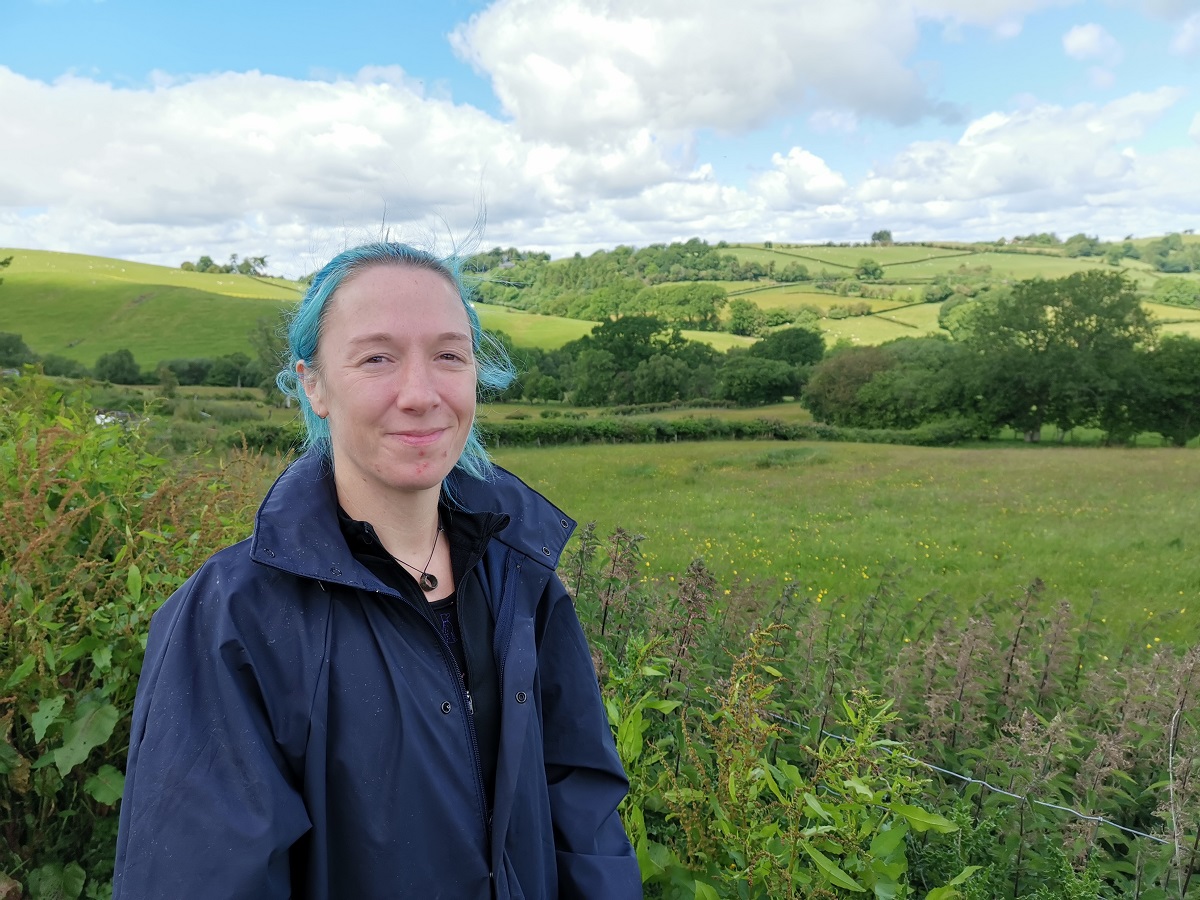 Researcher Keira Washtell of Aberystwyth University
Abby Neve
A study led by a Welsh University is set to investigate how everyday interactions between people and dogs in rural Wales could be helping a harmful tapeworm spread.
Mid-Wales is recognised hotspot for the disease which can infect dogs, sheep, and in rare cases, people.
Researcher Keira Washtell, from the Department of Life Sciences at Aberystwyth University, said: “This research goes beyond disease surveillance – it’s about understanding how people live with and care for dogs, and how those relationships intersect with environmental and public health risks.
“By investigating canine movement and lifestyle and community perceptions, we aim to identify practical, locally informed strategies to reduce zoonotic transmission.”
Despite decades of public health campaigns, the parasite responsible for hydatid disease remains endemic in mid-Wales.
The region is recognised as a hotspot for the disease, which poses risks to livestock welfare, farm productivity, and human health.
Sheep are typically infected first in the UK, while dogs are the final host for the Echinococcus granulosus parasite.
The parasite’s life cycle is sustained when sheep eat eggs from dog faeces, which can lead to cysts in their organs.
Dogs then become re-infected by scavenging or being fed infected sheep offal, perpetuating the cycle.
Humans can also become accidental hosts – the infection is very difficult to treat and can potentially lead to serious health complications or death.
The study will involve fieldwork across mid-Wales to examine how human-dog interactions in agricultural communities influence the transmission of the disease across species.
Researchers will use GPS collars to track the movements of free roaming farm dogs and analyse faecal samples from farmland to investigate their diets.
The project team will work closely with farmers, vets, public health experts, and dog owner groups, to gather insights into why previous public health messaging about hydatid disease may not have succeeded.
Dr Gwenllian Rees from the School of Veterinary Sciences at Aberystwyth University, added: “Hydatid disease, though relatively rare in the UK today, has historical significance in mid-Wales and there is evidence that the disease is increasing once more which is a real concern in areas where livestock farming and close contact with working dogs are part of daily life.
“This project’s transdisciplinary approach – bringing together geography, parasitology, epidemiology and behavioural science – will help us better understand and address the root causes of disease transmission.”
By examining the relationship between human behaviour and environmental factors, the research team hopes to inform more effective disease control strategies and public health interventions, supporting efforts to eradicate the parasite.
Dr Andrew Nelson, a senior epidemiologist at Public Health Wales is part of the project. He said: “Hydatid disease, which can cause cysts in the liver or lungs, remains a significant public health concern.
“Symptoms can take years to develop meaning you cannot fully understand the risks to the public by studying human cases.
“This multidisciplinary research will help bridge this gap by elucidating the drivers of human infection in the very communities in Wales that are most at risk of hydatid disease.”
The research is part of OneZoo, a UK-wide doctoral training programme funded by UK Research and Innovation (UKRI), which brings together researchers from Aberystwyth University, Cardiff University, the London School of Hygiene and Tropical Medicine and Queen’s University Belfast to tackle the growing threat of zoonotic diseases.
Support our Nation today
For the price of a cup of coffee a month you can help us create an independent, not-for-profit, national news service for the people of Wales, by the people of Wales.
Get more trusted Welsh news
Choose Nation.Cymru as a preferred source in Google News to see more of our journalism.



