


Newsletter hopes to fight ‘nuclear expansion’ across Wales
Adam Johannes
The Welsh Anti-Nuclear Alliance (WANA) is relaunching with the return of its newsletter, as campaigners warn Wales faces new nuclear expansion.
WANA is a coalition of groups, including CADNO (Cymdeithas Niwclear Oesel), CND Cymru, the Low-Level Radiation Campaign, the Low-Level Radiation and Health Conference, No Nuclear Llynfi, PAWB (People Against Wylfa-B), Stop Hinkley, and Welsh Nuclear Free Local Authorities.
The newsletter is intended to reconnect campaigns across the country and strengthen coordination as new nuclear projects move forward.
In the first issue, editor Richard Outram reflects on WANA’s roots: “WANA was formed over 45 years ago. In April 1980, Paul Flynn MP, Les and Judy James, organic farmer Peter Segar and environmentalists from the Central Wales Energy Group came together to establish an alliance that would pull together groups and individuals across Wales who were concerned about all matters nuclear.”
“WANA formed to oppose the expansion of nuclear power and the dumping of radioactive waste, and in favour of the conservation and rational use of energy.”
Outram points to WANA’s historic impact: “WANA has played a leading role in campaigns such as the one that led to all principal Welsh local authorities declaring themselves to be nuclear free; that raised public awareness about the health risks of the Chernobyl accident and low-level radiation; [and] in opposition to plans for new nuclear plants”
He added: “In the face of the renewed threat from new nuclear, we have reformed and will have a relaunch on St David’s Day.”
Threats
The newsletter lists key nuclear projects campaigners are fighting.
At Wylfa on Ynys Môn, the UK government has backed Rolls-Royce plans to build Small Modular Reactors (SMRs). “Rolls-Royce propose to deploy Small Modular Reactors on state-owned land next to the old Wylfa nuclear power station,” it states, noting the company has secured £2.5 billion in public funding towards the cost of the first three SMRs.”
Elsewhere, US company Last Energy is proposing four 20 MW micro-reactors near Maesteg, while at Trawsfynydd in Gwynedd the Welsh Government plans SMRs or a micro-reactor for medical isotope production under “Project Arthur”, “at the very heart of Wales’s most famous and beautiful national park, Eryri (formerly Snowdonia).”
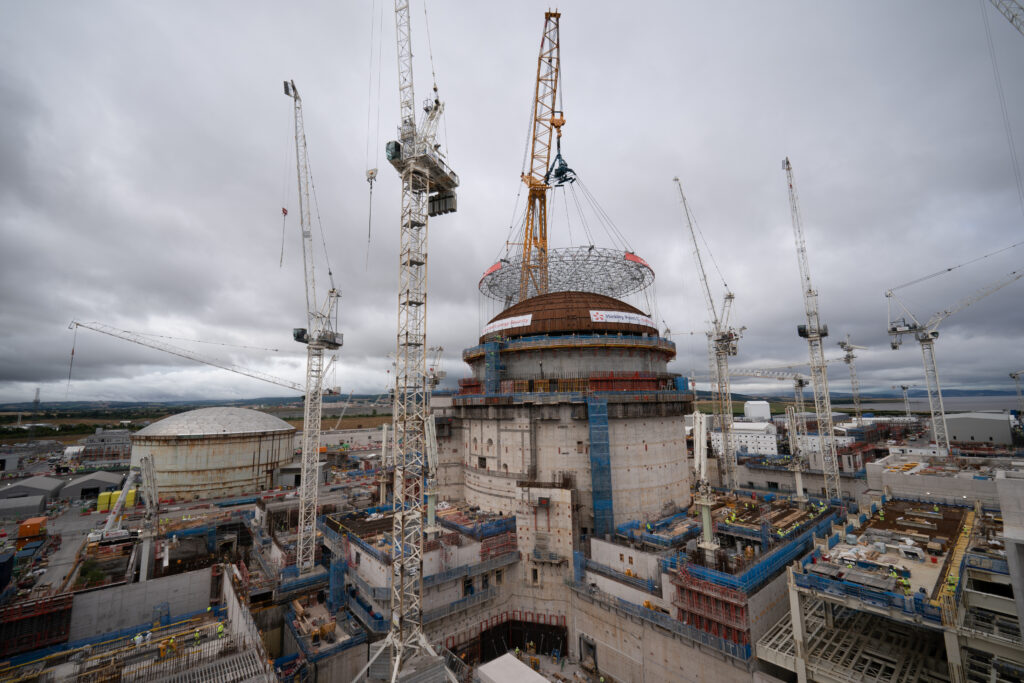
The newsletter also flags Hinkley Point C in Somerset, warning of “ongoing concerns about the impact on fish stocks” in the Severn Estuary.
Outram takes on the editorship as he steps down as secretary of the UK/Ireland Nuclear Free Local Authorities (NFLAs) network, which winds down after 44 years.
NFLAs said: “We have seen a steady reversal in membership, with austerity, the abolition and merger of authorities, the loss of elected member champions, and changes in political control or direction having significantly reduced the number of affiliated authorities.”
In the 1980s – amid protests against nuclear weapons, and the Chernobyl nuclear power disaster – the network included 140 councils, but in recent years, membership had dwindled to fewer than 30.
Outram said: “Our work is ending when the need for an NFLAs has never been greater… Investment in nuclear power is an unwelcome distraction from delivering green power now from renewables, while further investment in nuclear weapons will simply exacerbate already febrile international tensions and invite the prospect of Armageddon.”
Activists hope WANA will now pick up the baton.
To receive the newsletter or contribute, email [email protected]
Support our Nation today
For the price of a cup of coffee a month you can help us create an independent, not-for-profit, national news service for the people of Wales, by the people of Wales.



The authorities have never made a strong economic case for using nuclear energy to generate electricity. There are better, cheaper and more reliable way to generate electricity through Wind farms both onshore and offshore and there are solar, tidal, etc. Wind turbines and equipment can be installed and working within months. West Wales has a lot of wind from the Atlantic, especially when we need it. Nuclear takes up to 10 Years to be up and running and is much more expensive to install. Then is the problem of nuclear waste. Nuclear is too expensive and not economically viable. Somewhere… Read more »
Modular nuclear reactors are one way of mitigating the effects of climate change, the effects of which are more obvious with each passing day. The nuclear industry has a reasonable safety record and there are various ways in which the problem of waste can be solved. Because of the animus against nuclear power there has been a reluctance to pursue research into this issue. And because of Trumpism, the reduction of greenhouse emissions by countries which are still sane, is even more important. Let us not delude ourselves – a warming planet is an existential threat.
Madness.
Nuclear power provides well needed jobs for areas of Wales bleeding young people. It also strengthens the local economy and in the case of Wylfa, actually promotes the use of the Welsh language.
Using stupid examples like Chernobyl (a failure of moronic soviet bureaucracy) only strengthens the non serious nature of their claims.
“Environmentalists” need to move with the times. Nuclear power isn’t scary.