


NHS chief’s departure welcomed by campaign group
Martin Shipton
The departure of a top health service manager has been welcomed by a campaign group that described her as “one of the worst chief executives the Welsh NHS has had, and among the least effective digital leaders any health system in these islands has produced”.
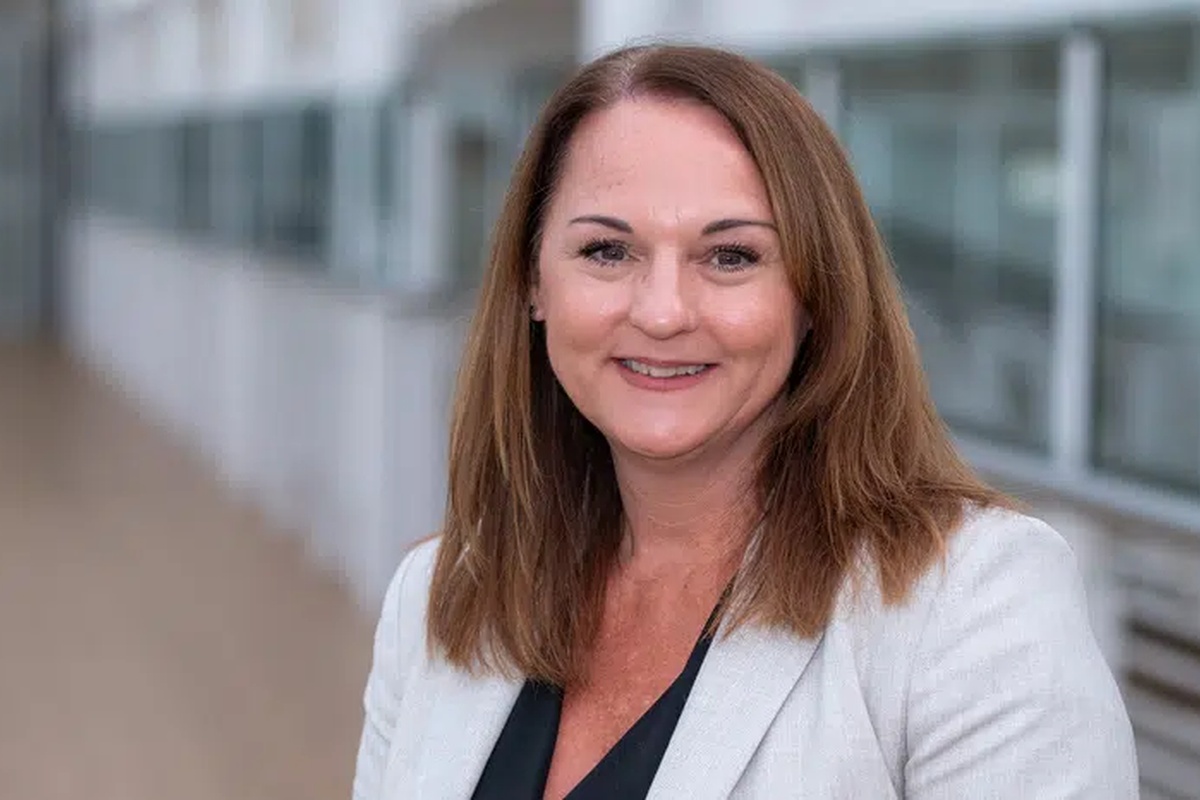
Helen Thomas has stepped down as head of Digital Health and Care Wales (DHCW), a little-known body responsible for digital systems used across the Welsh NHS.
In a blog post, CARENHS – the Campaign for Responsible Leadership in NHS Wales – described Ms Thomas’s departure as an opportunity for the Plaid Cymru Welsh Government to make a clean break from mistakes of the past and embark on true renewal.
Announcing her decision to leave her role, Ms Thomas said: “The decision to retire has not been an easy one, however, following personal health challenges experienced by some of my nearest and dearest, I now feel it is right to focus more of my time and energy on those closest to me outside of work.
“I am incredibly proud of what has been achieved by the organisation. But what stands out most to me is the commitment, expertise and passion of the people I have had the privilege to work with. Their dedication to improving health and care outcomes for the people of Wales has been inspiring.
“While there is still much to do, I believe this is the right time for new leadership to take forward the opportunities that lie ahead for digital health and care.”
However, CARENHS’s post stated: “Since 2019, DHCW and its predecessor the NHS Wales Informatics Service (NWIS) have spent £1.11bn of public money. Not one of its flagship programmes has been delivered on time – every one now sits under Targeted Intervention, one step from Special Measures.
“Thomas follows her predecessor at NWIS, Andrew Griffiths, out of the door. He stepped down in December 2019, after a 2018 Public Accounts Committee inquiry found NWIS running ‘archaic and fragile’ systems, with a culture ‘the antithesis of open’ and a data-centre outage every nine days. Thomas, NWIS’s Director of Information since 2017, took over as interim director, and then as DHCW’s founding chief executive. The rebrand changed the name, not the leadership.
“On 9 December 2020 both of them, the outgoing director and the incoming one, were made honorary Professors of Practice by the University of Wales Trinity Saint David, at the same ceremony where NWIS renewed its partnership with that university. For what achievements, exactly, the record does not say.
“Between April 2021 and March 2026, DHCW’s own accounts record about £919m of public money passing through the organisation: £816m of revenue spending and £102m of capital. That is five years of DHCW alone. Add NWIS’s last two years: £88.5m in 2019-20, the year Griffiths handed over to Thomas, and £101.9m in 2020-21 with Thomas in charge. The total comes to £1.11bn in seven years, before counting a single earlier NWIS year or any NWIS capital spending.
“In our view, Wales got remarkably little for it. The National Data Resource, the flagship Thomas led from her NWIS days, saw its forecast benefits cut from £151.5m to £41m while its cost rose from £57.2m to £73.6m. It is doubtful it will ever deliver any value. The intensive care system was found by an external review to be ‘not clinically acceptable in its current form’. The data centres failed, again and again, year after year. Nine flagship programmes ended up under Welsh Government escalation at the same time, and four more were closed, paused or cut back.
“DHCW’s own Director of Finance put its total demonstrated return at £0.5m, in non-cash time savings, from a single system. A VAT error cost the Exchequer around £4.3m in interest alone. And in April 2026 the Welsh Government escalated DHCW to Level 4, Targeted Intervention, over ‘concerns around delivery, accountability and leadership’. That was the first time leadership had been named in the grounds.
“On that record, we think Helen Thomas will be remembered as one of the worst chief executives the Welsh NHS has had, and among the least effective digital leaders any health system in these islands has produced. Her departure will be greeted with relief by many people who worked under her, and by many more who depended on what DHCW was supposed to deliver.”
‘Without vision’
CARENHS continued: “Thomas leaves an organisation without vision, direction or purpose. It is out of step with what patients, clinicians and the public expected of it. It has failed countless patients who waited for systems that never arrived or arrived not working.
“She also leaves an organisation that has been hollowed out of technical ability. That is not a judgement on the people who work there. Many of them are capable, and they came to DHCW wanting to build something. It is a judgement on what was done to them. There was no career path and no meaningful budget for upskilling. Direction did not come from the top. Leadership was absent when it was needed and unresponsive when it was told things it did not want to hear. Good people learned helplessness, because their skill, energy and creativity went into work that leadership then squandered.
“DHCW’s own staff survey shows what that does. In a single year, the share of staff confident that DHCW would act on their concerns fell from 84.8% to 59.2%. The share who felt safe to speak up fell from 84.8% to 62.8%. That collapse happened on a higher response rate. Days lost to sickness rose 82% in three years, to 15,846 in 2024-25, and more than half the workforce took sickness absence that year. All the while, DHCW was collecting workplace wellbeing awards. Stress and anxiety are now the largest single cause, at 5,209 working days lost in a year. In September 2026 the board heard that sickness had hit its highest level in 12 months.
“Under Thomas, mediocrity and passivity became virtues. Anyone who pushed for real change met resistance first, then was undermined, and in some cases lost their job. She leaves behind a trail of careers ended or stalled, belonging to people who dared to want something bigger and better for digital healthcare in Wales, and who were treated as a threat for it.”
Test
Looking to the future, the blog states: “The test for Mabon ap Gwynfor, as Cabinet Minister for Health and Care, starts now:
- Who replaces her? If the answer is another chief executive from the same network, chosen for the same qualities, then nothing will change. The NWIS-to-DHCW rebrand already ran that experiment, and Wales has spent five years and nearly a billion pounds learning the result. It is now further behind England and comparable small countries than it was when DHCW was founded.
- Who else goes? Thomas did not run DHCW alone. If the rest of the circle stays in place, the organisation will keep running in the same direction, further into the ground.
- What else changes? An independent well-led review of DHCW is due to report by the end of November. It must be published in full, and its findings must drive the next decisions rather than follow them.
“DHCW cannot simply be repainted. Its next chief executive must be:
- A technical leader with a proven record. The job needs someone who has delivered large-scale digital transformation and turned around large, failing organisations.
- Open to candidates from outside the NHS. NHS experience is not necessary. Technical and leadership excellence is.
- Given real authority. The new chief executive needs a clear vision, and the power to rebuild the whole structure from top to bottom where that is needed, not just the floor they inherit.
“Helen Thomas’s departure is good news, and it is years late. Plaid Cymru now holds the one thing the last government never used: a clean break. Please don’t waste this chance for true renewal.”
“She leaves with a pension that DHCW’s own accounts value, as a cash-equivalent transfer value, at £1.8m. That has risen by 71% across the years in which DHCW went from routine oversight to Targeted Intervention.”
Support our Nation today
For the price of a cup of coffee a month you can help us create an independent, not-for-profit, national news service for the people of Wales, by the people of Wales.
Get more trusted Welsh news
Choose Nation.Cymru as a preferred source in Google News to see more of our journalism.



Yet another sad example of an overpaid NHS boss getting well rewarded after a record of failure. When will there be real independent scrutiny of such appointments and more close monitoring of their progress if any. People in low paid jobs are given the boot if not up to the job, but the higher you go the easier it is to perform badly and just wait for the golden payoff.