


NHS waiting lists in Wales remain stubbornly high
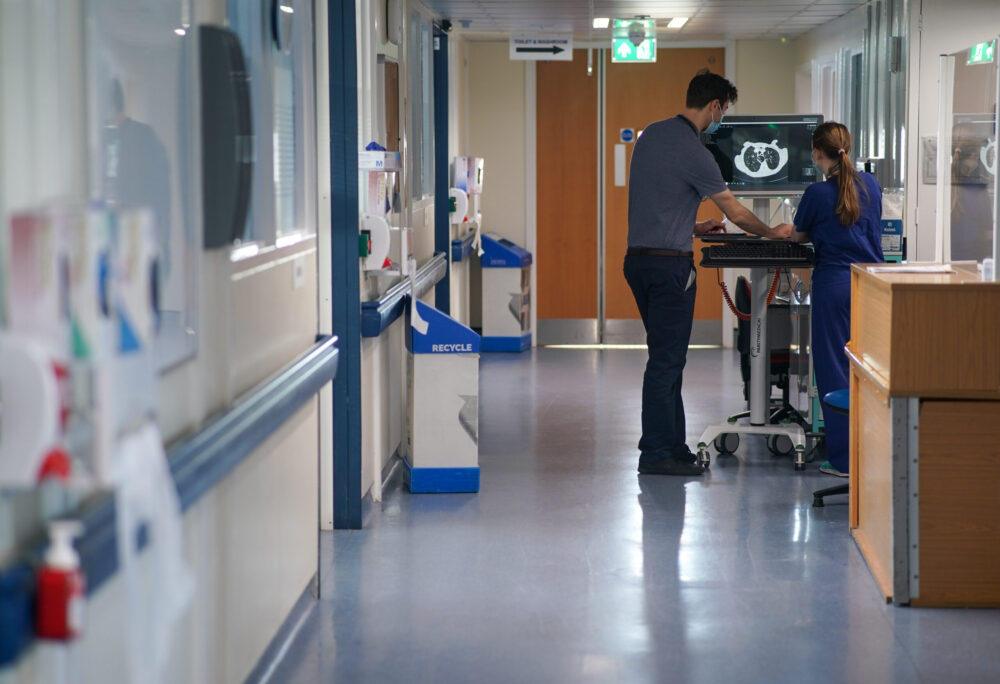
New figures confirm NHS Wales continues to struggle with long waiting lists and pressure in emergency care, despite extra funding and new performance measures.
At the end of July, there were just under 793,100 referral-to-treatment patient pathways waiting to start treatment – the equivalent of almost one in four people in Wales.
Management information suggests this represents about 613,400 individual patients.
While overall numbers fell slightly compared to June, waits remain considerably higher than pre-pandemic levels.
More than 8,000 pathways were waiting over two years in July, the second-lowest figure since April 2021 and 88% lower than the peak in March 2022. However, this marked a rise of 7.5% on the previous month.
The average wait in Wales was 21.1 weeks compared with 13.1 weeks in England.
Failure
Welsh Conservative health spokesperson James Evans MS described the figures as “another abysmal failure” and accused Labour ministers of missing repeated targets. “You are 380 times more likely to wait over two years in Wales than in England,” he said. “We need less bureaucracy and more focus on the frontline.”
Last month, just 65.4% of patients were admitted, transferred or discharged from emergency departments within four hours, far below the 95% target.
More than 10,400 patients waited 12 hours or longer, a slight increase on the previous month. The average time spent in emergency departments rose to two hours 45 minutes.
These figures are the first to include a new ambulance response model, introduced in July.
Under the changes, the most urgent calls are now classed as “purple” for cardiac and respiratory arrests and “red” for other life-threatening emergencies.
In August, ambulances received 802 purple calls and 4,380 red calls. The median response times were 7 minutes 15 seconds for purple calls and 9 minutes 15 seconds for red calls, both slower than the 6–8 minute target.
Despite this, clinical outcomes showed some improvement. For cardiac arrest patients where resuscitation was attempted, 27.4% had a return of circulation on arrival at hospital, up six percentage points from July.
Planned care
Planned care also showed mixed progress. The number of patient pathways waiting longer than 36 weeks dropped to just under 265,700, while those waiting less than 26 weeks rose to 56.6%. More than 73,000 people were waiting over a year for their first outpatient appointment.
Cancer services saw 2,301 patients begin treatment in July, the highest figure on record. Performance against the 62-day target rose slightly to 61%, still below the 75% target.
Health Secretary Jeremy Miles said additional funding was making a difference, with 15,000 extra outpatient appointments taking place in September and more than 20,000 additional cataract operations planned by 2026.
“We are seeing the highest levels of referrals on record, but also significant progress on reducing the longest waits,” he said. “I remain confident we will see further improvements by the end of the year.”
Support our Nation today
For the price of a cup of coffee a month you can help us create an independent, not-for-profit, national news service for the people of Wales, by the people of Wales.


