


NHS waiting lists rise as A&E performance hits record low
Mark Mansfield
Waiting lists have risen for the first time in almost a year, while emergency department performance has fallen to its worst level on record, according to the latest NHS Wales figures.
New data published on Thursday shows the number of patient pathways waiting to start treatment increased by almost 9,700 in May to 689,721, ending 10 consecutive months of declines.
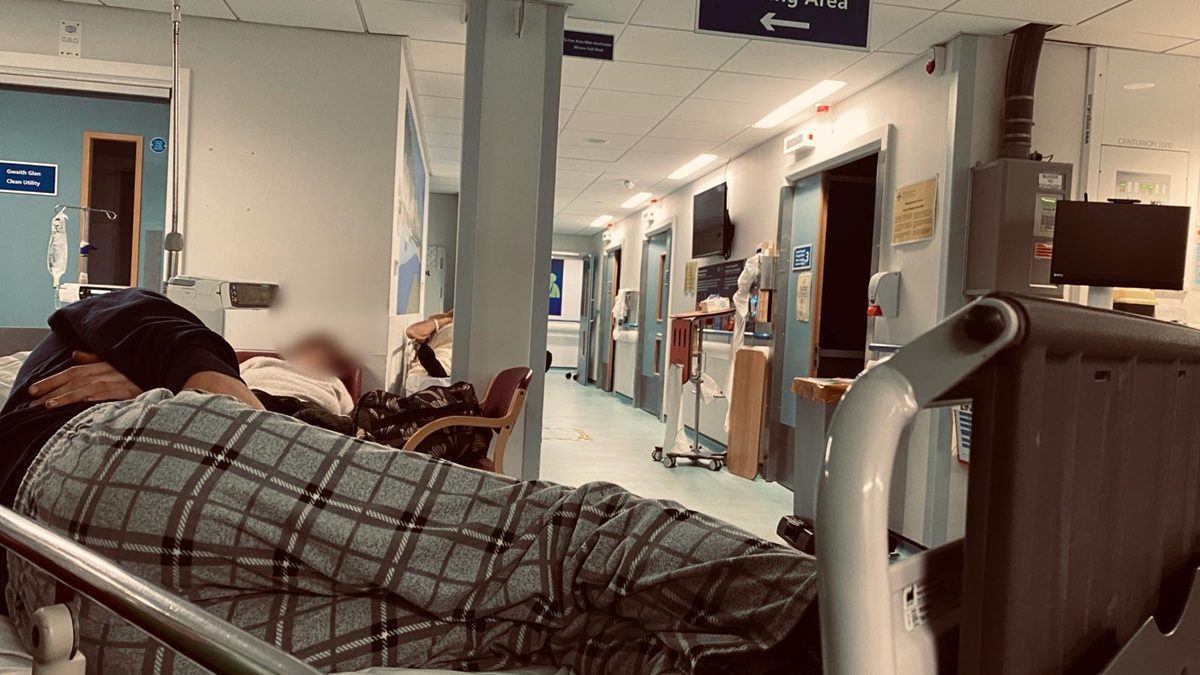
Performance in emergency departments also deteriorated in June, with only 63% of patients admitted, transferred or discharged within four hours – the lowest figure on record.
The figures also show the number of patients waiting more than two years for consultant-led hospital treatment rose from 3,694 in April to 4,208 in May, while those waiting more than a year increased to 97,590.
The publication of the latest figures came as surgeons urged politicians from all parties to reach an agreement over NHS funding, warning that reducing waiting lists will require greater surgical capacity.
The Welsh Government’s first supplementary budget includes an additional £100 million for waiting list reductions and £25 million in capital funding for surgical and diagnostic hubs. However, the budget has yet to be approved by the Senedd, meaning uncertainty remains over when the money will become available.
Professor Jon Barry, Director in Wales at the Royal College of Surgeons of England, said: “These latest figures are a sobering reminder of the scale of the challenge facing our health service.
“Staff are working tirelessly to reduce waiting lists, but lasting improvement requires certainty over resources and expanded surgical capacity.
“The need for greater capacity, including more surgical hubs, attracted support from across the political spectrum during the recent Senedd election. That reflects a shared recognition of the importance of improving access to treatment for patients across Wales.
“Behind every waiting list statistic is a patient whose life remains on hold while they wait for treatment. We urge all parties to work together to secure the resources our health service needs and help more patients get the care they have been waiting for.”
Cabinet Minister for Health and Care Mabon ap Gwynfor described the figures as “disappointing and unacceptable”.
“My immediate priority is clear – cut the waiting list backlog inherited from the previous Government, help those who have been waiting longest, and build an NHS here in Wales that can stand strong for generations to come,” he said.
“Too many people are waiting for treatment, and they are waiting too long. We have a plan to tackle this which will deliver the real change the people of Wales need to see and that they rightly deserve.”
The minister said the Welsh Government’s clinically led surgical hub programme would expand local capacity, reduce waiting times and help manage elective care more sustainably.
He also linked pressure on emergency departments to June’s prolonged hot weather, saying the month had seen record attendances for June because more people sought treatment for heat-related illnesses.
Ambulance performance
Despite the wider pressures, ambulance performance for the most urgent incidents continued to improve. The target response time for “purple” calls – involving cardiac or respiratory arrest – was met for the 12th consecutive month, with a median response time of seven minutes and 42 seconds.
Elsewhere, cancer performance improved slightly, with 57.1% of patients beginning treatment within 62 days of first being suspected of cancer, although this remains well below the Welsh Government’s target of 75%. Therapy waiting lists reached a record high of more than 63,500 pathways, while diagnostic waiting lists fell slightly despite an increase in the number of people waiting longer than the eight-week target.
Mr Ap Gwynfor thanked NHS and social care staff for their work under sustained pressure.
He said: “I want to recognise the incredible people working in our NHS and social care. Every single day, they show up and give everything they have – often under enormous pressure. Their dedication and compassion is something we should all be proud of.”
‘Shameful’
Dr Rob Perry, RCEM Vice President Wales, said: “The state of our emergency departments is nothing short of shameful.
“No patient should wait 12 hours on a trolley or in a chair in an overcrowded emergency department. Long waits are not only stressful and undignified, they are dangerous and put lives at risk.”
“This is a fixable problem. Delayed discharges and a lack of available hospital beds are preventing patients from leaving emergency departments and causing a complete breakdown in patient flow.
“The Welsh Government has signalled it understands the need to reduce long waits and overcrowding. I hope, for our patients’ sake, those words become action soon.”
Crisis
Natasha Asghar MS, the Welsh Conservatives’ shadow cabinet minister for health and social care, said: “These figures show the crisis in the Welsh NHS is continuing to deepen.
“Plaid Cymru cannot escape responsibility for this. Patients need urgent action, not more empty promises. Wales needs more hospital beds, a robust NHS workforce strategy, a serious plan to cut waiting lists and immediate action to relieve pressure on emergency departments.”
Support our Nation today
For the price of a cup of coffee a month you can help us create an independent, not-for-profit, national news service for the people of Wales, by the people of Wales.
Get more trusted Welsh news
Choose Nation.Cymru as a preferred source in Google News to see more of our journalism.



To be expected when Reform blocked £145m to fix this.
Don’t be silly. This would be the case even if the budget passed. look at the date range of the data. Just blaming people who aren’t in power makes you look like you don’t understand how these things work.
Yet it was Natasha Asghar MS (Conservative) along with her mates in Reform and the Labour Party who voted in the Senedd last week against putting a stop-gap £100m into NHS Wales.
Smiles no longer around cracking his whip at the feet of Tory and Reform should explain it…
Well, it’s all on Plaid now. Opposition is easy. Responsibility to deliver, and pass a budget is all on them.