


Non-profit urges netting ban after jackdaw dies on pub roof
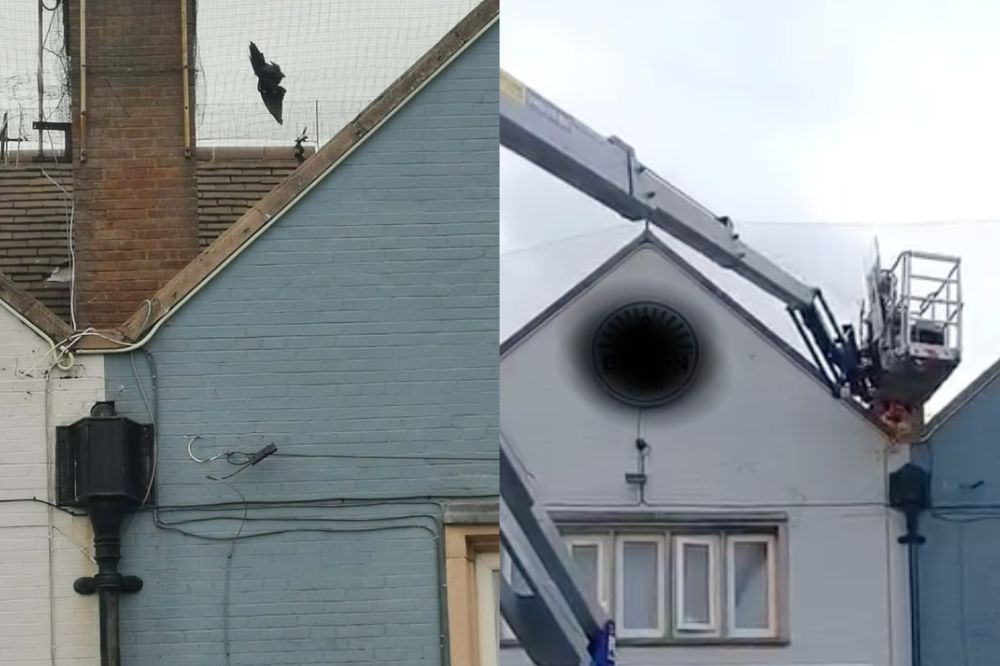
A Welsh non-profit has urged the public to back a petition to ban netting on buildings following the death of a jackdaw in north Wales.
Foundation for Feathered Friends, a community organisation that helps wild birds in Caernarfon and around the UK, shared the news on their Facebook page.
The Jackdaw, nicknamed Jack, was caught in netting above a Prestatyn pub. Members of the public notified Foundation for Feathered Friends on the evening of Thursday (16 April).
The foundation then contacted local rescues but said they did not receive a response. A volunteer also informed the pub’s staff.
The foundation then contacted the RSPCA on the morning of Friday 17 April.
They arranged for a cherry picker to attend, with support from North Wales Wild Bird Care and the RSPCA, in an effort to free the bird.
However, as the pub did not open until midday, volunteers did not have permission to access the site. At 12.02pm on Friday the foundation shared the news that Jack had died.
Foundation for Feathered Friends later wrote on their Facebook page: “We did our best but at the end of the day could not save him. It is unknown how long he had hung there desperate for help.”
The foundation thanked the specialists from Western Platforms who provided and operated the cherry picker, as well as those from North Wales Wild Bird Care and the RSPCA who attended.
Several members of the public also assisted by calling tree surgeons for advice, and donating to hire the cherry picker. Commenters voiced their support and urged others to boycott businesses using netting.
Foundation for Feathered Friends continued: “Please think of Jack and all the other birds that are trapped in netting ~ abandoned, thirsty, hungry in pain and fear, and sign and share our Petition to Ban Netting.
“There was another Jackdaw already dead in the netting on the roof that could not be seen from street level. So many people comment in groups that netting should be banned and still don’t know about the Petition.
“Fly high Jack in a place free from netting.”
The petition, ‘Ban the use of netting on roofs and outdoor structures‘, aims to stop birds getting trapped in netting leading to injuries and death.
Netting is commonly used on buildings to stop birds nesting. The RSPCA told the BBC in 2019 that they received around 2,000 reports annually of birds stuck in the material.
Foundation for Feathered Friends highlights that The Wildlife and Countryside Act 1981 places responsibility for maintaining the netting on property owners.
While bird-deterrent netting is not banned outright, it can become unlawful if it causes harm to animals or prevents birds from reaching their nests and eggs.
The Animal Welfare Act 2006 also provides protection for trapped birds, but the Foundation for Feathered Friends said they “believe neither [of the laws] are being observed nor enforced”.
Launched in February, the petition now has over 15,000 signatures and will be considered for parliamentary debate at 100,000. The deadline is 3 August 2026.
The Department for Environment, Food and Rural Affairs reminded those who had signed the petition that wildlife management is a devolved matter, and so it could only provide a response related to England.
They said: “All wild birds are protected by law. The Wildlife and Countryside Act 1981 makes it an offence to deliberately hurt or kill wild birds or damage their eggs and nests. They can only be removed for a very good reason, such as if they pose a risk to public health and safety.
“Before taking action to remove birds, people will sometimes try to deter them by using bird netting to prevent nesting in certain places. These nets are not designed to deliberately kill or injure wildlife and, if installed correctly, they should not do so.
“Anybody using a net to deter birds should monitor and maintain it to prevent harm. The Animal Welfare Act 2006 does not mandate checks every 25 hours; it makes it illegal to allow or cause unnecessary suffering to wild or companion animals that are being restrained, permanently or temporarily, by their actions. This includes animals that have been caught in a net.
“While we understand that there are concerns that the use of netting to deter birds can cause harm, Defra has no plans to introduce new legislation to prohibit this. Existing protections are already in place and we would encourage anyone who has concerns about the welfare of a trapped animal to report it to the police.”
Both The Wildlife and Countryside Act and The Animal Welfare Act apply to Wales. Natural Resources Wales affirms that “all wild birds are protected by law, including their breeding sites and resting places.”
They acknowledge that nets present “potential animal welfare concerns with the risk of animals or birds becoming entangled. Correct installation, using the correct gauge of netting and regular inspection and maintenance are required.”
While bird-deterrent netting is not banned outright in Wales, recommendations have been made to the Welsh Government to do so specifically where netting of hedgerows is concerned.
In response to a report recommending guidance on netting hedgerows in July 2025, then Cabinet Secretary for Climate Change and Rural Affairs Huw Irranca-Davies said the Welsh Government would encourage “good practice” to reduce harm to wildlife, including regular maintenance and avoiding work during bird nesting season.
The petition is available here.
Support our Nation today
For the price of a cup of coffee a month you can help us create an independent, not-for-profit, national news service for the people of Wales, by the people of Wales.
Get more trusted Welsh news
Choose Nation.Cymru as a preferred source in Google News to see more of our journalism.


