


Nurses call for Wales to publish corridor care figures
Mark Mansfield
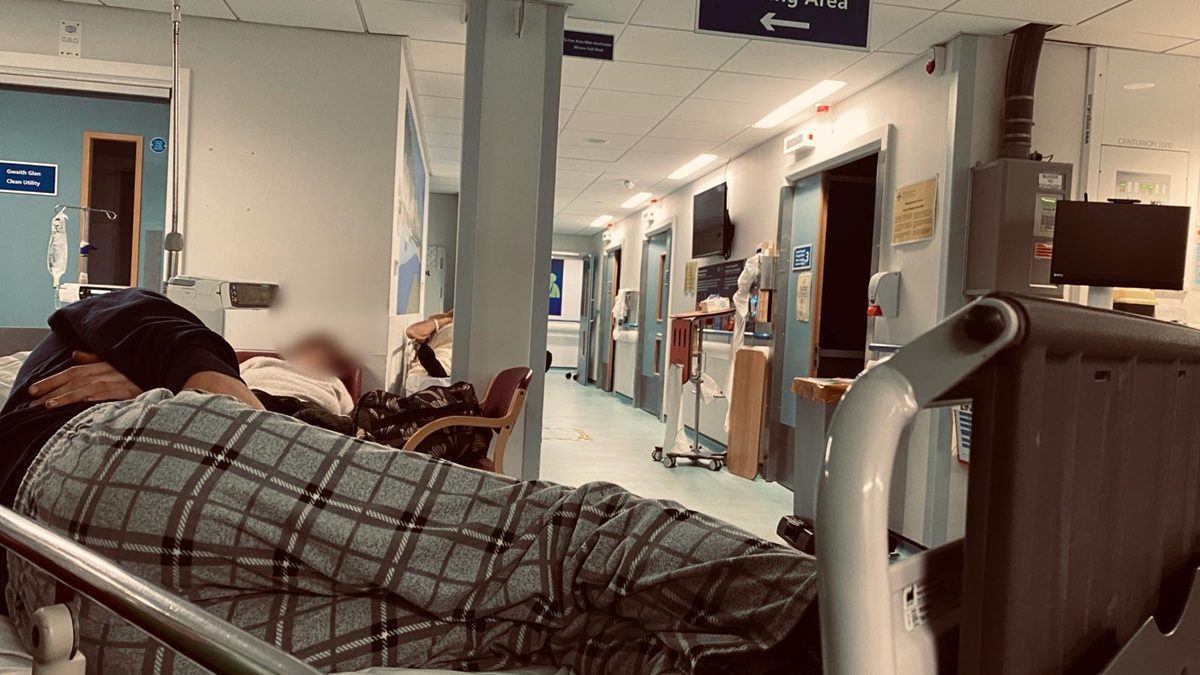
Nursing leaders have renewed calls for the Welsh Government to begin collecting and publishing data on patients being treated in hospital corridors, following the release of the first national figures for England.
The Royal College of Nursing (RCN) Wales said the publication of corridor care data by NHS England had highlighted the need for greater transparency about the scale of the problem in Welsh hospitals.
The union argues that without consistent national data it is impossible to understand how widespread corridor care has become, identify trends or measure whether efforts to tackle it are working.
RCN Wales Executive Director Nicola Williams said nurses across Wales continue to witness patients being treated in unsuitable areas because of pressures on hospitals and the wider health and care system.
“Corridor care is unsafe, undignified and unacceptable,” she said.
“Today’s publication of corridor care data in England demonstrates why transparency matters. We cannot tackle a problem we do not fully understand and are not measuring.”
Ms Williams said recent visits to hospitals across Wales had revealed patients spending lengthy periods on trolleys and in chairs in overcrowded spaces not designed for clinical care.
She described seeing patients in hospital gowns with little privacy or dignity, some of whom had been waiting for more than 12 hours.
“There was one consistent feature, which was the look of fear in patients’ eyes as they watched the continual movement and activity going on loudly in very close proximity to them,” she said.
“Nurses told me this is now normalised, happens every day and staff cannot care adequately for patients, which is causing harm and distress to patients and significantly affecting nurses’ morale.”
The intervention comes just days after Health Minister Mabon ap Gwynfor described corridor care as an unsafe practice during a Senedd debate and pledged to tackle the issue.
RCN Wales welcomed those comments but said ministers must now go further by introducing a national reporting system.
The union is calling for corridor care figures to be published monthly for each health board, alongside the creation of a national dataset to ensure incidents are recorded consistently across Wales.
It also wants the Welsh Government to publish two national reviews examining healthcare capacity, arguing that understanding pressures on beds and services will be key to eliminating corridor care.
Ms Williams said collecting the data was not simply a bureaucratic exercise.
“This is not about collecting statistics for their own sake,” she said.
“It is about establishing a baseline against which improvement can be measured and ensuring accountability for delivering safer care for patients.”
The issue has become increasingly prominent across the UK as emergency departments and hospital wards struggle with demand, staffing shortages and delayed discharges.
Dataset
While official figures are now being collected in England, no equivalent national dataset currently exists in Wales, making it difficult to assess the extent of corridor care across the NHS.
The Welsh Government said: “This new Welsh Government is committed to tackling corridor care with urgency and has been clear about its expectations of health boards.
“Work is underway to establish a robust dataset before the publication of national data on corridor care is considered, as any such reporting must be underpinned by consistent definitions and high-quality data.”
Support our Nation today
For the price of a cup of coffee a month you can help us create an independent, not-for-profit, national news service for the people of Wales, by the people of Wales.
Get more trusted Welsh news
Choose Nation.Cymru as a preferred source in Google News to see more of our journalism.


