


Older People’s Commissioner frustrated as UK Government declines to introduce a national social tariff for water
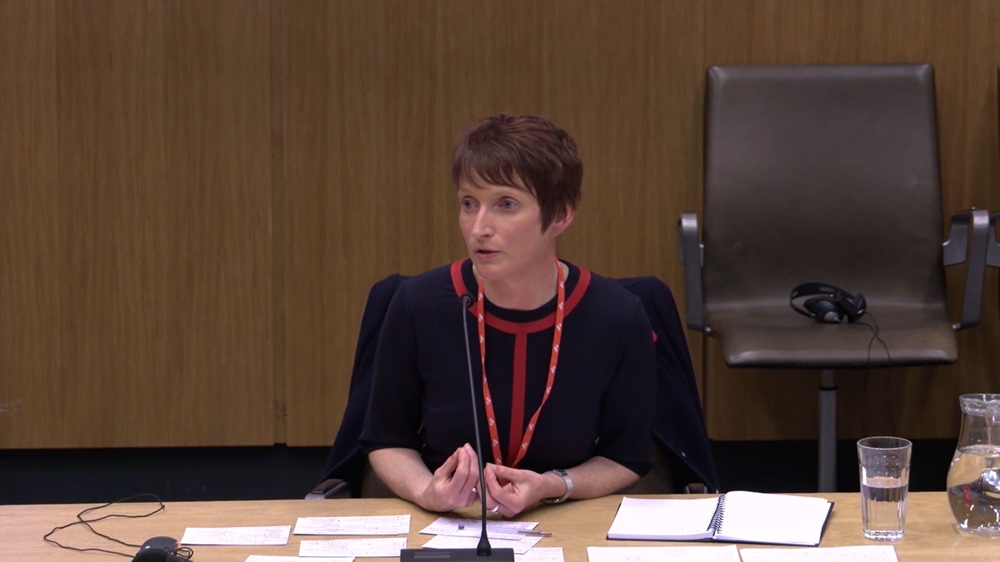
The Older People’s Commissioner for Wales has expressed ‘disappointment’ after the UK Government confirmed it will not introduce a national social tariff for water.
Its decision comes despite recommendations from an independent review of the water industry.
Rhian Bowen-Davies said the decision risks leaving older people and low-income households across Wales facing mounting financial pressure as water bills continue to rise.
“It is very disappointing that the UK Government will not be taking forward the recommendation from the Independent Water Commission to introduce a social tariff for water, a measure I supported alongside a wide range of other organisations,” she said.
“People on low incomes, including many older people, are already being forced to cut back on washing, laundry and even flushing the toilet to try to keep bills down, something that is simply not acceptable: people should not have to restrict their water use just to make ends meet, which can increase the risk of illness and infection as well as leading to stress, stigma, and social isolation.”
The Commissioner also warned that water poverty is a growing problem, particularly for older households, and said a national tariff would provide fairer and more consistent support.
“A social tariff for water would provide much needed, meaningful and consistent support for people on low incomes, and play an important role in alleviating water poverty, a growing issue that is expected to affect around a million older households across the UK by 2029,” she said.
“I would therefore urge the UK Government to rethink its decision and work with the water industry and stakeholders to ensure that customers who are struggling financially can access the support they need.”
Her comments come as new figures underline the scale of financial hardship linked to water bills.
Reduced bills
Around two million households were receiving reduced bills through existing social tariff schemes in 2025, but an additional 199,000 households fell into water debt during the same period.
This took the total number of customers in arrears to around 2.85 million.
According to the Consumer Council for Water’s annual Water Mark report, water companies across England and Wales supported 1.96 million customers through social tariffs last year – an increase of 22 per cent, with an average bill reduction of £190.
However, the support was not sufficient to prevent rising debt, particularly ahead of April’s record increase in charges, which saw the average water and sewerage bill rise by around 26 per cent, or £123.
The Consumer Council for Water has called for a single social tariff across England and Wales, arguing that the current system creates a “postcode lottery” in which support varies widely depending on the water company. Average reductions under existing schemes range from £120 to £314 a year.
WaterSure
Other measures are in place to help some households, including the WaterSure scheme, which caps bills for metered customers on income-related benefits who either have large families or medical conditions requiring higher water use.
More than 260,800 households benefited from WaterSure, receiving an average reduction of £325.
The UK Government outlined a range of reforms in its Water White Paper published this week, including plans for a new Water Ombudsman and changes to regulation.
Support our Nation today
For the price of a cup of coffee a month you can help us create an independent, not-for-profit, national news service for the people of Wales, by the people of Wales.



How is a social tariff actually funded? Would the water companies use it as an excuse to raise prices for other customers?