

One in five teenagers ‘do not share political views due to cancellation fear’
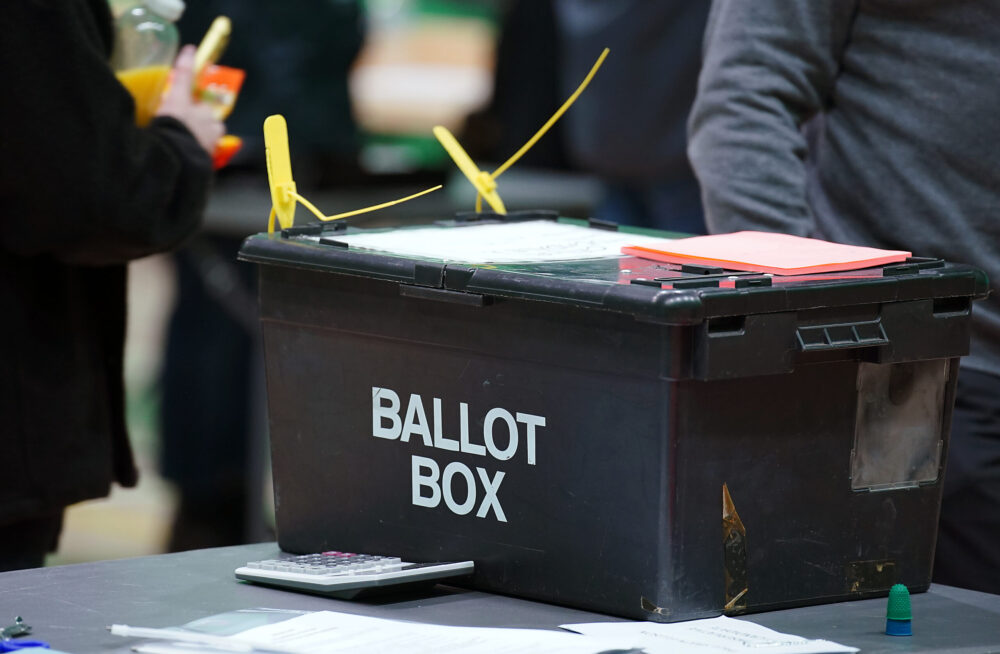
Around one in five teenagers say they have stopped themselves sharing political views because they are worried about being cancelled, a survey has found.
More than two in five (44%) 15 to 17-year-olds who responded to the survey by the Economist Educational Foundation said they would not feel ready to vote in the next election.
It comes as the UK Government introduced plans to lower the voting age to 16 in its Representation of the People Bill for UK parliamentary elections.
Sixteen and 17-year-olds are already able to vote in Welsh and Scottish Parliament elections.
Among 15 to 17-year-olds, 22% said they had stopped themselves sharing views because of cancellation fears, while 19% of 10 to 14-year-olds said this.
Among all respondents, nearly one in four (23%) said they have been asked to stop speaking about their political views at school.
Tiffany Smyly, chief growth officer of the Economist Educational Foundation, said: “If teenagers are worried about being cancelled, then they are not going to be sharing their viewpoints at school or with friends.
“Instead, they are likely to go into chat rooms or forums that do allow them to share a fringe opinion, and that might be where their views become more extreme. We need to channel young people’s political curiosity in more positive ways.”
The Economist’s survey of more than 4,000 students aged 10 to 17 found that the cost of living was the main concern for young people – flagged by 70% of 15 to 17-year-olds and 58% of 10 to 14-year-olds.
Health was the next most important issue for young people responding to the survey.
Helen Blachford, trust subject director of personal development and curriculum leader for citizenship and PSHE at Priory School, said students are likely to be seeing the impact of rises in the cost of living in the lives of people they know and in their communities.
“While young people are also concerned about issues such as the environment, knife crime and violence against women, they might have real, tangible experience of the cost of living on a day-to-day basis which would affect their votingchoices,” she said.
Respondents aged 10 to 14 were less likely to feel not ready to vote at 16, with around one in three (31%) saying they would not feel ready.
The lower figure than 15 to 17-year-olds “may reflect the fact that votingstill feels some distance away for this group, and they may expect to feel more prepared as they get older,” the report authors said.
Both age groups were more likely to say they were curious about politics than uninterested in it, and nearly two in three (65%) 15 to 17-year-olds said they would feel more confident voting if they knew more about different political policies.
Flora Letanka, chief executive of the Economist Educational Foundation, said: “Young people are curious about politics, but the worry is that if they don’t have the opportunity to engage and debate on topics that matter to them, then they may turn to social media which can be very polarising.
“Instead, we need to ensure young people are given the chance to think critically about what’s going on in the world, to explore different perspectives, and see the real impact of political decisions on the people around them.”
Support our Nation today
For the price of a cup of coffee a month you can help us create an independent, not-for-profit, national news service for the people of Wales, by the people of Wales.
Get more trusted Welsh news
Choose Nation.Cymru as a preferred source in Google News to see more of our journalism.


