


Outrage after Diocese contributes £1.15m to new school despite saying it is ‘not financially well off’
Alec Doyle, Local Democracy Reporter
Opponents of a new Catholic super school are reportedly outraged after it emerged that the Diocese of Wrexham recently contributed towards the construction of another new school, after claims he was ‘not well off.’
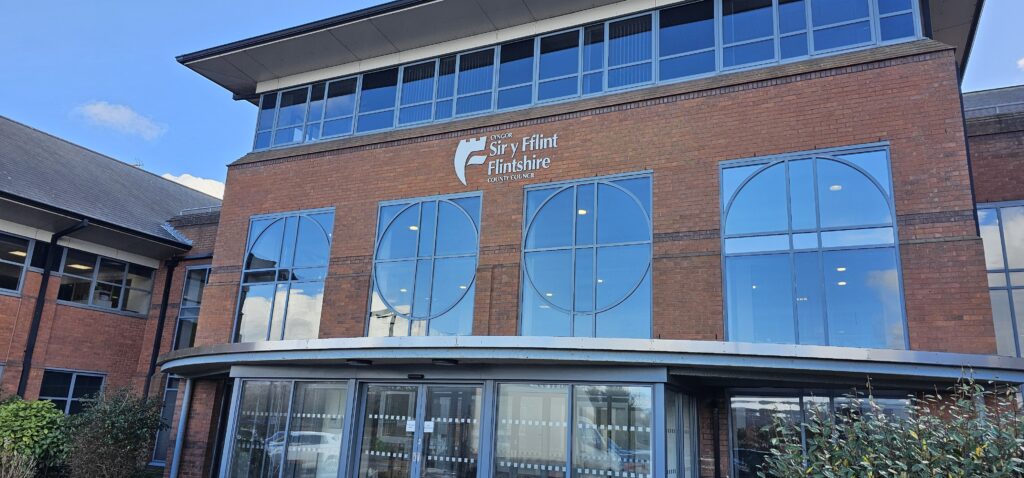
Council taxpayers could face a bill of more than £30m over 50 years if plans to close four Catholic schools and replace them with a new 3-18 Catholic super-school are approved.
The Diocese is expected to contribute 15% towards the cost of building a new Catholic school under the usual funding arrangements.
However, the Diocese has previously told Flintshire County Council that it cannot afford to make the contribution towards the proposed new school in Flint.
Cash-strapped Flintshire County Council plans to borrow 15% of the cost of the school – with the remaining 85% funded by Welsh Government through its Sustainable Communities for Learning grant.
Contribution to other school
At a special meeting of Flintshire’s Education and Youth Overview and Scrutiny Committee has now revealed that the Diocese recently found the money to make a 15% contribution to build a new primary school in Gwynedd – Ysgol Ein Harglwyddes – worth around £1.15m.
Back in May Wendy White, the Diocese of Wrexham’s Education Officer, told Flintshire Council’s Cabinet that the Diocese was ‘not well off’.
“Contrary to some people’s beliefs, the Diocese is not financially well off at all,” she said.
“Funding has to be part of the picture. Some of our buildings are not fit for purpose to offer children the best education.”
But during the special meeting Cllr Andrew Parkhurst – the Leader of Flintshire’s Liberal Democrat group – revealed the Diocese had made the full 15% contribution in another authority.
“Bangor got 15% from the Roman Catholic Diocese, we are getting nothing,” he said.
“The school will be handed over in its entirety with zero contribution.
“I would ask cabinet to consider the sense of that, the approach to this topic, and who made the decision for that to happen, because that has not been recorded.”
Cllr Carolyn Preece said the decision was unfair to the people of Flintshire.
“The Diocese is giving 15% to another county and not to Flintshire,” she said ” It doesn’t seem fair.
“Flintshire should be treated exactly the same as Bangor or wherever else, From the outside looking in it looks like it could be a form of discrimination.”
Response
In response Ms White said: “The diocese works with seven different local authorities and we have relationships and discussions with them on a one-to-one basis.
“Those discussions within Flintshire have been very upfront with the executive. We do keep referring to them as Catholic schools but of course they are schools that have a Catholic nature that serve the children of Flintshire whether they are Catholic or not Catholic.
“Those children of Flintshire all deserve the best possible education that they can get,
“Thirdly I would say that quite a number of the children within our Catholic schools, usually around 50% are other than Catholics, are welcomed exactly as any other child might be and the church actually provides 15% of the day-to-day cost that would otherwise have to be provided by Flintshire County Council. Therefore those children who are not Catholic are actually receiving a 15% gift from the church as part of our community – the picture is not as simple as people would like to to perhaps put it.”
Flintshire County Council’s Chief Officer (Governance) Gareth Owens said in terms of the legality of how the building is funded, Flintshire Council does not have to pay the Diocese contribution. It could simply leave it to the Diocese to pay.
Tax payers question council
However, if the authority chooses to pay on behalf of the Diocese, it cannot recover any money from the Diocese after the fact.
Council tax payers and parents at schools in line for closure are now questioning why – in light of the Gwynedd situation – the Diocese has not put up any money for the Flintshire super-school proposals.
St Anthony’s Catholic Primary in Saltney is one of the four schools – along with St David’s Catholic Primary in Mold, St Mary’s Catholic Primary in Flint and St Richard Gwyn Catholic High School in Flint – that will close if the super-school proposals are approved.
Kerry Hunt – a member of the Save St Anthony’s School campaign – said: “Labour and certain Independent councillors have long championed ‘equity of funding’ for school places yet now appear willing to abandon that principle by shifting the Wrexham Diocese’s 15% contribution onto Flintshire taxpayers through a 50‑year loan with interest.
“That means today’s residents – and future generations – will be paying for a cost the Diocese should be meeting. Flintshire already faces one of the higher council tax levels in Wales, and this proposal will likely push it even higher.
“This contrasts sharply with Gwynedd, where the Diocese paid its full 15% contribution towards a recently opened primary school, sparing local taxpayers from carrying the burden.
“The question is straightforward: why did the Gwynedd project receive the Senedd recommended Diocesan contribution, yet Flintshire residents are being asked to shoulder this portion of the cost for decades?”
Support our Nation today
For the price of a cup of coffee a month you can help us create an independent, not-for-profit, national news service for the people of Wales, by the people of Wales.
Get more trusted Welsh news
Choose Nation.Cymru as a preferred source in Google News to see more of our journalism.



Why should the non Catholics of Flint pay 100% of the contribution available to provide a school which will become an asset of the Diocese of Wrexham?