


Parasitic fly ‘sacrifices sight’ after finding host, researchers discover
Mark Mansfield
A blood-feeding parasitic fly appears to reduce its visual sensitivity after finding a host and permanently giving up flight, according to new research led by scientists in Wales.
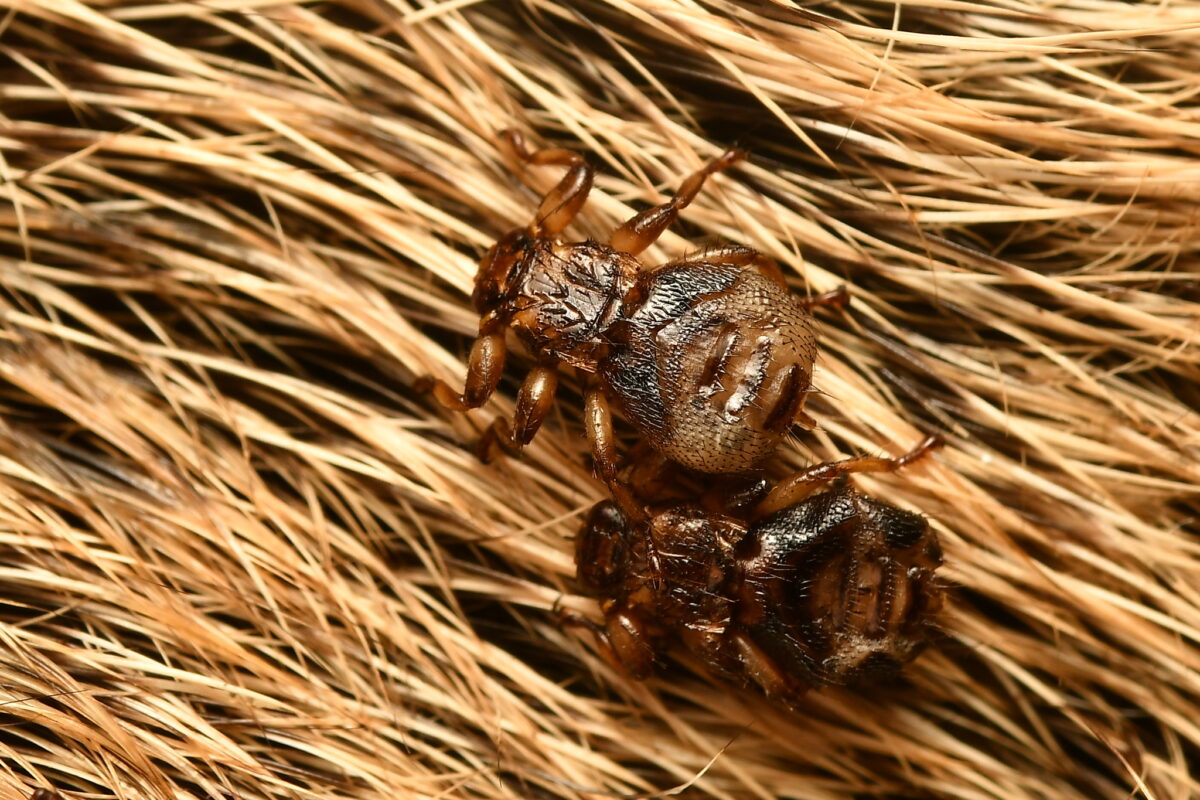
Researchers at Aberystwyth University and the University of Florence studied deer keds, biting flies that use flight and vision to locate hosts before shedding their wings and living permanently in fur while feeding on blood.
The study found that after the insects settle on a host, they appear to divert energy away from maintaining strong vision and towards other functions such as digestion and reproduction.
Deer keds are found across Europe, Asia, Africa and the Americas, usually targeting deer but occasionally biting humans and other mammals.
Dr Roger Santer, from Aberystwyth University’s Department of Life Sciences, who led the research, said the insects offered scientists a rare opportunity to study how sensory systems adapt to dramatic lifestyle changes.
He said: “Vision plays a vital role in animal behaviour, but it is also energetically expensive.
“Evolution favours sensory systems that are efficiently matched to an animal’s way of life. Some blood-feeding flies rely heavily on vision, while others live permanently on hosts and have little need for it. Deer keds are especially interesting because they switch between these two lifestyles.”
The research team examined deer keds at different stages of their life cycle, including winged adults searching for hosts and wingless adults collected from deer after adopting their parasitic lifestyle.
Scientists focused on “opsins”, genes linked to visual sensitivity, comparing their activity before and after the insects lost their wings.
According to the study, the activity of these genes dropped to around half their previous level once the flies became permanent parasites.
Dr Santer said the flying insects initially had visual systems similar to tsetse flies, which are known for locating mammal hosts in Africa.
However, he said that changed significantly once the deer keds settled onto a host.
Tsetse fly
“We found that a flying deer ked’s visual system is much like that of a tsetse fly,” he said.
“However, after a deer ked loses its wings and becomes an ectoparasite, activity of its opsin genes reduces to around half the previous level.
“This suggests that the flies do not lose vision entirely, but that their visual sensitivity is reduced. We think the fly might be sacrificing sight to conserve energy for functions such as digestion and reproduction.”
The findings, published in the Journal of Experimental Biology, could help improve understanding of how biting flies and parasites adapt to different environments.
Researchers said the work may also contribute to future monitoring and control strategies for blood-feeding insects.
Support our Nation today
For the price of a cup of coffee a month you can help us create an independent, not-for-profit, national news service for the people of Wales, by the people of Wales.
Get more trusted Welsh news
Choose Nation.Cymru as a preferred source in Google News to see more of our journalism.


