


Patients treated in store cupboards as corridor care ‘normalised’
Chris Haines – ICNN Senedd reporter
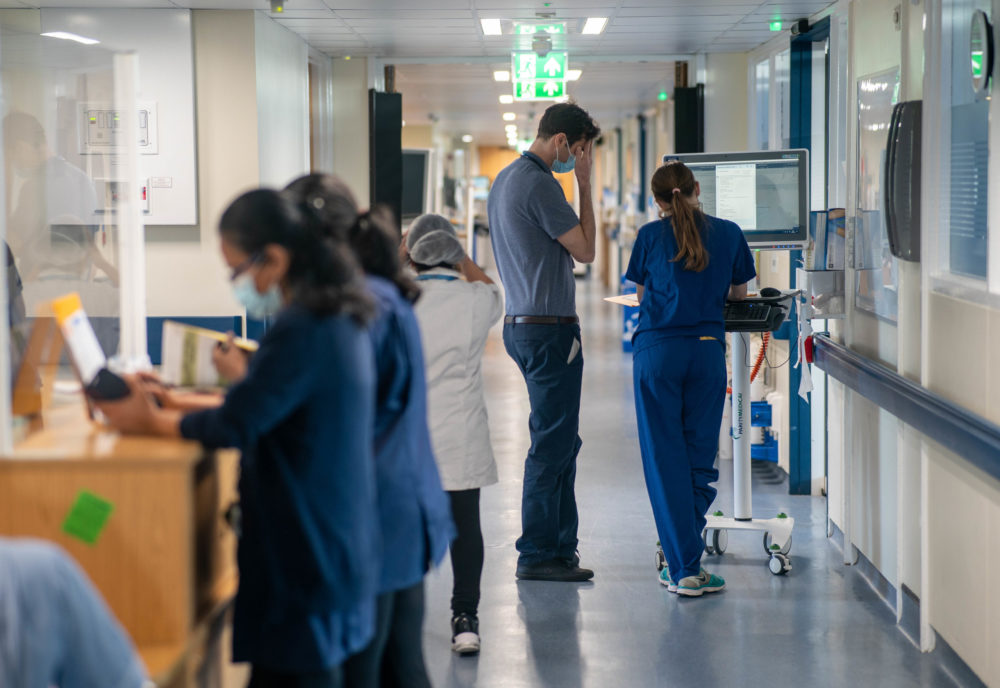
Patients are being treated in store cupboards, break rooms and toilets as so-called corridor care becomes the norm in Welsh hospitals, the Senedd has heard.
Senedd members warned treating patients in inappropriate areas has become a “daily reality” rather than an exception as they debated calls for the practice to be eradicated.
The debate was prompted by a petition – submitted by the Royal College of Nursing (RCN) and British Medical Association (BMA) – which gathered more than 10,000 signatures.
Petitioners demanded that keeping patients on trolleys or chairs for a long time be formally classified as a “never event” – a serious, preventable safety incident that should not happen.
But the Welsh Government rejected the calls, arguing the strict definition of a “never event” applies only to preventable medical mistakes – not systemic capacity pressures.
The petition urged ministers to start reporting on corridor care, pause reductions in hospital beds, invest in community care, and prioritise prevention and early intervention.
Sharing her own experience, Reform UK’s Laura Anne Jones argued corridor care is one of the clearest signs of a health service that has been allowed to fall into crisis.
“I was placed on a broken bed in a corridor for two nights before a room became available,” she said. “I was in too much pain to care at the time but those caring for me said how completely inappropriate it was and kept apologising for it.”
Ms Jones added: “I could hear private conversations between consultants, doctors and nurses about other patients. And I was right against a curtainless window… there was no dignity, no privacy, and that’s just not OK.”
The Conservatives’ Joel James told the Senedd thousands of patients are now being treated on trolleys in corridors, in ambulances, store cupboards and other places not meant for care. “This is putting life at risk,” he said. “They are being treated without proper facilities.”
‘Inhumane’
Mr James warned: “NHS Wales doesn’t even collect data on who is being treated in a corridor. That frankly should surprise no-one, as Welsh Labour’s philosophy has always been, if you don’t measure it, then there is no evidence to pin you down on it.”
His Tory colleague Janet Finch-Saunders said: “I even know of situations where a paramedic will leave a patient in an ambulance with a new paramedic coming on. When that paramedic comes back on the next shift, the same patient is still in that ambulance
“How can that be morally right? It’s inhumane, it’s cruel and it’s certainly unacceptable.”
Mabon ap Gwynfor, Plaid Cymru’s shadow health secretary, warned the “demeaning and dangerous” practice has become an “almost inescapable” part of hospital care.
“What should be the exception has now been normalised,” he said.
Rhys ab Owen, who sits as an independent, highlighted reports of patients being cared for in “car parks, break rooms and even toilets”.
‘National crisis’
Labour’s Carolyn Thomas, who chairs the Senedd’s petitions committee, warned that RCN and BMA members view corridor care as a “systemic national crisis”.
Responding to Wednesday’s (December 10) debate, Jeremy Miles acknowledged that corridor care “compromises patient dignity and staff well-being”.
But Wales’ health secretary insisted that designating corridor care as a “never event” was not the solution. “The delivery of care in undesignated or non-clinical environments doesn’t meet the criteria due to the complexity of underlying causes,” he said.
Mr Miles told the Senedd: “We do not endorse routine care in non-clinical environments. Our goal is to eliminate this practice through system-wide reform.
“Eradicating care in undesignated or non-clinical environments will not be a simple quick fix. It requires co-ordinated action across health and social care.”
Support our Nation today
For the price of a cup of coffee a month you can help us create an independent, not-for-profit, national news service for the people of Wales, by the people of Wales.


