


Permission sought to permit use of historic colliery building as storage centre
Alec Doyle, local democracy reporter
Retrospective plans to secure permission to turn a listed coal washery into a storage facility have been lodged with Wrexham Council.
Within Llay Hall Industrial Estate sits a collection of four Grade II-listed buildings that were part of Llay Hall Colliery – the colliery chimney and flue, engine house, workshops and washery.
Listed status
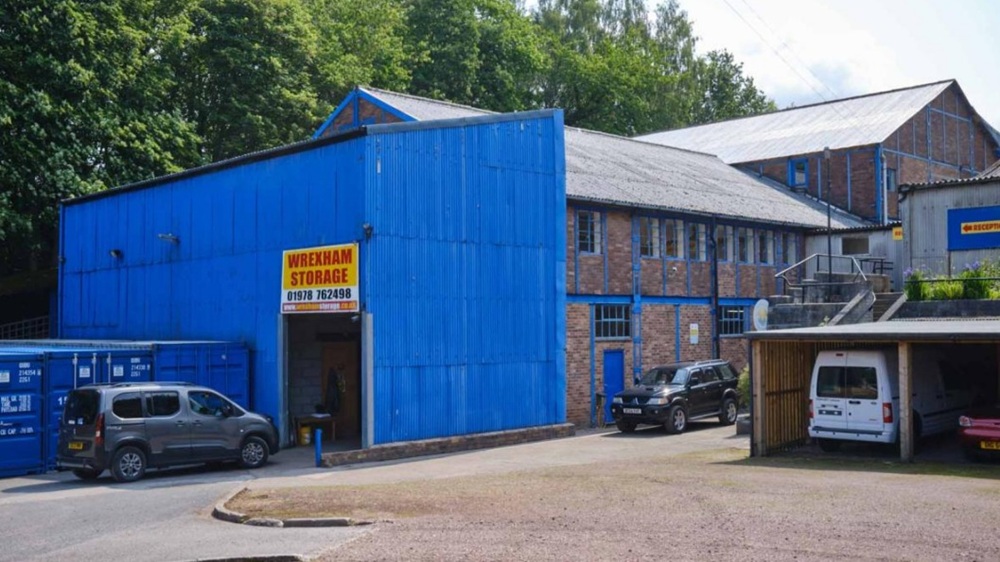
The washery – the only building of its kind granted listed status and one of only two pre-World War II examples known to have survived in Wales – has been turned into storage units for Wrexham Storage by owner Don Hitchmough, and plans have now been submitted to secure permission for that change.
“The applicant seeks retrospective consent for the subdivision of the building to form individual compartments/cubicles to serve as storage facilities for hire,” said the covering letter drafted by agents Concept Town Planning on behalf of the applicant.
“The plywood and chipboard units are themselves clearly reversible and their construction has not affected the historical or evidential value of the interior, given that the structure was re-purposed after it ceased to be a washery and the original equipment was removed.
“The impact of the storage units on the significance of the listed building is neutral, and there is no impact on the significance of other nearby heritage assets.”
House and steam coal
Llay Hall Colliery was opened in 1877 by Llay Hall Coal, Iron and Firebrick Company – 44 years before the Llay Main Colliery. By 1896 there were 360 men employed at Llay Hall, producing house and steam coal and fireclay.
The washery, added later, saw ‘dirty’ coal – coal with shale still attached due to mechanical mining – drop in above. Water, jigs and compressed air would separate the shale from the coal and the ‘clean’ coal would drop into the waiting coal wagons.
By 1905 output was 145,000 tons and the workforce had grown to 533
men. But following a serious explosion in January 1947 the pit was closed.
The building as it is currently is clad in asbestos cement sheets. Inside much of the original steelwork structure remains, with some new metalwork added for extra strength.
The secure storage areas installed by Wrexham Storage for customers are made of chipboard and plywood.
Planners are expected to rule on the application by October 21.
Support our Nation today
For the price of a cup of coffee a month you can help us create an independent, not-for-profit, national news service for the people of Wales, by the people of Wales.


