

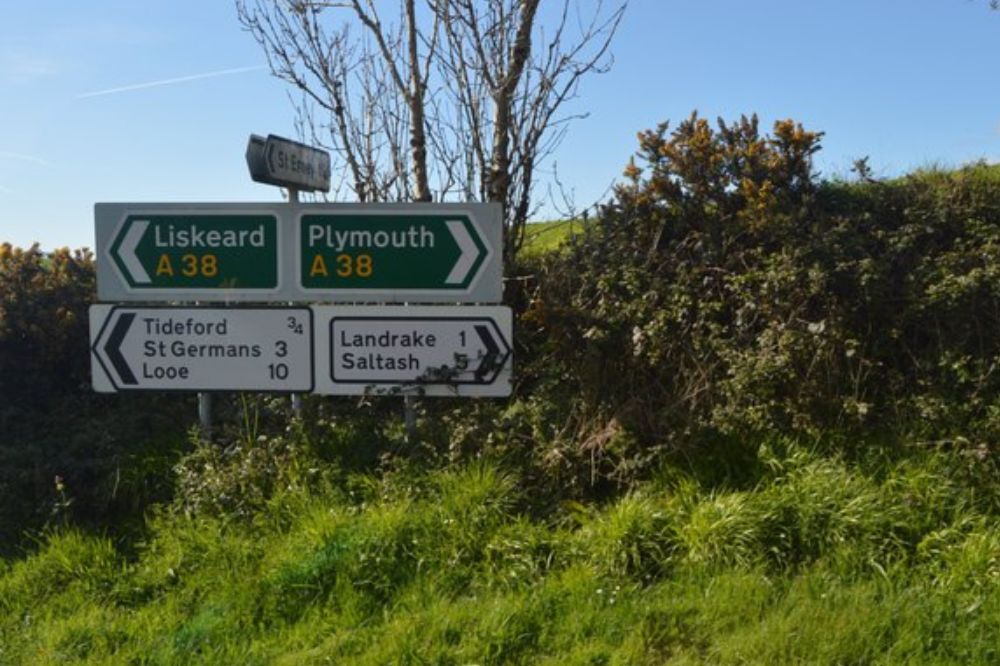
Petition calls for dual Kernewek place name signage across Cornwall
Stephen Price
A campaign has been launched demanding dual Kernewek place name signage for all Cornish villages and towns.
Created by Edward Rowe, a newly launched change.org petition states: “The ancient Celtic language of Kernewek is all around us in Cornwall- be it the already fantastic array of bilingual signs in the Hall for Cornwall or Lys Kernow in Truro.
“And now, the Cornish language/yeyth Kernewek has been officially recognised under Part III of the European Charter for Regional or Minority Languages. Yippeee!!
“Kernewek is at her most interesting and inspiring when you uncover the Cornish name for a village, a town or a river.
“Here are just a few examples”
- Roche: Tregarrek, home of the rock.
- Redruth: Resrudh, red river/ford.
- Camborne: Kammbroon, crooked hill.
- Brown Willy: Bronn Gwenneli, hill of the swallows.
- Camel River: Camel literally means, crooked river.
(If you wanted to learn more about place names/henwyn tyller, check out the online Cornish dictionary:
https://www.akademikernewek.org.uk/place-names/ )
The petition, which received hundred of signatories within it first day of launching, adds: “I have no doubt that changing signage would be tremendously expensive, and people will say “potholes are more important”.
“But if this petition raises the awareness of Kernewek and people gain more of an understanding of Cornish and the places around them, that can only be a good thing.
“So, please sign this petition to make all place names signs Cornish/Kernewek (and English) for the future generations of Cornwall.
“KERNOW BYS VYKEN!”
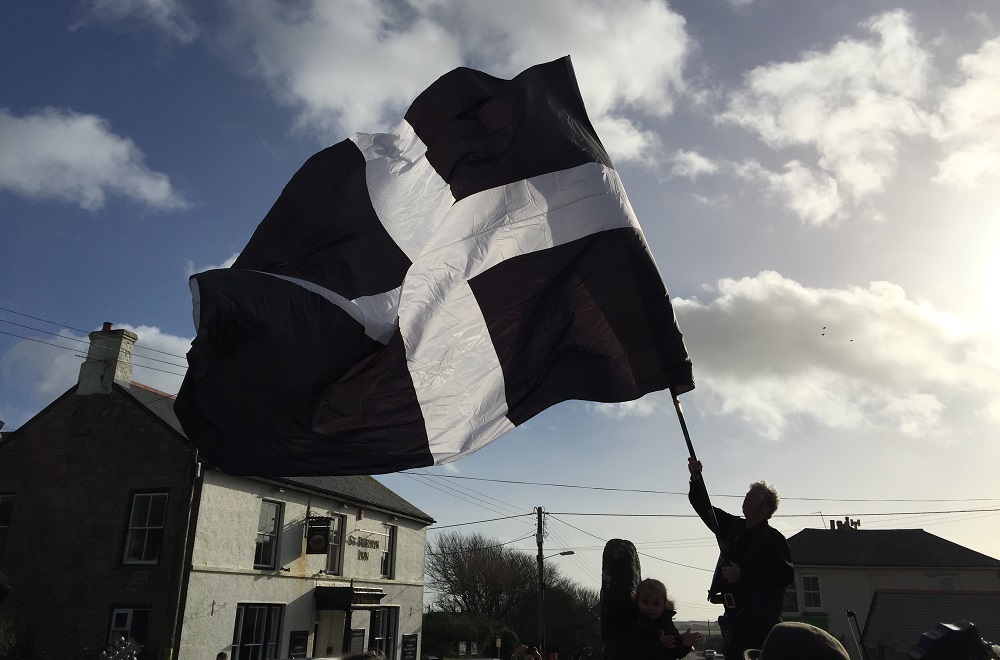
As reported in November 2025, Kernewek will be recognised alongside Welsh, Irish Gaelic and Scots Gaelic after the UK Government recommended it for Part III status – the highest level of protection under European treaty.
The announcement follows years of campaigning from Cornwall Council, community groups and cultural organisations dedicated to protecting Cornwall’s native language.
Councillor Sarah Preece, Portfolio Holder for Tourism, Localism and Planning said “Kernewek is a fundamental part of Cornwall’s unique identity. We welcome this announcement as a huge step forward, giving the language the recognition and protection it deserves for future generations.”
Councillor Dick Cole, chair of the Fifth Nation Working Group said “It is really positive news that the Government has confirmed that Cornish will be covered by Part III of the Charter for Regional or Minority Languages. It means that Cornish will have the same status as the other Celtic languages of the United Kingdom – Welsh, Scottish Gaelic and Irish – and I would like to pay tribute to everyone who has campaigned for these greater protections for the Cornish.
“The priority must now be for the Government to work with the people of Cornwall to better support and promote our national language. And we must build on this status to ensure that Cornish nationhood is better reflected in all aspects of the governance of the UK, which needs to include a meaningful devolution settlement.”
Council Leader Leigh Frost said: “This is brilliant news for Cornwall. Achieving Part III status reflects years of hard work by Cornwall Council, our partners and the many community groups who have fought to keep the Cornish language alive. To see Cornish recognised alongside Welsh, Scottish Gaelic and Irish Gaelic is something we can all be extremely proud of.”
He added: “Our language is a vital part of who we are. This announcement sends a strong message that Cornish matters, and that it deserves the highest level of support and protection. It’s an important step in strengthening our culture for future generations.”
To “celebrate the latest step in the ongoing resurrection”, Cornwall Live wrote their news story about the new status for Kernewek bilingually, gaining widespread praise across social media for the move.
Cornish became extinct as a living community language in Cornwall by the end of the 18th century.
A revival started in the early 20th century and in 2010 UNESCO reclassified the language as critically endangered, stating that its former classification of the language as extinct was no longer accurate.
In 2024-2025, over a million searches were made using the online Cornish dictionary and Cornwall Council’s Cornish Language Team received more than 650 requests, translating more than 32,000 words into Kernewek – up 22% from the previous year.
More than 200 people sign up for Kernewek classes each year, and almost 6,000 schoolchildren are having fun with the Cornish language through the Go Cornish for Primary Schools programme, commissioned by Cornwall Council.
Petition
Support for the place names petition is growing, with one supporter from Barry writing: “As a Welshman, I understand what place names mean to those trying to preserve their heritage. I am strongly supportive of Cornwall’s fight to preserve not only their history, but their distinctiveness in all facets.”
Another supporter added: “Amid the relentless calls for ‘Devonwall’ – our language is more important than ever in preserving our identity and fighting for our recognition as the Celtic nation we are and always have been.”
Echoing the situation of many Welsh place names, Alan in Truro wrote: “Most of the names are mangled English mispronunciations of Cornish names anyway.. Redruth ? (red red) Cornish Resrudh (red river).. the list goes on.. if etymology and truth matters to people then correction of place names through dual lingual signage would seem fair.”
View and sign the petition here.
Support our Nation today
For the price of a cup of coffee a month you can help us create an independent, not-for-profit, national news service for the people of Wales, by the people of Wales.



Now this should make the Reform brigades blood boil!
Pur dha!
Brentyn / Ardderchog!
Hen bryd.