

Petition calls for ‘much greater focus on Welsh history’ in schools
Stephen Price
A Senedd Cymru petition has launched, calling on the Welsh Government to ‘put a much greater focus on Welsh history’ in the GCSE (Curriculum Wales) course.
The petition, created by Elfed Wyn ap Elwyn states: “At the moment, school leavers in Wales will know more about the history of America and Nazi Germany than the history of their own country.
“The new GCSEs in History being introduced in September this year are likely to exacerbate this situation even further.
“We need your support to ensure that learning the story of our country is put at the forefront, giving our young people the opportunity to understand and appreciate Welsh history as a central part of their education.”
ap Elwyn adds: “The new GCSE History course was postponed for a year last year thanks to a successful campaign by history teachers across Wales who opposed the changes.
“At the time, it was hoped that the WJEC examination board and the Welsh Government would listen to their voice and review the course for the better. Unfortunately, that hasn’t happened, and the situation continues without any meaningful changes.”
The petition follows years of campaigning across Wales, including calls from Dr Huw Griffiths, a Senior Lecturer in Education at the University of Wales Trinity Saint David, who has argued that Welsh history is being sidelined in secondary schools and a complete overhaul of Wales’ GCSE history qualification is urgently needed.
The prominent historian was one of 200 teachers that had a hand in compiling the content of Wales’ GCSE history qualification around ten years ago.
But Dr Griffiths says that despite his best efforts, the resulting qualification never had enough focus on Welsh history. He is now battling for this to change.
‘Battle’
With a new GCSE history qualification set to be introduced in Wales in September 2026, Dr Griffiths has called for a complete re-design of what 14 to 16-year-olds are taught about their own country’s history.
The education academic has suggested that the people of Wales themselves should have a hand in what content should be include in the next GCSE history qualification.

Dr Griffiths said: “We are fighting a battle to get Welsh history in our schools.
“As a country we should look together and decide what are the 10 or 15 key facts, events, dates, or figures that every pupil in Wales ought to learn about.
“Every child in Wales should know about Aneurin Bevan and events like the Aberfan disaster. Dates like 1812, 1822 and 1847 are important too.
“Children in Wales should know these things — about who we are as a people. It’s just bonkers that we don’t emphasise it in schools.”
American history
Dr Griffiths added: “Every school in Wales has to do one unit on Welsh history. The way that the curriculum has been written says children have to do three different periods in history. Modern history, the Middle Ages and early history.
“What will happen in every school in Wales is for the modern period they’ll either do Nazi Germany or they will do American history to draw students in.
“The middle period is quite a dry period for Wales — there’s two units that can be chosen, children will either do the plague or the Civil War.
“But the plague affected almost every country in the same way and the Civil War is called the English Civil War for a reason. Because it predominantly happened in England.
“Apart from St Fagans, there was no other major incident in Wales — the Welsh were predominantly supporting the Royalists — there’s very little Welsh history in the Civil War period.
“For the early period one of the units is Lord Rhys. I’d argue that four months just looking at Lord Rhys is too much.”
Key topics
Dr Griffiths says that Welsh language departments in both Welsh and English medium schools do a “far better job” of teaching Welsh history than school history departments do.
He has also compiled and studied the details of history curriculums taught in schools across the world and compared them with Wales.
Dr Griffiths said: “It’s an eye-opener. The amount of history being taught in other countries is vastly different to Wales.
“In Wales, children know far more about Nazi Germany and American history than they do about the Aberfan disaster. They know who Rosa Parks is, but they haven’t got a clue about important figures from their own country.”
Dr Griffiths has suggested several key Welsh historic topics that should be taught to children in Wales.
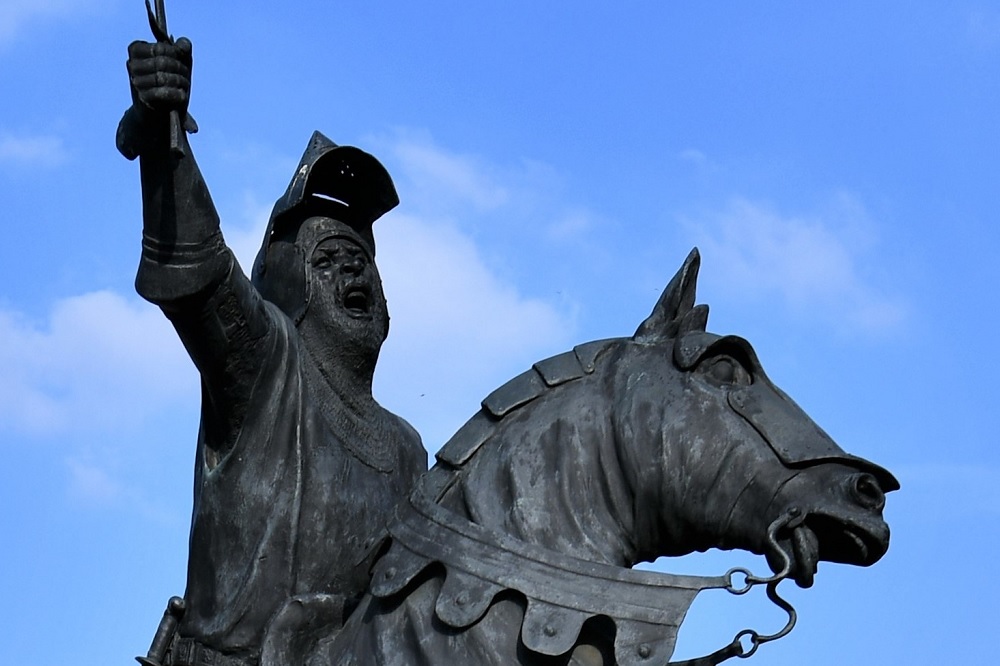
These include the death of the last Prince of Wales, Llywelyn ap Gruffudd, and the 1847 Blue Books report — a three-part government publication about the state of education in Wales that was branded a disparaging and prejudiced attack on the Welsh people.
Dr Griffiths said: “If you were to ask the majority of young people in Wales what happened in 1966 they are far more likely to say that England won the World Cup.
“That shouldn’t be the answer, the answer should be Aberfan. There are certain dates in Welsh history that are very important.
“1282 was when Llywelyn, the last Prince of Wales, was killed. 1847 was the Blue Books report which had a massive impact on the Welsh language. These are the dates people in Wales should know about.
“We should take pride in the fact that Lloyd George brought the pensions in and changed British society as a result.
“Aneurin Bevan brought the NHS in. These people changed our society and we should feel pride towards this and make our young people aware of it.”
‘Pride’
He added: “Our story and who we are is important. Look at Nobel Prize winners – Wales has created five or six – no other country of our size comes close to that.
“In drama and television, there’s no higher award than the Oscars. Wales have won seven Oscars for best supporting actors and actresses.
“Even if you look at the subject of maths. The equals symbol was created by Welsh mathematician Robert Recorde. William Jones created the Pi symbol – these are symbols that are used worldwide.
“People in Wales can lack confidence and by teaching children about Wales’s past we’re building that confidence and showing that we are an amazing people with amazing stories.”
The new GCSE History qualification will be introduced in September 2026, as part of the new National Qualifications for 14 to 16-year-olds in Wales.
The redesigned qualification has been updated to relate to and support Wales’ new curriculum and Welsh history will be mandatory.
Mandatory
Plaid Cymru spokesperson for Education, Cefin Campbell MS said: “Understanding Wales begins with knowing our own history. Plaid Cymru has long championed putting Welsh history at the heart of our curriculum, so every young person grows up with a full understanding of our nation’s story.
“We’ve consistently pressed the Welsh Government to ensure it’s taught meaningfully and with pride in every school and forms part of our qualifications. In government, Plaid Cymru would make sure Welsh history is a core part of our curriculum and qualifications, supported, celebrated, and given the importance it deserves.”
A Welsh Government spokesperson said: “Welsh history has been mandatory as part of the Curriculum for Wales since 2022: including learning about children’s own locality.
“Learners are taught how history, language, diversity and culture have shaped Wales to become the proud and unique nation it is today.
“We are working with Adnodd to support teachers with resources, advice and information.
“Qualifications Wales, as the independent regulator has developed new Made-for-Wales qualifications to align with the Curriculum for Wales. They have engaged extensively with teachers, universities, colleges and professional bodies.”
Support our Nation today
For the price of a cup of coffee a month you can help us create an independent, not-for-profit, national news service for the people of Wales, by the people of Wales.



History lessons are very English centric, the curriculum almost ignores the fact that Wales has been continuously lived in since 9000 BC at least. This is a well overdue correction.
The sad thing is that the Assembly (as was) and now the Senedd has the power to mandate such teaching. Why not? We can’t possibly have the Welsh people knowing their history! The nonsense was brought home to me a few years ago. At the beginning of every year, I would go around the students with the usual introductions and ask each about themselves. A young girl was from Blaenafon, I thought “wow,” such an important part of our history and asked here about it. NOTHING. When pressed, she knew all there is to know about Nazi Germany but absolutely… Read more »
It hampers the political awareness that studying Hanes Cymru brings…
[ Please Scroll down For English ] Dyw'r sefyllfa bresennol ynghylch dysgu hanes Cymru mewn ysgolion Cymruh ddim yn fawr o syndod i mi. Yn enwedig pan ystyriwch fod un Blaid wedi bod mewn grym ers 1999 ym Mae Caerdydd. Plaid Eingl-Brydeinig a'i phencadlys yn Lloegr yw'r Blaid Lafur, er bod ambell i un o'i haelodau wedi bod ymhlith rhai o'r bobl gorau - Aneurin Bevan, er enghraifft - mae Cymru wedi rhoi i ni. Os mae'r ddau arolwg barn diweddaraf gan YouGov yn adlewyrchiad cywir o ganlyniad etholiad Senedd Cymru eleni, wedyn mae 'na obaith hefyd o gael cwricwlwm hanes Cymru deilwng ddifri… Read more »
This is ridiculous. No normal country would put up with this. The idea that we have to argue in the 21st century for Welsh history to be taught properly in our schools? But it shows you the deliberate act by Westminster pre-devolution did not only to destroy our native language but also erase knowledge of Welsh history be it the Act of Union Wales 1535 to the Welsh Not. And why over the past 27 years since Welsh Labour has controlled Welsh education have failed and why we desperately need a Plaid Cymru Welsh Government to ensure Welsh history is… Read more »
What about a Welsh citizenship test? You have to know which Llywelyn is which Llywelyn? Llywelyn Bren, Llywelyn ap Gruffydd, Gruffydd ap Llywelyn, Llywelyn ab Iorwerth, Llywelyn Goch, Llywelyn ab Y Moel, Llywelyn ap Gruffydd Fychan.
This matters. For too long, many pupils in Wales have come through school with only the faintest sense that Welsh history exists as a coherent story, rather than a footnote to someone else’s narrative. That is not a neutral omission, it shapes confidence, belonging, and civic understanding. Welsh history is not just princes and castles. It is community life, chapel culture, language, migration, land, industry, education, protest, and the long, complicated story of how people here lived, organised, and argued about the world. It is also local, the history of your own valley, town, parish, and family, which is exactly… Read more »
If the Welsh knew more about their own history they would be less inclined to accept the centrist status quo as the only way things should be. A good way of assimilating a people is to rob them of their history.
Should be taught in all schools on this island.
Welsh history should be the subject for the compulsory school years. When I did my history teacher training the time periods that were assigned by the Welsh national curriculum were defined by events in English history.
Year seven for example was 1066 to 1485 – the Battle of Hastings and the conqueet of William and the Battle of Bosworth and Henry Tudor’s victory.
Direct action is sometimes needed. In 1990s before the minimum wage was introduced hotels in Abergavenny pay was as low as £2 per hour and staff lived in caravans without heating. July 1994 if I recall the year correctly Glamorgan played a county cricket match against an English team – so Charles visited. The morning of the match in Angel Hotel all the English cricketers were awoken at 0400 for early breakfast – somebody had put on their doors the request cards. That morning the council mowed the sports field where the helicopter was planned to land. About one hour… Read more »
Ever thought of home schooling your own children from the thousands of books on the subject in the library then two generations could learn together.
Being able to read is key but older family members should pick up the slack…
This whole story is one of willful neglect on a massive scale…by adults!
Welsh children should be taught the history of own history its the country WALES NOT BRITISH WHICH IN TRUTH IS ENGLISH PROPAGANDA HISTORY the normal thing for WALES SEE ENGLAND for Welsh history see english history
If English people were taught accurate Btitish history in school they’d be disgusted and disturbed enough to give Wales and Scotland their rightful independence.