


Plaid Cymru tables rail devolution amendments as HS2 costs top £100bn
Mark Mansfield
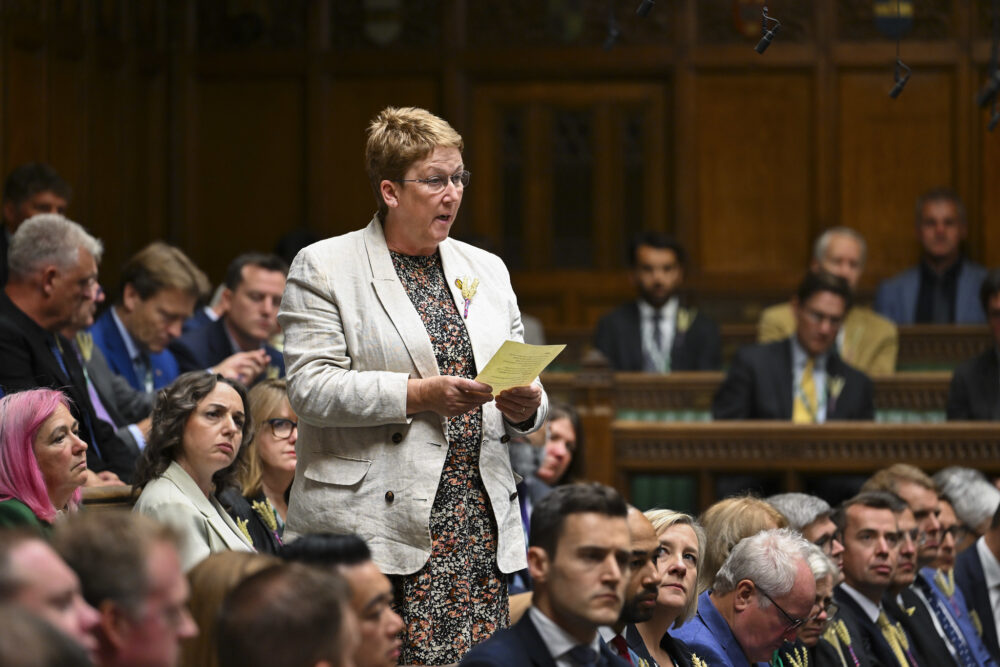
Plaid Cymru has tabled a series of amendments to the UK Government’s Railways Bill calling for rail infrastructure powers to be devolved to Wales.
The amendments, submitted by the party’s Westminster transport spokesperson Ann Davies MP, will be debated as the Railways Bill reaches its report stage in the House of Commons.
Ms Davies said the growing cost of the HS2 project, now estimated at more than £100 billion, strengthened the case for giving Wales greater control over its rail network and the funding that accompanies it.
The amendments call for the devolution of rail infrastructure to Wales, similar to arrangements already in place in Scotland and Northern Ireland. They also seek measures to address historic underfunding of Welsh rail and require the development of a strategy to improve railway investment in rural parts of Wales.
Plaid Cymru argues that Wales continues to lose out because major rail schemes in England, including HS2, Northern Powerhouse Rail and the Oxford-Cambridge line, are funded partly by Welsh taxpayers despite delivering little or no direct benefit to Wales.
Speaking ahead of the debate, Ms Davies said: “The current state of Wales’ rail network is simply unacceptable and reflects decades of underinvestment and structural unfairness that continue to hold our communities back.”
She added: “Plaid Cymru has long argued that Welsh rail should be in Welsh hands, with both the powers and funding needed to build a transport system that works for the whole of Wales.
“With the projected cost of HS2 now exceeding £100 billion, the case for a fair funding settlement and greater control over Wales’ transport system has never been more compelling.”
The intervention comes amid ongoing debate over rail funding in Wales following the UK Government’s Spending Review, which earmarked at least £445 million for Welsh rail enhancements during the current spending period, including infrastructure improvements and funding for the Core Valley Lines.
However, Welsh ministers have argued that the funding falls short of addressing decades of underinvestment in the network.
‘Unfair’
Last week, Wales’ Deputy Transport Minister Mark Hooper wrote to UK Transport Secretary Heidi Alexander calling for talks on rail funding and again raised concerns about the treatment of HS2.
In the letter, Mr Hooper described HS2 as a “long-standing symbol of unfair rail funding” and said recent funding announcements for Wales did not adequately address historic underinvestment.
The UK Government announced earlier this year that it had identified around £14 billion worth of potential rail investment schemes in Wales. However, funding for those projects has not yet been formally allocated and would need to be approved through future spending reviews.
Ms Davies has sought clarification from ministers on when the investment programme will be delivered and whether the funding is guaranteed. In response, the Department for Transport reiterated its commitment to the £445 million package but did not provide a timetable for the wider programme beyond saying it would be delivered “as soon as possible”.
Support our Nation today
For the price of a cup of coffee a month you can help us create an independent, not-for-profit, national news service for the people of Wales, by the people of Wales.
Get more trusted Welsh news
Choose Nation.Cymru as a preferred source in Google News to see more of our journalism.




In figures this is what £10,000,000,000 looks like. This is just one project of many the UK government is spending in England. They cannot spare Cymru £10 without a song and dance about it!!!
Oops…..add another nought….£100,000,000,000.
STOP THE THEFT FROM CYMRU!
I so very much agree with you on this issue.
Need separate legislation to prevent Whitehall mandarins favouring their favourites.
This Evil abhorrence of a so called UK gov,is deliberately Strangling Our Wales in every way possible,we so desperately need our Independence from this disgusting system asap.
If this relationship were of the human kind, it would be classed as domestic abuse. Every single reform supporter is a real danger to Cymru.
You can see with Plaid Cymru who stands up for Wales at Westminster and who does not – it is most certainly not Wales Labour or Conservative MPs. Diolch yn fawr, Anne Davies MP. If UK Labour has any sense, it will devolve the powers being sought rather than continually fobbing us off with empty rhetoric. This claim was recently repeated when Plaid Cymru called for the devolution of justice, as reported on BBC Radio Wales. During that discussion, Newport West MP Ruth Jones was cross-examined by a presenter, where she questioned why Wales has a higher incarceration rate than… Read more »
At last a party that stands up for the rights of Wales and its people not like Liebour Tory and the Fascists Reform
Tfw south Wales metro original 2016 budget £738M cost likely to be £1.3B, almost finished. HS2 2009 budget £37.5M cost likely to be over£100B due to finish 2040. Suggest tfw trying selling their expertise to network rail.