


Plaid MP calls out UK Government’s ‘double standards’ over British Steel buyout
Stephen Price
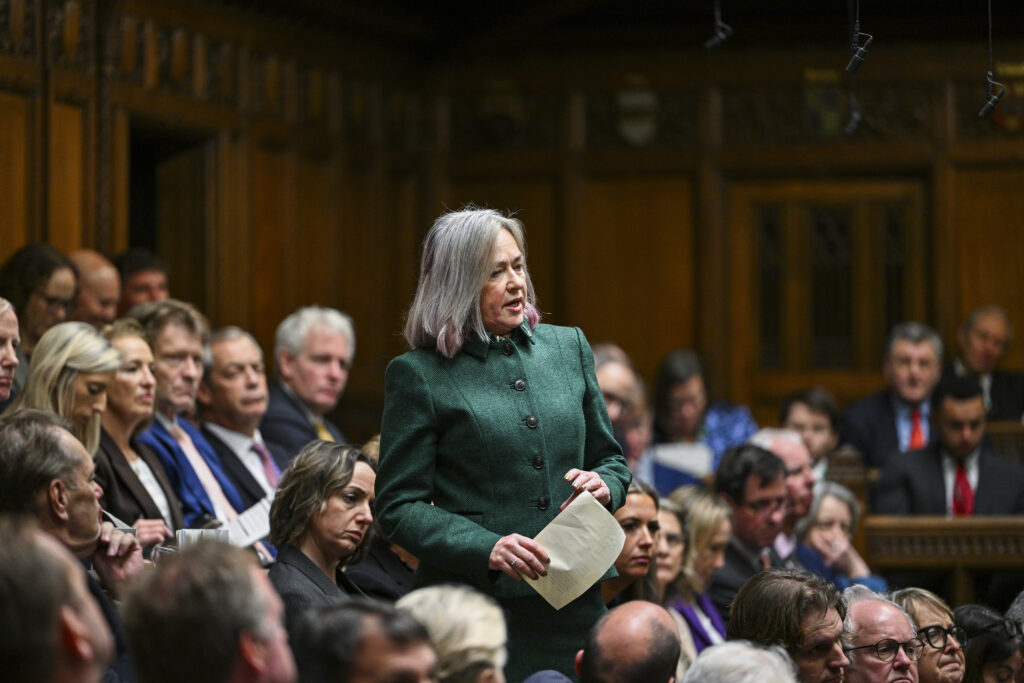
Plaid Cymru’s Westminster leader, Liz Saville Roberts MP has called out the UK Government’s ‘double standards’ for failing to act with the same urgency in Port Talbot after it was announced that British Steel has been formally taken into public ownership.
Today (Thursday 16 July) the UK Government announced that British Steel has been formally taken into public ownership – 15 months after the government stepped in to prevent the closure of its steelworks in Scunthorpe and the loss of 4,000 jobs.
The Department for Business and Trade said the move was essential to maintain steel production at British Steel’s site in Scunthorpe, Lincolnshire, to protect both the company’s future and UK supply chains.
The announcement follows the Steel Industry (Nationalisation) Act 2026 receiving royal assent and becoming law.
Commons Deputy Speaker Judith Cummins confirmed the news to MPs on Wednesday.
Labour stepped in with an emergency recall of parliament to prevent the closure of British Steel in April last year after the Chinese owner, Jingye, threatened to walk away without taking steps to preserve the blast furnaces.
In September 2024, TATA Steel closed the blast furnaces at Port Talbot, cutting 2800 jobs in the process. Leading up to their closure, Plaid Cymru consistently called for nationalisation to be on the table to save jobs in Port Talbot.
However, the then First Minister of Wales and Welsh Labour leader, Eluned Morgan, rejected Plaid Cymru’s calls describing nationalisation as a “pipe dream”.
Prime Minister Sir Keir Starmer said: “British Steel is part of the fabric of our nation and a cornerstone of Britain’s industrial strength.
“Today’s decision secures the future of steelmaking in the UK, protects skilled jobs and safeguards a vital national capability.”
He continued: “This Government will always act in the national interest to support British industry, strengthen our economy and ensure the industries we rely on can thrive long into the future.”
The new law allows ministers to transfer steel businesses’ shares or property into public ownership.
Business Secretary Peter Kyle said: “British Steel is one of the nation’s biggest steel producers, and I’ve made the decision to nationalise the business to secure steelmaking capability and maintain production in the national interest.
“British Steel now belongs to the British people, and our focus is on the future: stabilising the business, backing the communities that rely on it and building a sustainable, competitive and decarbonised steel sector for the years ahead.”
“Bittersweet”
Plaid Cymru has also tabled amendments to the Steel Industry (Special Measures) Bill and the Steel Industry (Nationalisation) to make clear that measures should apply to Wales, and could have been used to save the blast furnaces at Tata Steel. But UK Government Ministers in Westminster have ignored those calls too.
Plaid Cymru’s Westminster leader, Liz Saville Roberts MP has called the news today “bittersweet” saying that despite the decision being the right one, people in Wales will ask ahy Port Talbot “was not afforded the same priority”.
She has also accused the UK Government of its “double standards”.
Plaid Cymru Westminster Leader, Liz Saville Roberts MP said: “While today’s decision to bring British Steel into public ownership is the right one, the news will be bittersweet for many in Wales. The lack of urgency and planning by successive governments cost thousands of steel jobs in Port Talbot. The current Labour UK Government has also fallen short, having promised two years ago to introduce a £2.5 billion steel fund, it has yet to get the money out the door to communities in Wales.
“The truth is that we did not see the same level of intervention from Labour to save Port Talbot’s steelworks as we saw from them in the north of England. People in Wales will inevitably ask why Port Talbot was not afforded the same priority, and the double standards will not be forgotten.”
Support our Nation today
For the price of a cup of coffee a month you can help us create an independent, not-for-profit, national news service for the people of Wales, by the people of Wales.
Get more trusted Welsh news
Choose Nation.Cymru as a preferred source in Google News to see more of our journalism.



It didn’t help that the Labour MP for Port Talbot, Stephen Kinnock, is a parachute doing England’s bidding. He’s is actually appointed the minister for social care in England by Starmer. Sent to Wales on the coat tails by wealthy sugar daddy, banks in Switzerland, and more concerned about sending his kids to a private school than championing his constituents in Wales.
There’s no steel strategy if there’s no plan to transition to green primary steel. This seems to be about buying votes in the north of England.
Unfortunately, green steel is a myth. It is possible to strip oxygen out of iron ore by burning hydrogen rather than coal, but what’s produced is molten iron and how green it is depends on how the hydrogen is produced. The pig iron sponge is then fed into an electric arc furnace, a further stage, to add in the carbon. Steel is actually an alloy of carbon and iron. It takes 3.5Mwh of electricity to make one tonne of iron then a further 1Mwh per tonne to convert it into steel. The only ‘green steel’ plants in operation are in… Read more »
Where there’s a will there’s a way. While we’re too busy saying why it’s impossible China will solve the problems and patent the tech so they can sell us the green steel our net zero policies demand we use at inflated prices. And we’ll deserve it.
That’s because the Labour party is an English political party that serves the best interests of England. Wales will always be last on their list of priorities as far as they’re concerned.
Don’t allow anti-Welsh Labour to spin this in any other way. They nationalised British Steel, saving English steelworkers’ jobs in the process, yet were willing to pay Tata to put thousands of hardworking Welsh workers on the scrapheap. This decision not only lost 2800 skilled jobs but has threatened up to 9,500 jobs across the wider South Wales area. Adding insult to injury, Labour has deprived Wales of HS2 and the Oxford–Cambridge consequential funding meaning billions lost to the Welsh treasury, and they are also targeting those on Universal Credit and other benefits to fund a loss-making company British Steel… Read more »
Stephen Kinnock himself called for funding from his own Govt to keep one blast furnace open (one had 10 years left) and to invest enough to develop hydrogen technology to make iron. They offered well short of what Tata wanted, so Port Talbot ends up with a far cheaper steel recycling system and losing most of its jobs. Wales has the only mills for strip steel but no ability to make iron from base products. Will the UK Govt choose England or Wales for any future hydrogen investment? As Port Talbot’s port is being dismantled then the former is also… Read more »
The anti Cymru party strikes again.
Although I have a feeling this little stunt that’s purely to win votes, is going to backfire brilliantly.
Absolutely right to point out the glaring double standard. It’s almost as if Westminster considers steel made in Wales to be automatically inferior without evidence.