


Plan to save historic farmhouse requires partial demolition
Alec Doyle, Local Democracy Reporter
A listed farmhouse which dates back to the very start of the United Kingdom could be partially demolished as part of a huge restoration project.
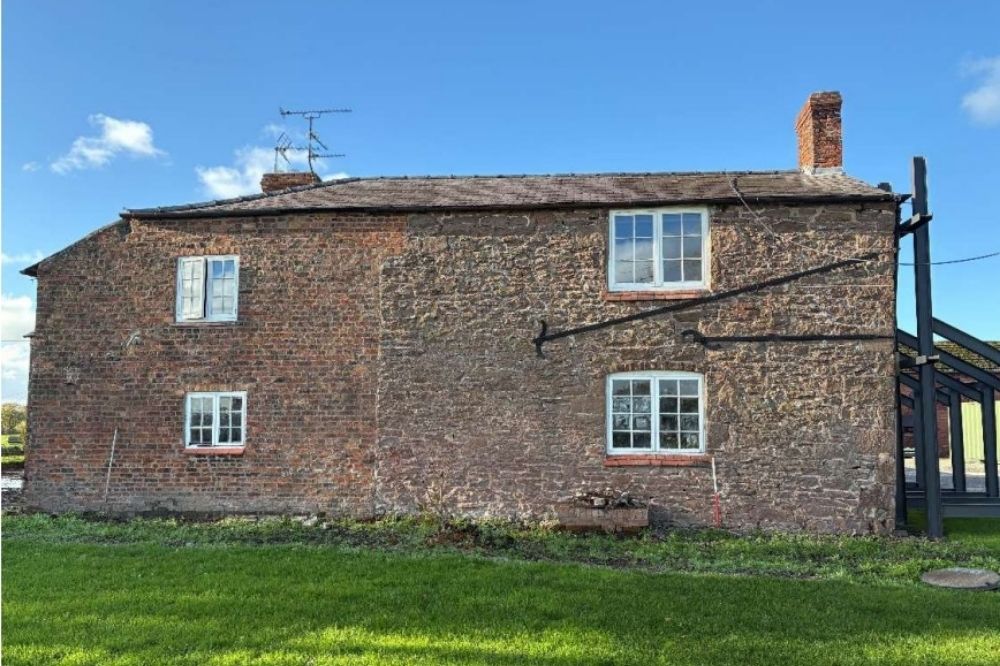
Pickhill Farmhouse on Holt Road in Cross Lanes, Wrexham dates back to 1801 and is a Grade II Listed building formerly owned by Simon Yorke III of the Erddig Yorke family.
It had already fallen into significant disrepair when purchased by the current owners in 2024. They moved in but soon left again as it was not structurally safe.
Plans have now been submitted to demolish a more recent addition to the building and carry out essential repairs to make the farmhouse structurally sound.
Cement used in the creation of a kitchen extension added in the 1960s is believed to have damaged the original brickwork. As a result the plans include the demolition of this part of the structure as well as extensive works to tackle subsidence.
The proposals also include some modernisation but wherever possible original materials will be preserved and re-used in the conservation of the building.
The application to carry out the works is part of a plan to restore the farmhouse to a habitable state and remove some of the external supports propping the building up.
They include dismantling of part of the northeast range so that new foundations can be laid, general repair and refurbishment of the external envelope to ensure the building is weathertight, the renewal of existing windows with new, timber frame slim-profile double-glazed windows and hardwood timber boarded doors and the demolition of the modern kitchen extension on the northwest side elevation.
Inside the wiring will be modernised and stud walls will reconfigure the interior – turning it from a three bedroom property into a four bedroom home with two en-suites.
Downstairs the entrance lobby will be extended to create a kitchen-diner and the hall will be transformed into a games room, with a downstairs shower also incorporated.
Heritage impact assessment
A heritage impact assessment compiled by Blueprint Architectural Services on behalf of the owners states: “The farmhouse is of high historic value – its significance lies in the survival of late 16th century timber framed fabric, evidence of early expansion in the 17th century and the subsequent adaptations made during the 18th and 19th centuries.
“The building retains high evidential value through its historic construction techniques and surviving structural fabric, historic value through its illustration of the long-term evolution of a rural farmhouse and aesthetic value through the character and craftsmanship of its surviving architectural features.
“In its current condition, the building is uninhabitable, and without intervention, its significance would continue to deteriorate. The proposed works will enable occupation by providing a modern standard of accommodation while safeguarding its long-term future.
“It is acknowledged that some elements of the proposals will result in a degree of harm to the building principally through the loss of some historic fabric of lower significance, alterations to internal layouts, and changes to established circulation patterns.
“However, this harm is considered to be outweighed by the heritage benefits arising from the works in this instance. These benefits include the arrest of ongoing deterioration, the repair of structural defects, the reinstatement of appropriate materials, and the securing of a sustainable long-term use.”
A decision on the applications is due no later than June 2.
Support our Nation today
For the price of a cup of coffee a month you can help us create an independent, not-for-profit, national news service for the people of Wales, by the people of Wales.
Get more trusted Welsh news
Choose Nation.Cymru as a preferred source in Google News to see more of our journalism.



