

Plans by holiday park in ‘stark contrast’ to rural setting turned down
Dale Spridgeon, Local Democracy Reporter
A holiday caravan park that was refused planning permission to extend has failed in its bid to have the national park’s decision overturned.
An Eryri planning inspector had identified “permanent and significant harms” to the “character and appearance” of the rural setting, near Tywyn.
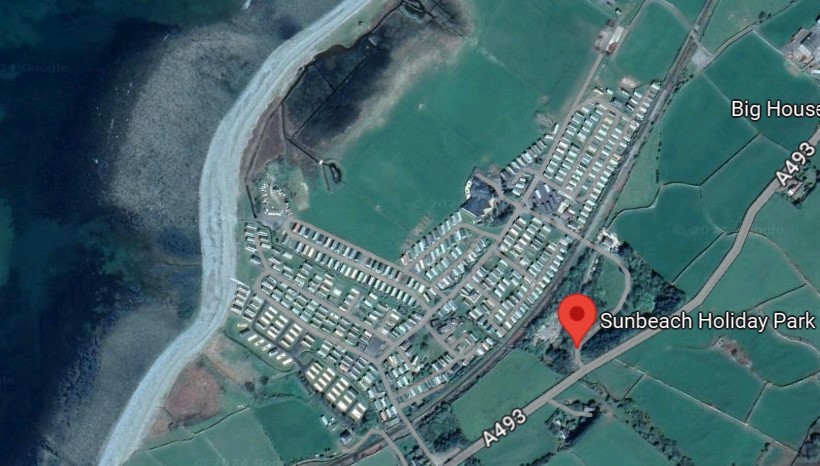
Sunborne Ltd, which runs the Sunbeach Holiday Park, at Llwyngwril, had taken a decision, by Eryri planners, to a PEDW, Planning and Environment Decision Wales, appeal.
It concerned an extension of the holiday caravan site to provide a main new site entrance, internal external road and amenity area.
Up to 455 holiday caravans can be stationed on the caravan site, and the application would not see an increase in the number of holiday units, beyond what was already permitted,
The appeal report, by an Inspector for the Welsh Ministers Claire McFarlane, goes before the Eryri National Park at its next planning and access committee, on Wednesday, January 21.
Concerns had “focused” on three parcels of land, heavily wooded to the north and south, with a number of small buildings and hard standing, as well as the main and secondary access, roads, and a central open field used for dog walking.
The surrounding area was described as “inherently rural” with “rising topography and sweeping views out to sea,” and “a dramatic, open landscape.
Her report stated: “The existing holiday park contrasts starkly against its natural setting of sparse development with its densely packed rows of light coloured caravans occupying a significant area of land.£
The applicant had described a “.. suite of site-wide improvements” which included stream work, base upgrades, drains and pipework, resurfacing, electrical supply, maintenance, and improvements to the site’s fabric and infrastructure.
But the report felt the changes would have “little or no relationship to improving the appearance of the site within the landscape”.
Views of the park from the Wales Coastal Path and railway line remained “readily apparent”.
The applicants, the report said, had proposed replacing high-level lighting with low-level lighting bollards, filter views, reducing the site’s night prominence, but the Inspector had felt this would only make a “modest contribution” towards improving appearance in the landscape.
The part of the proposal, introducing static caravans, parking, roads and paths and access roads on an undeveloped field would “significantly increase the built development” and she notes “a substantial area of trees to be removed”.
Activity in the area would “significantly intensify” and would see “encroachment of built form” and “urbanisation” to open countryside.
“Consequential erosion of the naturally wooded character of the site, which the recessive use of colours and material of on caravan exteriors would do little to ameliorate,” he report stated.
Concerns were also raised over the impact on protected species. Despite proposals for new planting, bat and bird boxes, reptile shelters, bug hotels, bee nest tubes, there was “little to demonstrate the requirement to avoid or minimise adverse impacts on biodiversity…”
The Inspector’s report had considered the application’s impact on neighbouring residential amenity, highway safety and archaeological interests, which she concluded were “acceptable”.
However, “the permanent and significant harms I have identified, in relationship to the character and appearance of the area, and to ecology and biodiversity, are compelling factors, which outweigh the proposals acceptability, in other respects as well economic benefits,” the report stated.
Support our Nation today
For the price of a cup of coffee a month you can help us create an independent, not-for-profit, national news service for the people of Wales, by the people of Wales.



Caravans used as second homes should pay council tax.